

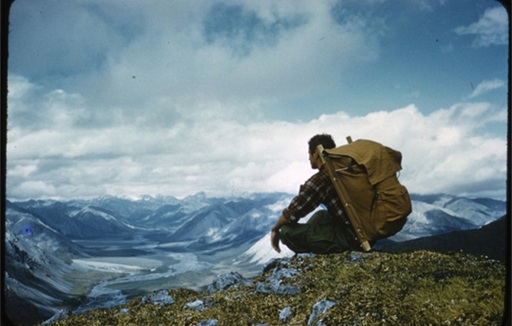
Some biographies are built around revelation. Others proceed by accumulation, assembling a life from fragments that resist easy interpretation. Miriam Horn’s Homesick for a World Unknown: The Life of George B. Schaller falls into the latter category. It takes as its subject George Schaller, a figure widely regarded as one of the most consequential field biologists of the twentieth century, yet one who spent much of his career deflecting attention from himself. Writing about such a person presents a structural problem: how to render a life whose central impulse was to look outward. Horn approaches this constraint directly. Her biography draws heavily on field journals, letters, and archival material, allowing Schaller’s habits of observation to shape the narrative without turning the book into a compilation of documents. It is neither a conventional intellectual history nor a purely personal account; instead, it tracks a method of seeing as much as the arc of a career, moving fluidly between landscapes and institutions. That balance reflects Horn’s own trajectory. Before turning to long-form writing, she spent years working within conservation institutions, including the Environmental Defense Fund (EDF) and the United States Forest Service (USFS). Those experiences inform her treatment of Schaller’s work, which rarely fits neatly into disciplinary categories. He is presented both as a scientist and as a practitioner working within systems shaped by politics, funding, and local realities. The biography follows him across multiple regions, but its emphasis is less on cataloguing his achievements than on how knowledge is produced under…This article was originally published on Mongabay
From Conservation news via This RSS Feed.