

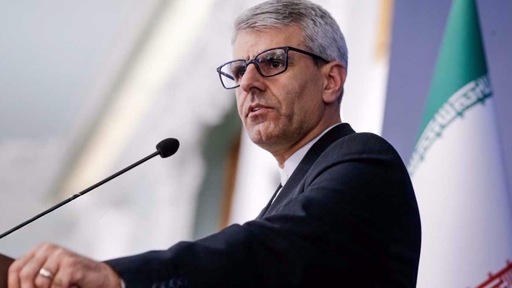
Spokesperson of the Iranian Ministry of Foreign Affairs, Esmail Baghaei, accused the US of not being serious about talks and warned that if it repeats its past mistake of attacking Iran it will face a decisive Iranian response.
The statement came after the US refused to lift its naval blockade, despite Iran’s initiative last week in announcing the complete opening of the Strait of Hormuz for commercial shipping, as a gesture for further talks.
Instead, the US attacked and seized one of Iran’s commercial ships, “Toska”, on Sunday, in the Gulf of Oman, while it was coming from China, in violation of the temporary ceasefire in place between the two countries since April 8.
The attack on the Iranian ship and Washington’s refusal to lift the naval blockade, imposed on April 13, have hampered efforts toward a diplomatic resolution to the war.
Responding to the US move, Iran’s Khatam al-Anbiya military headquarters called the attack and seizure of its ship a violation of the ceasefire, accusing the US of indulging in maritime piracy and warned of retaliation.
Iran announced the reimposition of the blockade on the Strait of Hormuz on Monday, declaring that no ships will be allowed to pass through the strait without prior permission.
During a press conference in Tehran on Monday, April 20, Baghaei claimed that Washington’s “words and actions are not consistent, and Iran will make the appropriate decision with careful consideration of its interests and national priorities.”
US actions intensify mistrust
Reacting to the US seizure and of its ship and its refusal to lift the naval blockade, Iranian President Masoud Pezeshkian, during a phone conversation with Pakistani Prime Minister Shehbaz Sharif on Sunday, said that “such actions, along with threatening rhetoric by US officials against Iran, only lead to intensifying mistrust regarding America’s seriousness and further reveal that the US seeks to repeat previous patterns and betray diplomacy.”
In a social media post, US President Donald Trump celebrated the attack and the seizure of the Iranian ship.
US Central Command praised the American forces for acting “in a deliberate, professional and proportional manner to ensure compliance.”
Read more: Iran does not seek war but will never abandon its rightful demands, claims Supreme Leader Ayatollah Mojtaba Khamenei
Washington’s attack on “Toska” is considered a significant setback to the peace efforts made since the temporary ceasefire on April 8, which halted nearly 40 days of US-Israeli bombings in Iran, in which more than 3,000 Iranians were killed, according to the latest figures issued by Iran’s Legal Medicine Organization on Monday.
The US-Israeli attacks also killed several of Iran’s top political and military leadership, including Supreme Leader Ayatollah Khamenei and head of the Supreme National Security Council Ali Larijani. Scores were also killed in Iranian retaliations on US bases in the region and inside Israeli territory.
No talks without a framework of understanding
Responding to a question about the normalization of traffic in the Hormuz, Baghaei claimed that it is not possible unless the US-Israeli war on Iran ends.
Meanwhile, US media reported on Monday that Vice President JD Vance is expected to travel again to Islamabad in the coming days for a fresh round of talks.
The first round of talks, also held in Islamabad on April 11, failed after Iran accused the US of raising maximalist demands and shifting the goal posts at the last moment.
“From the early days of the ceasefire, we were faced with the US’s bad faith, contradictory statements and followed by a naval blockade,” Baghaei said, while reiterating that his country will not join talks with the US unless a framework of understanding is reached between the two sides.
Pezeshkian praised Pakistan’s efforts to make peace and expressed his country’s commitment for the same. However, he also condemned the “provocative and illegal actions.” Responding to repeated threats by Trump, Pezeshkian warned that, in the event of any American “adventurism”, Iran will retaliate strongly and the world would face a greater prospect of instability.
The post US naval blockade puts future of talks with Iran in jeopardy appeared first on Peoples Dispatch.
From Peoples Dispatch via This RSS Feed.