

This article by Alejandro Calvillo originally appeared in the April 18, 2026 edition of Sin Embargo.
Transforming how food systems are governed is a matter of survival. It is key to addressing profound inequalities, their enormous environmental damage, their contribution to global warming, and, especially, to promoting the production of healthy food and ceasing the production of ingredients for ultra-processed, junk food, which has caused serious harm to public health. To achieve this, multisectoral governance is urgently needed, where agricultural policies are coordinated with environmental, health, and social development policies, rather than each operating independently and contradicting the other. And amidst all this, the good news is that Mexico is recognized as holding the key to a healthy and sustainable food system.
The current food system, the dominant system inherited from the so-called Green Revolution, increased production at the cost of converting highly fertile soils into infertile ones, polluting rivers and lakes with agrochemicals, displacing millions of small and medium-sized producers, and being one of the main causes of global warming. This model surrendered to the logic of large corporations, displacing the scientific research and innovation that had been developing to provide rural populations with alternatives for increasing their production, maintaining the biological and mineral richness of the land, and developing ecological alternatives for pest and weed control.
Given the current situation of vast and profound inequalities, and serious local and global environmental damage, a profound transformation of food systems is imperative. This has been recognized by United Nations international bodies and all national and international organizations that have addressed these issues without conflicts of interest. However, the economic power of large agribusiness corporations—a few corporations that globally control both seeds and agrochemicals—maintains its control and political influence. We see this situation currently in Mexico, with the obstruction of the publication of the Regulations to the General Law on Adequate and Sustainable Food, internationally recognized as one of the most advanced on a global scale.
While Mexico is internationally recognized as being among the 34 countries, out of a total of 197 evaluated, that have a policy proposal on food systems aimed at achieving better environmental, social and economic results through its Law of Adequate and Sustainable Food; sectors of the government are blocking the publication of its Regulation, that is, the instrument that would allow this Law to stop being on paper and become a reality.
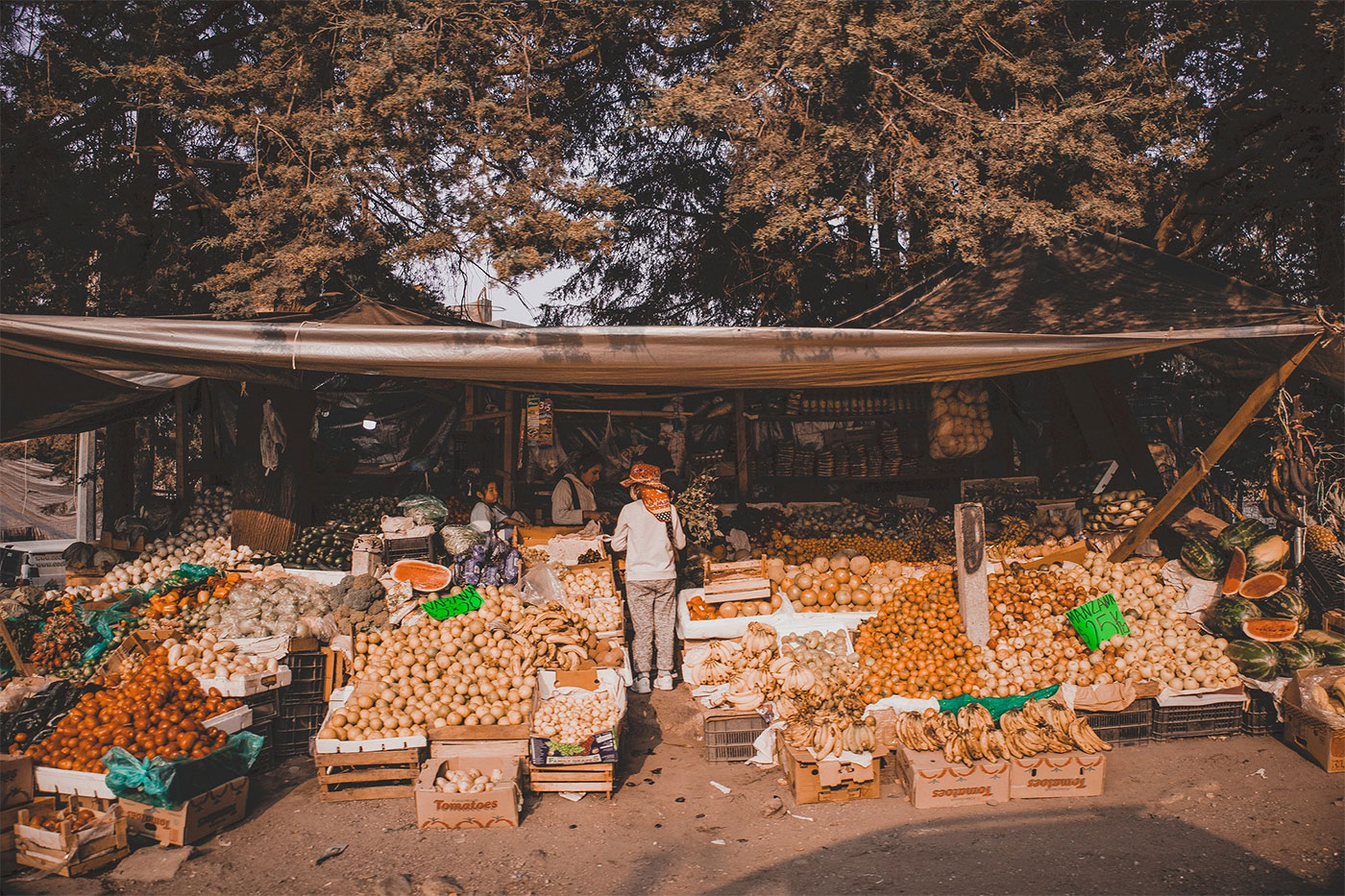
Photo: Jay Watts
The scientific article published in the journal Sustainable Development, titled “From Ministries of Food to National Food System Committees,” highlights the importance of multisectoral policies for food system governance. We still have a system in which policies, originating from the Ministry of Agriculture and Rural Development, prioritize increasing production without considering the environmental damage caused by the production model it promotes, the health impacts of the food produced, or its social consequences.
The Law proposes the creation of the National Intersectoral System for Health, Food, Environment, and Competitiveness (SINSAMAC), which aims to ensure that policies across different government ministries are aligned, a major inconsistency in governance with serious consequences for the population. The objective is to prevent agricultural policies from becoming a threat to health and the environment, and a means of excluding rural communities. The publication of the Regulations is essential for SINSAMAC to become a reality, so that, through multisectoral policy, agricultural policy aligns with environmental, health, and social development policies, rather than conflicting with them.
However, there is very strong resistance; resistance from power structures, from departments that are unwilling to collaborate or question their projects; resistance due to conflicts of interest, close ties to major economic interests and corporations; and resistance due to professional and ideological training based on outdated paradigms that can no longer address the challenges we face.

What bothers these sectors is that the Law and Regulations establish the exclusion of conflicts of interest; that is, they clearly state that those representing strong economic interests cannot participate in decision-making, excluding large corporations whose sole interest is profit above all other considerations. The goal is to promote comprehensive policies that prioritize the collective interest over private interests, evaluating all aspects: productive, environmental, health, social, and economic.
One of the central points of opposition to the publication of the Regulations for the General Law on Adequate and Sustainable Food, by those who hold economic power and those involved in agribusiness, is the requirement that products on the market carry labels informing consumers when they contain any genetically modified ingredient. And here, the argument that GMO labeling could pose a risk of trade conflict with our trading partners no longer holds water.
That risk doesn’t exist because the United States already has a labeling system for genetically modified organisms (GMOs). The only reason is the resistance of food corporations to informing Mexican consumers about the presence of GMOs; they do so in the United States, but they don’t want to do it in Mexico.
The General Law on Adequate and Sustainable Food establishes something that is also disliked by that same sector: the formal recognition of a Citizen Participation Commission.
Two years have passed without the publication of the Regulations to the General Law on Adequate and Sustainable Food due to the resistance of a sector within the government that, rather than serving the public interest under an integral vision of food systems to make them fair, adequate and sustainable, serves the interests of large agri-food corporations.
In Mexico, there were state institutions with resources for agricultural research aimed at providing technology, knowledge, and practices for domestic food production, without the need to pay patent fees to large corporations or purchase seeds in technological packages tied to the purchase of agrochemicals. These options are now being implemented as the most advanced and adapted forms of food systems in other nations. The General Law on Adequate and Sustainable Food and its Regulations are on this cutting-edge path internationally.

Alejandro Calvillo is director of El Poder del Consumidor*, a non-profit civil association that works to defend the rights of the Mexican consumer*, as well as a sociologist with degrees in philosophy from the University of Barcelona and environment and sustainable development from El Colegio de México
-

Who is Blocking Mexicans’ Right to Food?
April 20, 2026April 20, 2026
A Mexican food law which would exclude corporations from participating in decision-making is dying from neglect: the government has stalled on implementing it for the past two years.
-
Government Handing Telmex Over to Carlos Slim for 30 More Years Violates Labour Rights: Telephone Workers
April 20, 2026April 20, 2026
The new concession weakens regulations, the necessity of updating technology and opens the door to even more profiteering & union-busting by one of Mexico’s wealthiest billionaires.
-

Mexico’s Plan to Build 100,000 Homes for Government Employees
April 20, 2026April 20, 2026
The program will include self-build projects, participatory design, urban amenities, and services such as grocers and healthcare in housing developments.
The post Who is Blocking Mexicans’ Right to Food? appeared first on Mexico Solidarity Media.
From Mexico Solidarity Media via This RSS Feed.