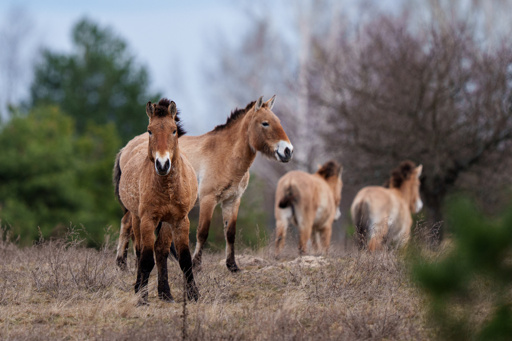
CHERNOBYL, Ukraine (AP) — Wildlife is thriving again four decades after the nuclear disaster at Ukraine’s Chernobyl power plant in what became the exclusion zone created by the forced mass evacuations of the population. Wolves, bears and lynx have rebounded in the radioactive landscape, along with a rare breed of horses native to Mongolia. Scientists say it shows nature’s ability to recover when human activity is removed. Hidden cameras have revealed the animal population adapting by using abandoned buildings for shelter. Chernobyl remains too dangerous for people but has become an unexpected refuge — and research site — for resilient ecosystems shaped by disaster and war. By Derek Gatopoulos and Evgeniy Maloletka, Associated Press Banner image: Wild Przewalski horses graze in a forest inside the Chernobyl exclusion zone, Ukraine, Wednesday, April 8, 2026. Chornobyl is the Ukrainian name for the city. Evgeniy Maloletka, Associated PressThis article was originally published on Mongabay
From Conservation news via This RSS Feed.
This just provides irrefutable evidence that this planet’s main problem is humans…
Nuclear is really cool, but isn’t solar cheaper now anyways? Idk about thorium though, it might still be worth the cost of building and staffing. China actually built their first throium reactor.
Just goes to show that man is far more dangerous to life than radioactivity.
I have heard this before!