

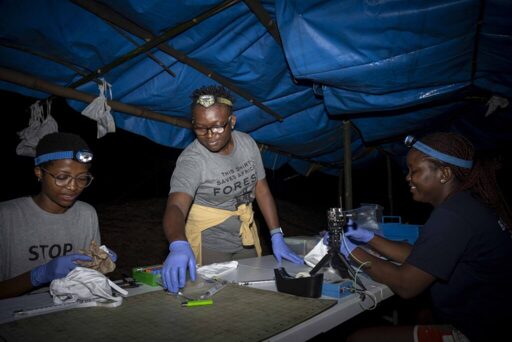
In the forested highlands of southern Nigeria’s Cross River state, plumes of smoke signal the annual fire season from January to April, when farmers routinely use fire to clear new land for planting cacao, maize and cassava. In five villages near the Afi Mountain Wildlife Sanctuary, the period is also marked by another signal: the sound of metal gongs announcing weather conditions too risky to set fires. In Buanchor and four other villages, on days when dangerously dry conditions prevail, town criers fan out with gongs to warn residents not to burn the bush. Since 2022, weather stations set up in each of the communities track temperature, humidity and wind. The data are used to produce a daily alert that’s displayed on a signboard in each village, color-coded green for safe, yellow — when there’s been no rain for two weeks — for caution, and red for high danger. On high-risk days, 50 trained forest guardians patrol danger zones equipped with water backpacks, GPS, radios, fire boots and motorcycles. Anyone caught setting a fire on a “no-burn” day faces a fine equivalent to between $4 and $14 under a community bylaw. These fire prevention efforts stem from an unlikely source: In 2016, ecologist and bat specialist Iroro Tanshi witnessed a wildfire that swept from farmland into the 100-square-kilometer (38.6-square-mile) Afi sanctuary, where she was exploring caves that provide roosts for several bat species. She and her team had just discovered the caves harbored the short-tailed roundleaf bat (Hipposideros curtus), last…This article was originally published on Mongabay
From Conservation news via This RSS Feed.