

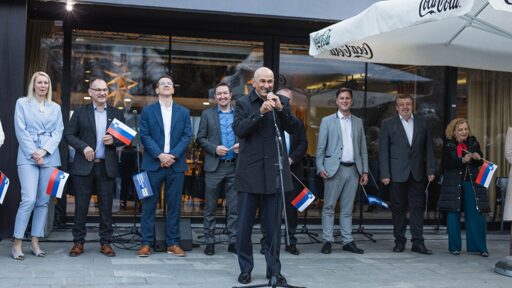
Despite securing a narrow victory in last month’s general election, the liberal Freedom Movement (Gibanje Svoboda) announced it is “looking forward to working from the opposition” during consultations with Slovenian President Nataša Pirc Musar on April 20. The party’s representatives, including current Prime Minister Robert Golob, said they were unable to secure the necessary majority during negotiations and would not do so by agreeing to political trade or blackmail.
The Freedom Movement’s announcement signals that far-right leader Janez Janša might be building his own majority composed of right-wing and self-declared anti-establishment parties. The likelihood of this scenario has grown since Zoran Stevanović, leader of the Resnica party, was confirmed National Assembly speaker earlier this month, drawing criticism from progressive political circles.
While Janša denied the Slovenian Democratic Party (SDS) is actively negotiating to form an administration at the moment, he also stated they are prepared for any upcoming role: government, opposition, or early elections. With other right-wing parties eager to avoid another election, some analysts believe an agreement with the SDS is likely to follow soon.
Read more: Orbán defeated, but right still victorious in Hungarian elections
The post-election process has been heavily criticized by progressive parties, in part because conservative and self-proclaimed anti-establishment parties are believed to have thrown their weight behind Janša – though quietly– thus betraying their electoral promises. “As the new government takes shape, we are witnessing messy political horse-trading that has, among other things, led to a person with no experience and a history of breaking the law being appointed to a leading position in the legislative branch,” the progressive party Levica wrote on Monday. “In doing so, Resnica has betrayed its own voters, broken a (notarized) promise, and struck a deal with those who, just a few years ago, were repressing the people of Slovenia and firing tear gas in Ljubljana.”
During the COVID-19 pandemic, Resnica promoted anti-vaccination mobilizations and theories. This overlapped with a period when Janša’s previous administration deployed extremely repressive measures against the population. During this election campaign, Janša was implicated in an espionage case against Golob’s government, reported to European Union bodies and involving Israeli mercenary company Black Cube. Most recently, in discussing policies he would implement if he became prime minister again, the far-right leader referred to uncontrolled public expenditure and debt – signaling cuts to public services – and potential changes to electoral law, a pet project of many of Europe’s far-right parties.
Read more: Antifascism is anti-militarism: socialist industrial legacy at risk of becoming motor of EU armament
While the government outlook remains uncertain, Slovenia’s public took to the streets last week, reaffirming demands for the direction they want the country to take, most notably taking a decisive stand against war and genocide. During an April 14 protest, demonstrators demanded all ties with Israel be cut – going beyond Golob’s government stance in international fora during the Gaza genocide – as well as an end to purchases of US-made weapons and an exit from NATO. Unlike what might be expected from another Janša administration, protesters insisted the new government should: “Reduce defense spending and instead allocate funds to strengthening public health, education, and culture in Slovenia.”
The post Right wing could build a majority despite narrow liberal election win in Slovenia appeared first on Peoples Dispatch.
From Peoples Dispatch via This RSS Feed.