

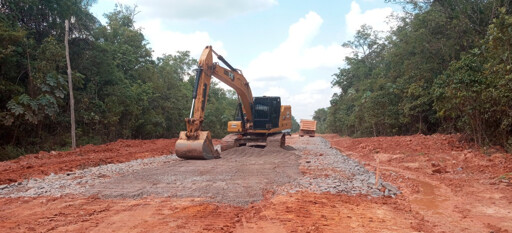
Heavy machinery will soon be working on the road that may determine the future of the Amazon Rainforest: On April 13, the Brazilian government issued calls for four bids to pave the controversial BR-319 highway. Inaugurated in 1976 to connect two major Amazonian municipalities, Manaus and Porto Velho, the BR-319 runs 885 kilometers (550 miles) and crosses one of the best-preserved areas of the Brazilian Amazon, home to 69 Indigenous territories and 41 conservation units. The middle section of the highway was never fully paved, and after decades of abandonment, it became undrivable, especially during the rainy season. Paving this 339-km (211-mi) critical stretch has long been advocated by locals, politicians and businesspeople, who currently rely on plane or boat to travel. Paving the road to improve connectivity, however, would come at a high environmental cost. Scientists say upgrading BR-319 may push the rainforest to a tipping point, transforming it into a much drier, less biodiverse ecosystem. However, the administration of President Luiz Inácio Lula da Silva, who came to office on a pro-environmental platform, is exploiting an environmental licensing loophole to announce it will start roadworks in the second half of this year. It has budgeted 1.3 billion reais ($260 million) for the project. “The idea is to get started quickly, with independent mobilizations, taking advantage of the Amazonian summer and making as much progress as possible,” Fabrício Galvão, general director of the National Department of Transportation Infrastructure (DNIT), said at the project announcement. In October, Lula will run…This article was originally published on Mongabay
From Conservation news via This RSS Feed.