

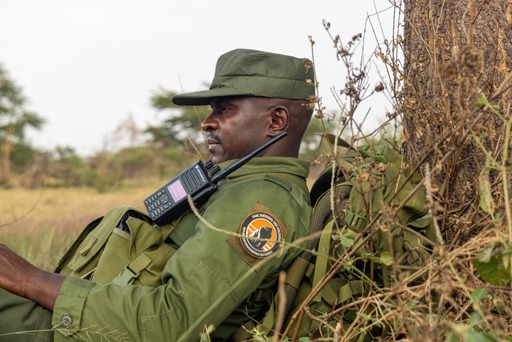
SALONGA NATIONAL PARK, Democratic Republic of the Congo — For over two decades, Emmanuel de Merode has worked at the intersection of conservation, conflict, and development in the eastern Democratic Republic of the Congo. As director of Virunga National Park, he has overseen one of Africa’s most ambitious—and controversial—conservation experiments: protecting biodiversity by improving the living conditions of the millions of people living around the park. His guiding principle, shaped by years of experience, rests on the idea that conservation must benefit local populations. “If conservation creates hardships, it won’t work,” he said during a recent visit by Mongabay to Salonga National Park. Established in 1925, Virunga National Park is Africa’s oldest national park and one of its most biodiverse. Stretching from the Rwenzori Mountains to the volcanic plains along the border between Rwanda and Uganda, it is home to mountain gorillas, forest elephants, and three species of great apes. Yet it has also been shaped by decades of conflict, the presence of armed groups, and the illegal exploitation of resources—making conservation far more complex than the mere protection of wildlife. Fabrice, a ranger at Virunga National Park since 2013 and now a Deputy Sector Warden, pauses during a patrol. Virunga has lost more rangers than any other protected area in Africa, illustrating the human cost of conservation and raising the question of whether new conservation models can better protect both biodiversity and those charged with defending it. Image courtesy of Virunga National Park. For de Merode, these realities profoundly…This article was originally published on Mongabay
From Conservation news via This RSS Feed.