

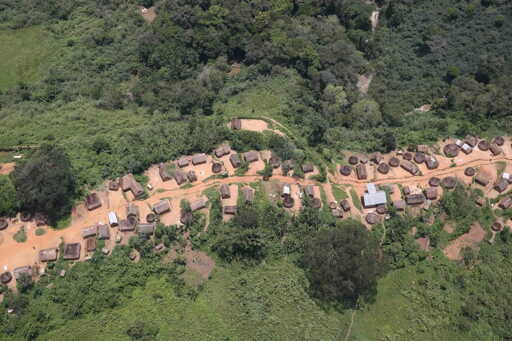
KINSHASA, Democratic Republic of the Congo — Félix Tshisekedi is banking on one of Africa’s most ambitious conservation and development plans to transform the future of the Democratic Republic of the Congo. He recently reiterated this vision in Bandundu during the annual Conference of Provincial Governors. “Through this Green Corridor, we are choosing to replace a war economy with an economy of life, work, and hope,” Tshisekedi said. According to official documents and public statements, the Kivu-Kinshasa Green Corridor would stretch from eastern DRC all the way to Kinshasa in the west. If implemented as planned, it would cover more than 544,270 square kilometers (210144 sq miles) —an area comparable in size to France—and would integrate conservation, economic development, and community protection. The initiative was first announced during the World Economic Forum in Davos in January 2025. An aerial view of the village of Lac Paku within the peatland forest near Mbandaka, in the Democratic Republic of the Congo. The Green Corridor traverses the Équateur province. Image by Daniel Beltrá/Greenpeace. Conservation Spaces and Drivers of Economic Stability Individuals involved in the planning process told Mongabay that the initiative could create more than 500,000 jobs—particularly for youth and women—preserve over one million hectares of land, and transport food products from the East to the major consumer market in Kinshasa. For the Congolese government, the Kivu-Kinshasa Green Corridor goes beyond mere forest protection. “The objective is to protect our forests, restore ecosystems, create sustainable jobs, support responsible agriculture, stimulate local processing, and…This article was originally published on Mongabay
From Conservation news via This RSS Feed.