

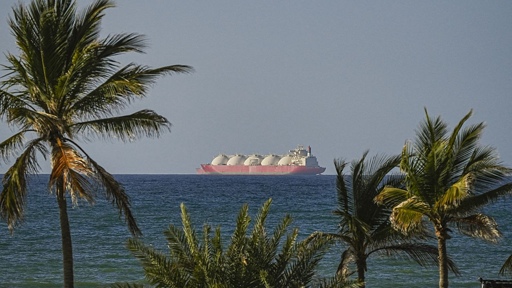
The shipping industry has been facing an acute crisis. For the first time in modern history, both of the Middle East’s critical waterways — the Strait of Hormuz and the Red Sea — were effectively closed for the past several weeks. Since early March, as Iran and Houthi rebels threatened ships attempting to cross these waterways and blocked the movement of oil in response to U.S.-Israel bombing, crude oil prices have soared. Maritime fuel costs in turn rose so sharply that some biofuels are now cheaper. And more than 150 ships were marooned, unable to safely pass through the Strait, which carries 20 percent of the world’s oil supply. Others have been making long detours around the southern tip of Africa, adding to the mounting cost of shipping and weeks of travel time. After briefly reopening the Strait, Iran seized the waterway once again over the weekend, restricting ships from passing.
It’s under these conditions that the International Maritime Organization, or IMO, the United Nations agency overseeing global shipping, is meeting this week to discuss reducing the climate change impact of the shipping industry, which is responsible for 3 percent of the world’s greenhouse gas emissions. For the last three years, the 176 countries that are members of the IMO have been working toward adopting the so-called net-zero framework, an international policy requiring shippers to pay a fee for every ton of greenhouse gas emissions above a certain threshold. These proceeds would then be used to drive the development of alternative, cleaner fuels and support lower-income countries.
But last summer, just as nations were nearing a vote to formally adopt the framework, the Trump administration threw a wrench in those plans. Secretary of State Marco Rubio, along with the heads of other agencies, released a statement warning countries that voting for the framework would result in a number of punitive actions by the United States, including visa restrictions, additional tariffs, and port fees. Seemingly overnight, countries that were previously in favor of the net-zero goal seemed to lose their nerve. And at an October meeting where the framework was expected to be adopted, countries voted instead to delay the decision by at least a year.
In the months since, technical work has continued, but the political backing required to adopt the international agreement has largely dissipated. The consensus that once seemed within reach has fractured.
“The Iran war has certainly complicated things,” said Evelyne Williams, a research associate with the Center on Global Energy Policy at Columbia University. “It’s tricky because if the U.S. does want to kill this thing, it has considerable leverage in its LNG market to threaten countries.”
Williams said the meeting this week will demonstrate where countries stand and what their priorities are, given the current crisis. Several countries have proposed alternatives to the framework in the past few months. One proposal from Japan seeking middle ground considers doing away with the fee structure altogether and allowing shippers that emit excess greenhouse gases to trade away their surplus with companies in compliance — essentially a carbon trading system. Another proposal — by Liberia, Argentina, and Panama — does away with the fees, too, eliminating the crux of the framework that incentivizes compliance. A group of petrostates is calling for the cancellation of the framework altogether, while island states, which are among the most vulnerable to climate change, are calling for the framework to be adopted as originally planned or a more ambitious carbon levy.
For its part, the U.S. has maintained its position that the net-zero framework essentially functions as a carbon tax, a move it predicts will raise costs for American consumers. In a separate proposal, the Trump administration has called for scrapping the framework and calling for a new proposal that doesn’t penalize fuel types that are more carbon-intensive and does not include an “economic element,” such as a tax or levy.
“The United States submits that the most appropriate path forward is to end consideration of the IMO Net-Zero Framework entirely,” it noted in the proposal. “This would be a logical development given the plethora of existing alternative proposals and clear lack of consensus over the IMO Net-Zero Framework.”
Doing away with the fee structure altogether would be “catastrophic,” said Em Fenton, a senior director at Opportunity Green, a U.K.-based climate group that has been closely tracking the IMO negotiations. The net-zero framework penalizes shippers whose carbon emissions are above a certain threshold. These fees, which independent analyses have estimated will range around $12 billion by 2030, are then expected to help with the development of clean technologies for the shipping industry. Doing away with the fee, Fenton said, would remove the policy’s “regulatory teeth” and jeopardize a just and equitable transition.
“Nothing can replace an economic element in terms of the value it brings for leveraging investment, for creating certainty,” said Fenton. “Nothing can replace that.”
The shipping industry has largely continued to back the net-zero framework, despite the additional cost and the current geopolitical crises. Absent a unifying global policy, the industry fears that a patchwork of regulations will complicate logistics. The European Union already has a carbon pricing mechanism in place for the shipping industry. If other countries adopt their own policies, it would add logistical complexity for a shipper moving products, say, from Asia to the Middle East and Europe.
The International Chamber of Shipping, the trade association representing shipowners and operators, and other industry groups have defended the IMO as the primary international shipping regulator. “The shipyards of tomorrow will not only build vessels; they will build confidence in the industry’s ability to meet its sustainability goals,” the International Chamber of Shipping Secretary General, Thomas Kazakos, said in a statement.
Fenton, Williams, and other experts will be following the discussions this week to see where countries stand and whether political consensus is still possible.
“As long as something is moved through the door, it can be iterated upon,” said Williams. “The fear for most parties is that this is abandoned in its entirety, and then you have to start from scratch.”
This story was originally published by Grist with the headline The world desperately needs to decarbonize shipping. Can nations find a consensus? on Apr 20, 2026.
From Grist via This RSS Feed.