

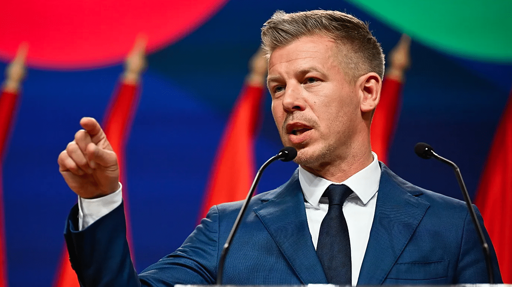
Last week, Viktor Orbán’s 16 years of rule in Hungary came to an end. He was defeated by Péter Magyar, whose Tisza party won 53 percent of the vote, while Orbán’s Fidesz party won just 52 seats in the National Assembly, down from 135.
The repercussions of this electoral defeat extend far beyond Hungary, and the election took on an international dimension. During his long tenure as Prime Minister, Orbán effectively built a bastion of counterrevolution at the heart of the European continent: xenophobic and racist policies targeting foreigners and national minorities (especially the Roma); sexist, misogynist, and anti-LGBTQ+ policies; and Islamophobia and open defense of the genocide in Gaza. He also systematically repressed left-wing opponents and attacked labor rights, while implementing economic policies benefiting domestic capitalists and imperialist capital, like the major German automotive companies.
In short, Orbán used the full arsenal of a textbook reactionary regime. It is no coincidence that he and his administration were role models for far-right organizations in Europe and around the world.
A Blow to the “Reactionary International”
From this perspective, Orbán’s defeat deals a severe blow to the so-called “reactionary international” and, above all, to Donald Trump. The U.S. president, bogged down in a disastrous imperialist adventure in Iran, did everything he could to help his Hungarian ally, even going so far as to send his vice president to Budapest last week.
But it was already too late.
Unlike the support given to the far-right German AfD last year during the general elections — a triumphant moment for Trumpism — the backing of a weakened U.S. administration with plummeting credibility instead proved to be a “kiss of death” for Orbán. His defeat reinforces Trump’s crisis and decline.
But Trump isn’t the only one on Orbán’s sinking ship. Others include France’s National Rally, Giorgia Meloni in Italy (herself mired in a political crisis), Geert Wilders in the Netherlands, and Javier Milei in Argentina (who has tied his fate to Trump, too, amid scandals erupting daily in the country).
To this list we can add the unique case of Israeli Prime Minister Benjamin Netanyahu, the architect of the genocide in Gaza. Until now, Hungary was the only European country that the Israeli prime minister could visit without risk of being arrested (at least in theory). The possibility of Orbán’s defeat was already a cause for concern in Israel, for fear that it would exacerbate the country’s isolation on the international stage and, above all, that the new government might adopt a hostile stance toward Zionist state.
On the Russian side, President Vladimir Putin lost a key partner within the EU, even though — contrary to what European leaders claim — Orbán largely enabled the EU to impose sanctions on Russia. The ties between the Hungarian prime minister and Putin were largely rooted in trade relations between the two countries, especially in Hungary’s dependence on cheap Russian gas. This dependence will continue, and Péter Magyar has already made it clear that he has no intention of doing without Russian gas. This situation will soon create a contradiction that the Kremlin will exploit to pressure the new Hungarian government.
Orbán: Europe’s Troublesome Ally, Not Enemy
This is where we begin to see the limits of European euphoria over Magyar’s victory. In their speeches, European leaders present Orbán’s defeat as a “break” with an era in which Hungary stood in opposition to “European values,” and hail Magyar’s victory as the country’s “return to Europe” (as if “Europe” were synonymous with democracy and freedom).
The reality is more complex: Orbán was actually quite useful to European liberal governments, for whom he often agreed to do the “dirty work.”
When refugees from the Syrian war fled in desperation in 2015, it was Orbán who implemented the continent’s most aggressive and xenophobic policy to stem their flow by building a fence along the border with Serbia, one of the main routes taken by migrants. This measure directly benefited Germany and the northern countries of the continent, where the majority of them were headed. The repression at the Hungarian borders represented a form of xenophobic outsourcing for the reactionary policies of Chancellor Angela Merkel’s government.
The same goes for the EU’s hypocritical stance on Israel’s crimes against the Palestinians. Orbán’s Hungary appeared to be the main obstacle to the adoption of European sanctions against Israel. Yet the main defenders and accomplices of the genocide in Gaza are precisely the continent’s central powers, Germany and France, which provide enormous political cover for Israeli operations in the enclave and the West Bank, constantly reaffirming “Israel’s right to defend itself” and cracking down on supporters of Palestine. Orbán may have simply expressed more openly and exuberantly the policy championed by most EU governments regarding the genocide in Gaza.
The same is true for Ukraine: There are high expectations, particularly in Kyiv, for the new Hungarian government. First is the prospect of unblocking of a €90 billion loan (not “humanitarian aid”) from the EU for Ukraine. More generally, Ukraine hopes that Orbán’s departure will accelerate the process of Kyiv’s entry into the EU. However, the new prime minister has already made it clear that admitting a country at war into the EU is out of the question.
This is the position of the leadership in Brussels. Indeed, the leaders of the major European powers hope that, amid a crisis within the EU and internal divisions, the new Hungarian government will be more aligned with their policies. But the hurdles imposed by Orbán’s Hungary have not always run counter to the Union’s interests. When Orbán took advantage of Ukraine’s delay in repairing a gas pipeline carrying Russian gas to Europe, the EU supported Hungary. In the midst of an oil crisis, the EU certainly did not view the continued flow of Russian gas to the continent with disapproval!
In other words, Orbán was less an “enemy” of the EU than a “troublesome ally.” Orbán sought to turn the weaknesses of Hungary’s capitalist periphery into advantages. He expanded economic partnerships with international players such as Russia and China, but also with the United States; he leaned on one side or the other to try to exploit their contradictions to the fullest in favor of Hungarian capitalists. The central powers of the EU also knew how to use this “troublesome ally” to do their dirty work.
The Magyar Mirage?
From this perspective, will Péter Magyar’s victory mark a radical turning point in Hungarian politics? For now, he has mostly made a lot of promises. But even promises have their limits.
Magyar promises greater alignment with the EU, and perhaps a less hostile stance toward Ukraine. But that does not mean Hungary will give Zelenskyy carte blanche. In Poland, even with the arrival of a liberal government, tensions with Ukraine are growing. Perhaps relations with Russia will be cooler. But, as Hungary’s dependence on Russian gas continues, a radical shift in Russian-Hungarian relations faces deep-seated limitations. Perhaps Hungary will distance itself from a Trump who is overly hostile toward the EU. But we’ve seen how the “pro-EU” Zelensky offered his services to Trump in his reactionary war in Iran.
His domestic agenda is even less clear. Magyar was part of Orbán’s inner circle until 2024. He comes from an influential bourgeois family in Budapest and describes himself as a conservative. He owes his victory largely to the near-total withdrawal of the other opposition parties (with the exception of the far-right, neo-fascist Our Homeland Movement). One of the main reasons behind the loss of a significant portion of Orbán’s social base is the poor economic situation, including stagnant growth, inflation, and the deterioration of public services.
The other major focus of the anti-Orbán campaign was corruption. But this issue is regularly exploited by opportunists and demagogues to rally a broad, disparate electoral base. Corruption is an inherent feature of capitalism, especially in the countries on the capitalist periphery. In the states that were part of the Soviet “buffer zone,” the fall of the Stalinist regimes resulted in an explosion of corruption, often tolerated or even exploited by imperialist agents to buy off local officials who could offer them investment “opportunities” in exchange for the submission of the countries in question.
Corruption is also a means of protecting capitalists friendly to the ruling powers in the periphery against competition from multinational corporations. In this sense, promises to fight corruption are mere rhetoric that in no way guarantee reform. One need only recall the example of Zelensky, who came to power promising to end corruption, only for his inner circle to become embroiled in scandals in the midst of war.
In other words, support for Magyar reflects a rejection of Orbán’s economic policies and corruption. The extent to which his reactionary policies — targeting minorities, women, young people, and opponents — are being challenged is less clear. This contradiction and fragility leave open the possibility that Magyar may eventually impose a different form of Bonapartism and authoritarianism against his opponents and against the social sectors that, today, may have supported him in order to oust Orbán without necessarily endorsing his conservative ideas.
For European leaders, it is enough that Magyar guarantees Hungary’s subordination to EU policy. If, to do so, he must repress his opponents — including those who might be betrayed — the leaders in Brussels will have no trouble finding excuses for him.
For workers and the working classes, however, the risk is that the Magyar mirage will become a mirror of Orbán. In these elections, workers effectively had no say. The result is disastrous: Parliament will be divided between a supermajority loyal to Magyar, a minority from Orbán’s Fidesz, and a handful of neo-fascist lawmakers. In this sense, workers, youth, and the masses have nothing to celebrate in the replacement of one reactionary with another.
Originally published in French on April 13 in Révolution Permanente
Translation by Adrien Masson
The post With Orban’s Defeat by Magyar, Hungary Replaces One Reactionary with Another appeared first on Left Voice.
From Left Voice via This RSS Feed.