

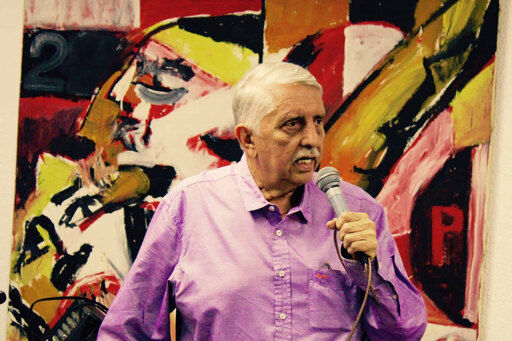
This article by León Enrique Ávila and Agustín Ávila originally appeared in the April 18, 2026 edition of La Jornada, Mexico’s premier left wing daily newspaper.
In memoriam
Enrique Ávila Carrillo (1946–2025)
On April 8, 2025, Enrique Ávila Carrillo, a retired professor from the Higher Normal School of Mexico (ENSM) and mentor to hundreds of teachers at that institution and at the Normal School of Tepic, Nayarit, passed away. With his death, the democratic Mexican teaching movement loses one of its most committed intellectuals: a historian who never wrote for university library shelves, but rather for secondary school classrooms, Indigenous communities, and labour unions in struggle.
From a young age, he worked under the tutelage of historian Agustín Cué Cánovas, a key figure in 20th-century Mexican critical historiography, and compiled an anthology of his contributions on historical methodology and the role of the popular classes in nation-building. This training served as the intellectual compass that guided his work: a history written from below, with the oppressed as protagonists.
This stance led him to question the dominant paradigms of “revolutionary nationalism” as taught in Mexican public schools. Ávila Carrillo denounced this official narrative for constructing a pantheon of heroes and founding fathers who, in historical reality, had fought against each other, their contradictions and conflicts carefully erased in favor of a monolithic image of the nation. In contrast to this hegemonic canon, he chose to reclaim the forgotten, the marginalized, the invisible.
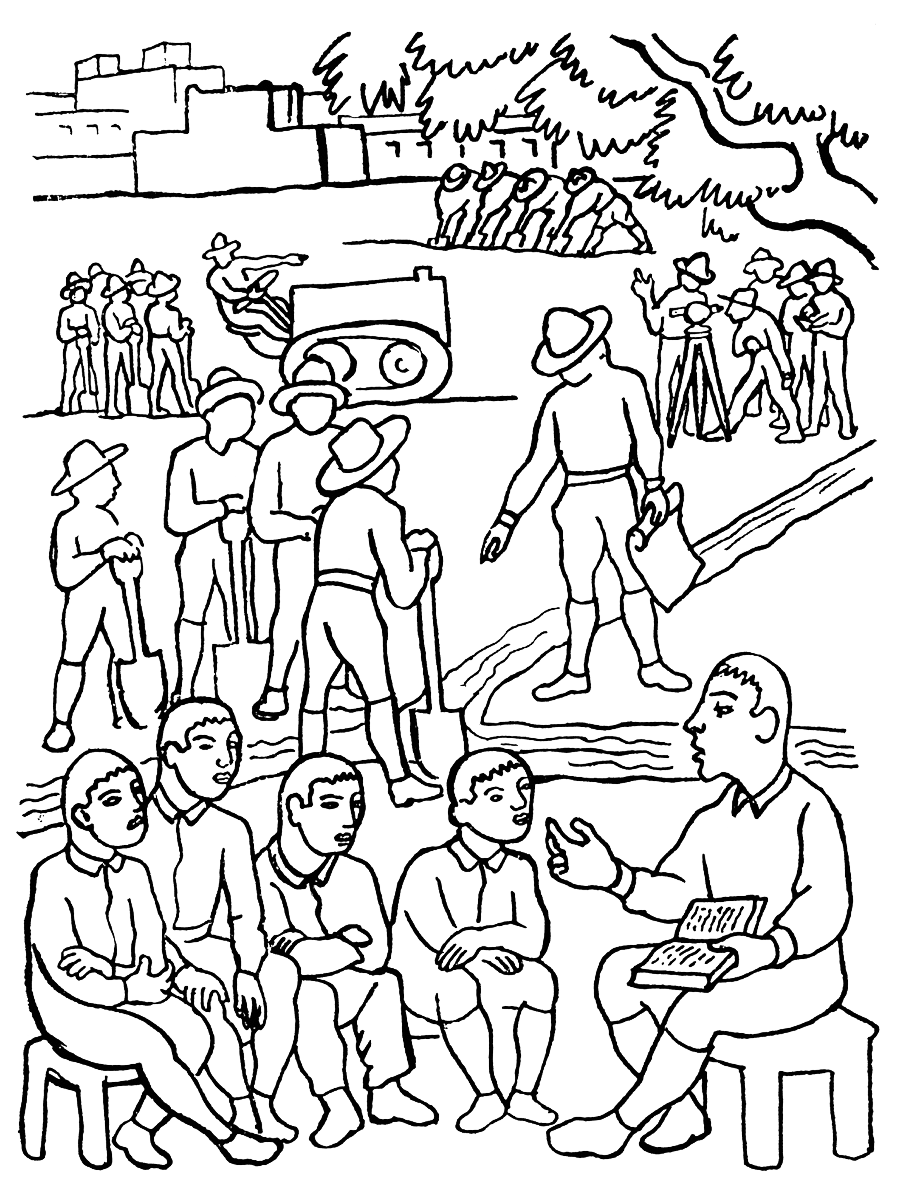
This task led to his work, Calendario cívico escolar y algunas fecha olvidadas (The School Civic Calendar and Some Forgotten Dates), where he recovered commemorations suppressed by the official narrative and restored the centrality of the plebeian sectors in the formation of the Mexican nation. He also addressed what he called the “false end” of Independence, a thesis he developed in two major works: Revolución de independencia: a 200 años de su inicio (Revolution of Independence: 200 Years After Its Beginning) and México por su historia: de los orígenes a la Independencia (Mexico Through Its History: From the Origins to Independence). His biographies of Miguel Hidalgo and José María Morelos completed this cycle: by demystifying the two insurgent leaders, showing their limitations and contradictions, he placed at the center the armies of the “barefoot” who made Independence possible with their bodies and blood.
During the PRI regime, Ávila Carrillo championed the popular student movement of 1968, of which he was a member of the National Strike Council, representing the ENSM (National School of Music), and was arrested in the Plaza de las Tres Culturas on October 2nd. In commemoration of the massacre, he coordinated the collective volume 1968: Fifty Years of Repression, Dispossession, and Resistance, a historical testimony that reconstructs the movement through the voices of its protagonists.
One of his central concerns was the systematization of the teachers’ union history. This led him to write History of the Teachers’ Movement (1910-1989): Democracy and Wages, a work in which he traced the role of teachers in the Mexican Revolution, and which is now an essential reference for understanding the political history of Mexican public education.
His historiographical work was inseparable from his political practice. Teaching at the secondary level and at the ENSM led him to promote democratization processes within the union and to participate in the founding of the National Coordinator of Education Workers (CNTE) in Tuxtla Gutiérrez, Chiapas, in 1979. The CNTE would become, from then on, the main space for organized teacher dissent against the corrupt union leadership.
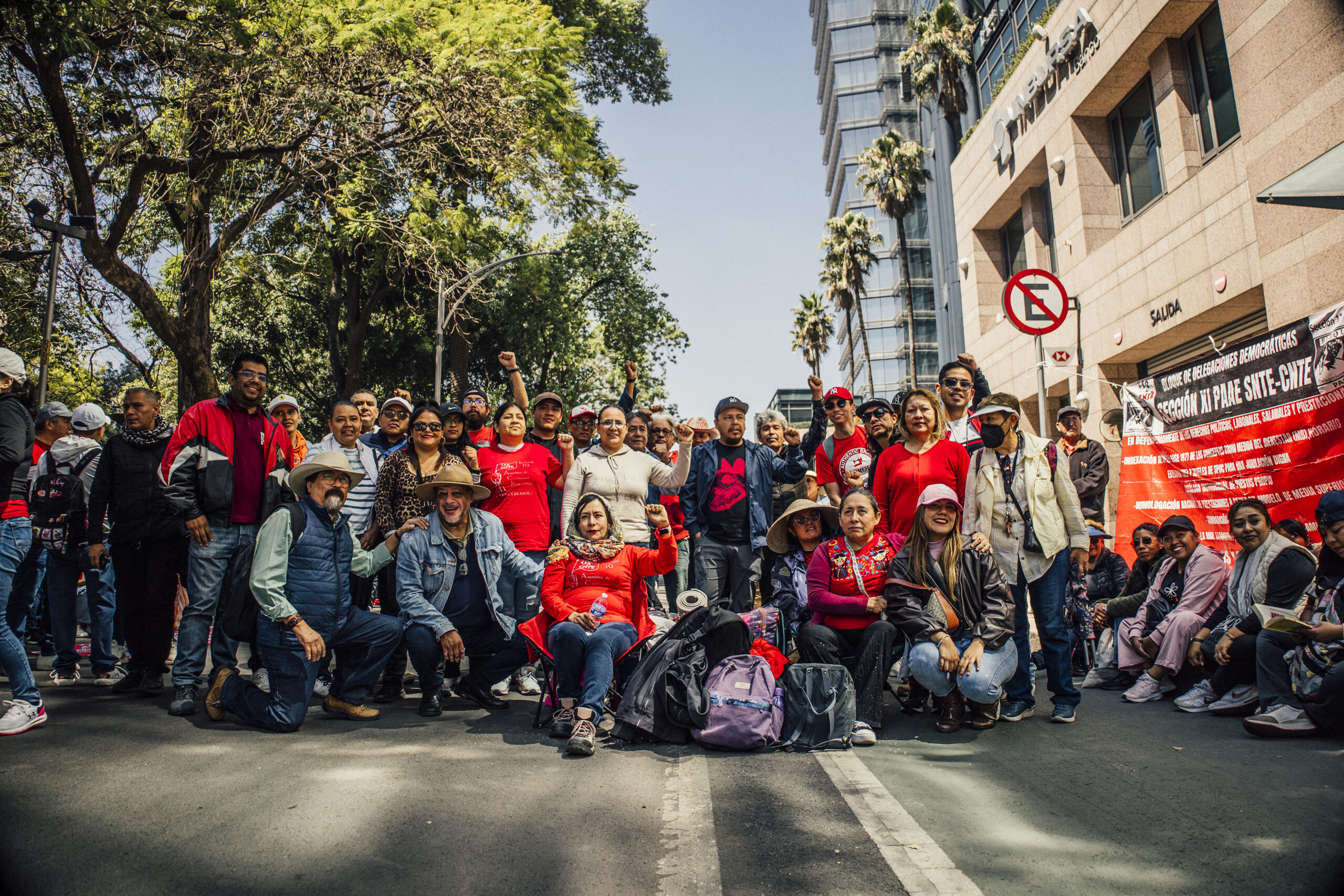
CNTE teachers on strike, March 20, 2026 in Mexico City Photo: Jay Watts
The teachers’ uprising of 1989 found him on the front lines. His participation as a leader of the CNTE (National Coordinator of Education Workers) in negotiations with the Salinas administration gave him access to the decision-making processes of that crucial period. The government, however, vetoed his nomination as general secretary of Section X of the SNTE (National Union of Education Workers), despite his having the support of the vast majority of the delegations. At the end of the Salinas administration (1988-1994), Ávila Carrillo embraced the Zapatista cause. He spearheaded the efforts of the democratic teachers’ movement in support of the EZLN (Zapatista Army of National Liberation) and participated in educational initiatives in communities in resistance. Until the end of his life, he stood alongside the collective of teachers who trained new generations in critical thinking, confronting the paradigm of educational privatization and the imposition of free-market values in public schools.
His textbook, History of Mexico (1910-1934), served as a foundation for millions of high school students. He was a dedicated and committed teacher, publishing to educate generations with a vocation for social transformation. He didn’t confine himself to university lecture halls; he traveled to schools in working-class neighborhoods and indigenous communities throughout the country, giving lectures and talks with the humor and engaging style of someone who knows that history is spoken, not recited. He declined nominations for awards and membership in the National System of Researchers because his place was in the classrooms and on the streets, not in the bureaucratic records of official science.
His work demonstrates that history is built from the perspective of the marginalized, in the everyday and the collective. His legacy lives on in the mountains of Chiapas, in classrooms, and in the consciousness of those who learned from him that teacher training is fundamental to the nation.
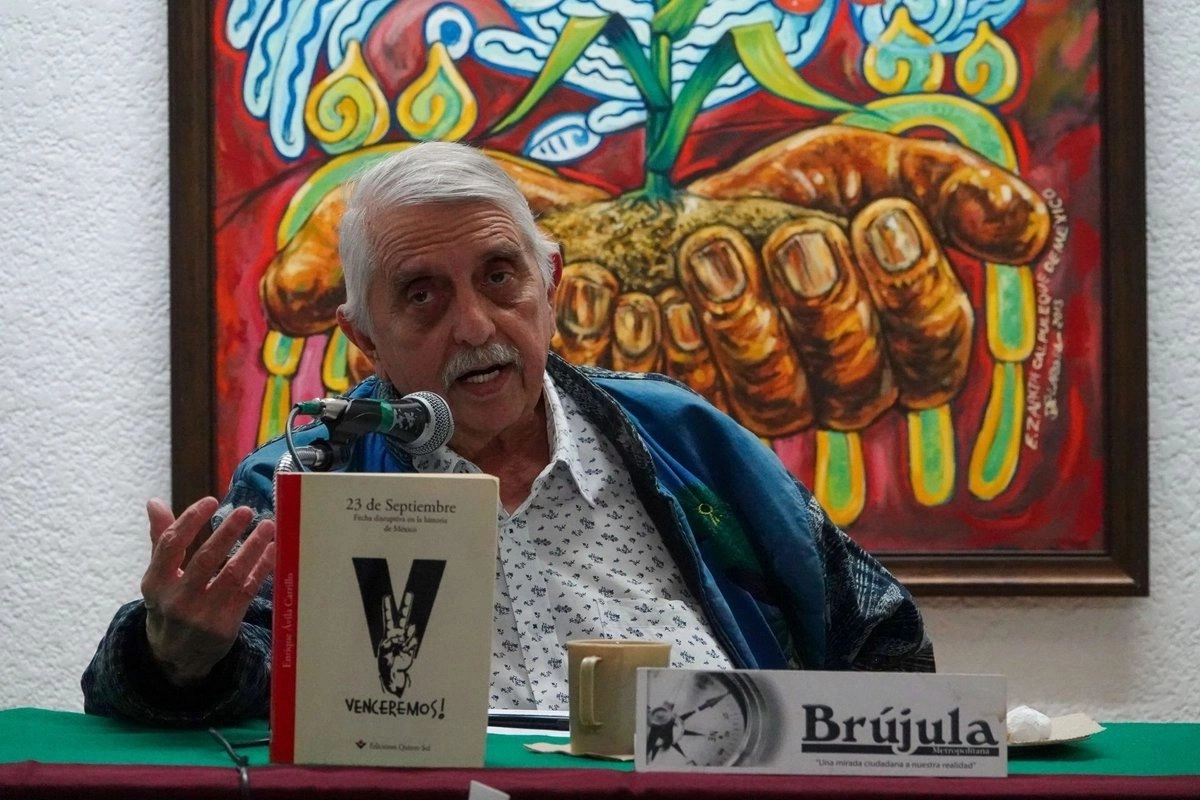
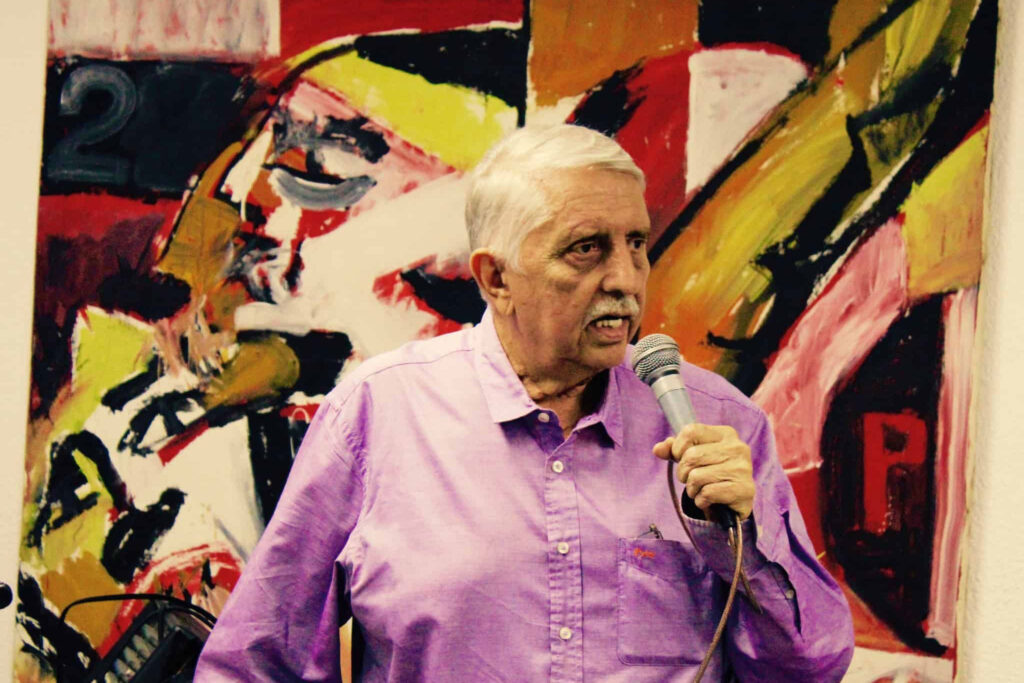
Enrique Ávila Carrillo, a retired professor from the Higher Normal School of Mexico (ENSM) and mentor to hundreds of teachers at that institution and at the Normal School of Tepic, Nayarit, passed away on April 8, 2025. Photo: Cuartoscuro
-
Teaching History in Mexico & Its Importance in the Teachers Movement
April 18, 2026April 18, 2026
With the passing of Enrique Ávila Carrillo, one of the founders of the CNTE, the democratic Mexican teaching movement loses one of its most committed intellectuals.
-
President Sheinbaum’s Address to Barcelona Summit in Defense of Democracy
April 18, 2026April 18, 2026
Remarks delivered by the Mexican President in Spain on Saturday, April 18th.
-
CDMX’ Brugada Confirms Problems with Metro, Allocates 50 Billion MXN for Rehabilitation
April 17, 2026April 17, 2026
Mexico City’s head of government emphasized that the metro is the “heart of mobility”, & therefore requires not only maintenance, but complete renovation.
The post Teaching History in Mexico & Its Importance in the Teachers Movement appeared first on Mexico Solidarity Media.
From Mexico Solidarity Media via This RSS Feed.