

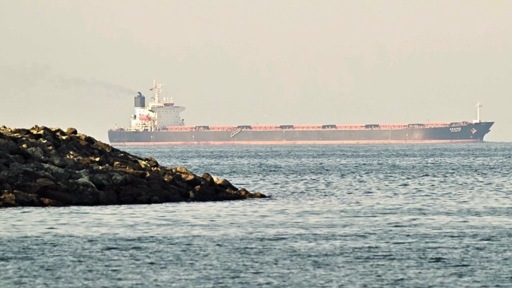
On Friday, April 17, Iran announced the opening of the Strait of Hormuz for all commercial ships for the remaining period of the two-week-long ceasefire with the US, a day after a ceasefire deal was achieved in Lebanon.
On Thursday, US President Donald Trump had announced that a ceasefire deal was finalized between Israel and Lebanon. According to the deal, Israel and Hezbollah will cease all hostilities against each other for the next ten days, in order to allow the two states to make a final ceasefire agreement.
Iran’s foreign minister, Abbas Araghchi, quoting the Lebanese deal, confirmed that “the passage for all commercial vessels through the Strait of Hormuz is completely open for the remaining period of the ceasefire.”
He, however, also made it clear that all such movements will be coordinated through the routes already announced by the Port and Maritime organization of Iran.
Iran has also clarified that free transit through the Strait of Hormuz does not apply to military vessels.
A defensive move
Iran had imposed a blockade on the Strait of Hormuz in the first week of March, in response to US-Israeli attacks on the country, which began on February 28. Iran had claimed it was a necessary defensive move.
Read more: Over 3,700 killed in US and Israeli attacks on Iran
The strait is crucial for the navigation of more than a quarter of the world’s energy resources, and thus the Iranian move sent shockwaves in the global economy. Later, Iran clarified that except for the US and its allies, the strait was open for all, in exchange for a transit fee, also proposing an arrangement for its management even after the war ended.
The US had objected to any Iranian control over navigation through the Strait of Hormuz and was leading the calls for international military action to “re-open” the strait, with no real results.
After the US accepted Iran’s 10 points and agreed to a temporary ceasefire for two weeks on April 8, it was hoped that an understanding on the strait would also be reached. It was widely speculated that Iran would open the strait for the period of the talks.
However, after Israel failed to adhere to the conditions of the temporary ceasefire, escalated its bombings in Lebanon, killing more than 300 people in one day on April 8, and remained defiant to the calls for ceasefire, Iran announced it would not open the strait as long as Israel continues to bomb Lebanon.
Iran had claimed that a comprehensive regional peace on all fronts, including Lebanon, was one of the fundamental principles of its 10-point proposal, accepted by the US. Following Iran’s refusal to open the strait over Israeli bombings in Lebanon and the failure of the first round of talks in Islamabad, the US announced a counter-naval blockade of Iran on Monday.
Chances of peace in the region improve
Following Iran’s announcement of the opening of the Strait of Hormuz, the international price of oil fell dramatically, even below the USD 100 per barrel mark around which it was trading at the beginning of the war.
The opening of the strait will allow countries in the Persian Gulf to freely export their energy products which will ease the energy crisis felt by several countries in Asia in the last month.
This may further strengthen the chances of peace in the region, as both Iran and the US have given indications of a possible second round of peace talks, soon after the first round of talks held last weekend ended abruptly without any concrete progress.
Read more: Talks in Islamabad failed because of Washington’s maximalist approach, Iran claims
However, it is widely speculated that the fate of the peace in the region largely depends on Israel.
Even on Friday, when Trump claimed Israel will not bomb Lebanon any longer, as has been the Iranian condition for any further talks, Israeli Prime Minister Benjamin Netanyahu repeated his threats to attack Lebanon on Thursday, claiming his country is yet to finish its “job” there.
Al-Jazeera reported that at least one Lebanese citizen was killed in an Israeli drone strike on Friday, a day after the ceasefire was announced.
The post Iran fully opens Strait of Hormuz following ceasefire deal in Lebanon appeared first on Peoples Dispatch.
From Peoples Dispatch via This RSS Feed.