

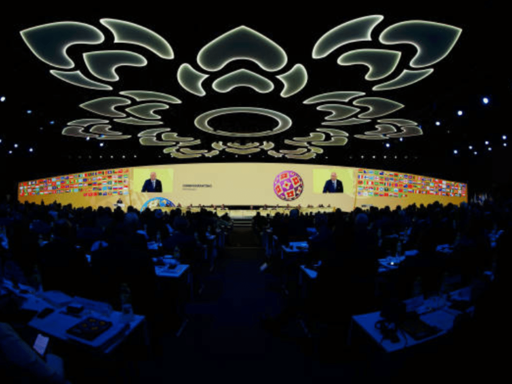

In a development that puts FIFA in a difficult position ahead of the 2026 World Cup, three senior officials from the Palestinian Football Association were barred from entering Canada after their visa applications to attend the FIFA Congress, scheduled to be held in Vancouver on April 30, were rejected.
The decision includes the president of the Palestinian Football Association, Jibril Rajoub, along with the secretary-general and the head of the legal department. This has prompted the association to request FIFA’s intervention with the Canadian authorities.
The FIFA Congress is not merely an administrative meeting; it represents the only official platform where national associations have the right to directly influence global football policies. Therefore, the absence of any association from it effectively constitutes exclusion from the decision-making process.
FIFA can’t keep ignoring Palestine
According to the Guardian, the Palestinian delegation was not only seeking to attend but also intended to raise a sensitive issue concerning the participation of Israeli clubs in competitions held in areas Palestinians consider occupied territory in the West Bank.
Last March, FIFA issued a report concluding that “no action should be taken,” justifying this by stating that the legal status of the West Bank is “complex and unresolved.” This decision sparked widespread criticism.
The Palestinian Football Association was expected to respond to this decision within the FIFA Congress, with the possibility of later escalating the issue to the Court of Arbitration for Sport.
Legitimate Questions
According to the source, Canadian authorities maintain that visa applications are reviewed individually according to immigration standards, without discrimination.
However, the timing of the decision, and the nature of the issue that was to be raised, open the door to broader questions regarding the world’s reaction to Israel’s genocide in Palestine.
The absence of the Palestinian delegation raises important questions about the deliberate attempt to reduce pressure on the issue of Israeli clubs and FIFA’s apparent indifference despite being aware of the repercussions of the absence of one of its members.
Did someone intervene?
In this context, a growing belief emerges in media and human rights circles that Israel may be the primary beneficiary of the absence of a Palestinian proposal, reinforcing suspicions about the possibility of indirect political pressure.
FIFA, for its part, may also benefit from avoiding the reopening of a thorny issue it had previously chosen to close.
Between benefit and decision, the scope of doubt and questions widens: was there covert intervention—direct or indirect—to ensure this issue never reached the discussion stage?
This question has yet to receive a definitive answer, but for those of us who have seen widespread suppression, censorship, and erasure of everything involving Palestine, the answer is obvious.
FIFA under scrutiny
This incident comes at a time when the challenges facing the 2026 World Cup are increasing. This tournament will be held for the first time in three countries with 48 participating teams. However, there remain serious questions over US president Donald Trump’s campaign of using a militia – ICE – to terrorise, detain, and deport people.
Despite FIFA President Gianni Infantino’s assurances that “everyone will be welcome,” reality reveals a gap between rhetoric and implementation.
Featured image via the Canary
By Alaa Shamali
From Canary via This RSS Feed.