

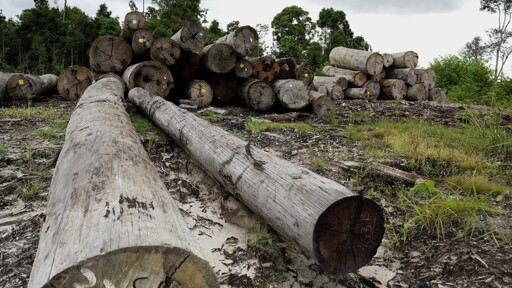
JAKARTA — Several European timber firms have cut ties with suppliers linked to deforestation in Indonesia following a 2025 investigation, suggesting that an upcoming European Union regulation is already influencing behavior ahead of its implementation at the end of 2026. Still, new trade data show imports from high-risk suppliers continued in 2025, raising concerns that timber linked to forest clearance may still be entering EU supply chains. In their 2025 investigation, U.K.-based NGO Earthsight and its Indonesian partner, Auriga Nusantara, traced timber from recently cleared forests in Indonesian Borneo to European importers, using government documents, satellite imagery and trade records. Analyzing nearly 10,000 unpublished documents submitted to Indonesian authorities, the investigators identified cases where timber produced through forest clearance had entered European supply chains in some cases. The findings showed that the top five users of deforestation-linked wood in Indonesia in 2024 all exported products to the EU. Their main European customers were companies in the Netherlands, Belgium and Germany, which together ordered more than 23,000 cubic meters (812,200 cubic feet) of wood products that year, including plywood, decking and door frames. While only some shipments could be directly verified, the investigation pointed to a wider risk that timber linked to deforestation is entering EU markets through opaque supply chains. But despite these findings, the investigation has already prompted changes among some of the companies involved, with several cutting ties with the suppliers named in the report. Under the EU’s new antideforestation regulation, the EUDR, set to come into force…This article was originally published on Mongabay
From Conservation news via This RSS Feed.