

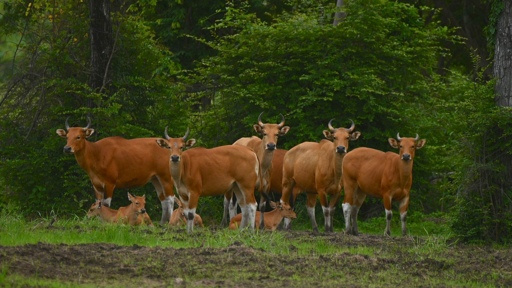
The critically endangered banteng is making a comeback in Thailand’s Huai Kha Khaeng Wildlife Sanctuary, and has become a unique community-led conservation icon, reports Mongabay’s Carolyn Cowan. Thailand’s population of banteng (Bos javanicus), one of the world’s rarest wild cattle species, was once reduced to just a few hundred individuals due to decades of deforestation, agricultural expansion and hunting. However, habitat protection and reduced poaching pressure, widely credited to the implementation of SMART (Spatial Monitoring And Reporting Tool) ranger patrols, have helped the banteng population in Huai Kha Khaeng double over the past 20 years. With an estimated population of at least 1,400 individuals today, the sanctuary is now recognized as home to the largest banteng population in Southeast Asia. The successful recovery has prompted several herds to naturally disperse from the protected area into surrounding buffer zones. This expansion initially caused concern over the potential for human-wildlife conflict, as the wild cattle entered lands used by local communities for farming and livestock grazing. Villagers faced crop damage, while the banteng faced the risk of poaching in areas with limited law enforcement. To address these challenges, residents of Rabam subdistrict, among the most affected by banteng presence, established a community-based ecotourism initiative in 2021 that focused on banteng-watching tours. The project has since transformed the species into a vital financial and cultural asset for the community. Today, more than 320 residents from 19 villages participate in the program, which includes wildlife watching, boat tours, and traditional cultural activities. For many…This article was originally published on Mongabay
From Conservation news via This RSS Feed.