

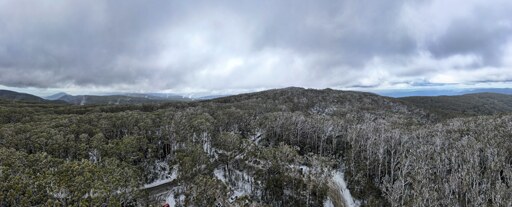
The Australian government recently listed the iconic alpine ash forests of mainland Australia as an endangered ecological community, citing ongoing threats from increasingly severe, frequent bushfires and climate change. While conservationists supported this decision, members of the timber and forestry industry questioned the move. Alpine ash forests occur on high country slopes in the states of Victoria and New South Wales and the Australian Capital Territory, at elevations of 900-1,500 meters (about 3,000-5,000 feet). These culturally significant forests sit within the traditional lands of many First Nations peoples. Alpine ash (Eucalyptus delegatensis), a tall eucalypt with menthol-scented leaves, dominates these forests. Alpine ash forests also support a rich community of other plants and animals, including lyrebirds and spotted-tailed quolls. The hollows of old-growth trees are important habitat for the critically endangered Leadbeater’s possum (Gymnobelideus leadbeateri). A spokesperson for the Department of Climate Change, Energy, the Environment and Water (DCCEEW) told Mongabay by email that the listing followed a “thorough assessment by the national Threatened Species Scientific Committee,” which “included a public consultation process and substantial input from many forest experts.” The spokesperson said proponents of activities that may significantly harm alpine ash forests will now need to fully avoid impacts on the forests or demonstrate “a net gain,” meaning environmental benefits outweigh the damage. This will lead to stricter assessments. The Victorian National Parks Association called the listing “an important step.” Forest and fire scientists writing in The Conversation said alpine ash is “facing an existential threat” and the listing…This article was originally published on Mongabay
From Conservation news via This RSS Feed.