

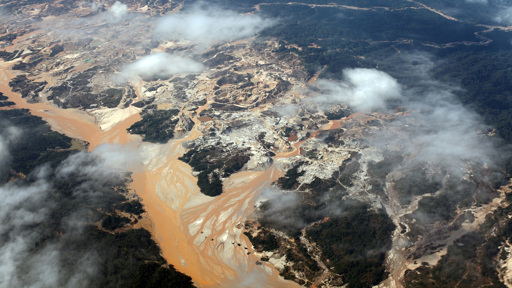
The Amazon is approaching a dangerous threshold. Long understood as the world’s largest tropical forest and a critical regulator of the global climate, its future is increasingly shaped by the convergence of organized crime and environmental crime. This nexus is accelerating deforestation and degradation, worsening fire risk, undermining governance, and weakening the economic foundations needed to sustain the region. Approaching a tipping point For decades, debate over the Amazon has centered on land-use change driven by agricultural expansion and cattle ranching. These pressures remain decisive. The advance of soy cultivation and pasture continues to fragment forests and disrupt rainfall cycles. When deforestation and degradation interact with climate change and fire, many scientists warn that parts of the Amazon—especially in the eastern and southern basin—could move toward an irreversible transition to a far more degraded, savannah-like state. A widely cited body of research suggests that such a tipping dynamic may emerge when deforestation reaches roughly 20 to 25 percent in some parts of the basin, especially when compounded by rising temperatures, drought, and recurrent fire. About 14–17% of the Amazon has been cleared, depending on definition and geography. The broader scientific message is clear: continued forest loss and degradation sharply increase the likelihood of large-scale ecological disruption. Many scientists warn that parts of the Amazon, especially the eastern and southern basin, are approaching dangerous thresholds once deforestation, degradation, fire and warming are considered together. Large-scale degraded areas scorched by fires, stripped by logging and desiccated by drought add a further layer of fragility that headline deforestation figures do not fully capture.…This article was originally published on Mongabay
From Conservation news via This RSS Feed.