

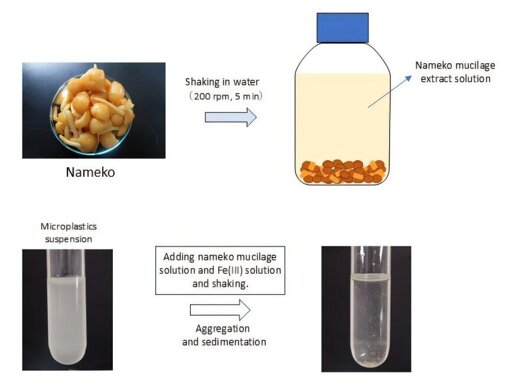
Microplastics and nanoplastics are tiny plastic particles that result from the breakdown of larger plastic products due to sunlight, waves, and other environmental conditions. In recent years, these particles have been increasingly detected in aquatic environments, raising concerns about their potential harmful effects on aquatic life and ecosystems. Even though awareness of this issue is growing, there is still no safe, practical, and established method to filter these particles from polluted water.
From Earth News - Earth Science News, Earth Science, Climate Change via This RSS Feed.
Additionally, the residues (flocs) resulting from the treatment are also biodegradable, which minimizes the overall environmental impact.
The flocs would contain those micro/nanoplastics tho. No?
That is correct, the article only states in the Conclusion section that the nameko mucilage solution (NMS) is biodegradable, but good as it doesn’t add additional pollution in the process. So the flocs, the plastics removed with NMS, would not be, the article makes it kind of ambiguous.
The NMS residue can be biologically decomposed. Therefore, the environmental impact is very low.
