

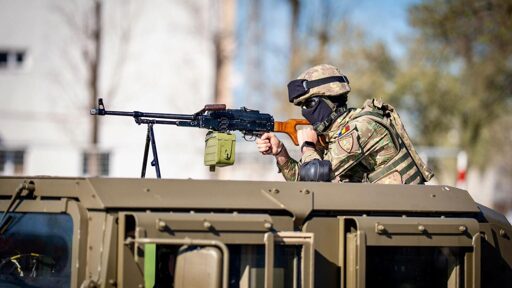
What does it actually mean to be secure? Is it the presence of armies, weapons, and fortified borders; or perhaps, rather, the assurance that one can access basic needs and live without fear of deprivation or violence? And whose security is really prioritized when states invest in military power, all while large parts of their populations remain exposed to economic, social, and environmental insecurity?
Militarized security narrows what counts as a threat to that which can be met with force. It prioritizes borders over bodies, and geopolitical competition over the everyday realities of human vulnerability. The result is a profound distortion: states prepare for war while neglecting the conditions that make life insecure in the first place.
For most people, insecurity does not come from invasion. It comes from failing public services; from economic and environmental crises; from political instability and institutional corruption. These are not peripheral concerns; they are the primary sources of vulnerability in contemporary societies. Insecurity is neither an external shock, nor something that just happens to societies. It is built into them.
Yet across Europe, as societies are increasingly structured by inequality, deprivation, and exclusion, public resources continue to flow into military expansion: new weapons systems, increased defense budgets, and strategic positioning, all while infrastructures which actually sustain life remain underfunded. This is not a mere misallocation of resources; it is a political choice with dire consequences.
Insecurity is produced, not accidental
When people lack access to effective public services, income, healthcare, housing, or education, they are not simply “at risk”. They are subjected to structural forms of violence that erode social cohesion, stability, and trust in public institutions.
In deeply unequal societies, as these conditions accumulate and grievances intensify, individual hardship metamorphosizes into collective resentment. If weak or exclusionary institutions fail to mediate tensions or provide credible avenues for redress, insecurity becomes politically combustible. Under these conditions, political actors can strategically mobilize, redirect, and weaponize insecurity by framing it along identity lines. Latent discontent becomes an organized conflict, embedded in regional and global dynamics, as local tensions become entangled with cross-border flows of resources, narratives, and support. In this way, insecurity is not merely a background condition but a central driver of conflict escalation, linking local grievances to wider systems of power and intervention.
Militarized responses do not interrupt this process. They deepen it.
The machinery of violence
Militarism does not simply respond to conflict; it sustains and intensifies its dynamics.
The production and export of arms increase the likelihood and lethality of violence. External military support prolongs wars, entrenches asymmetries of power, and reduces incentives for negotiating solutions. Conflict becomes not an exception, but an outcome embedded in the system itself.
At the same time, the language of “security” legitimizes extraordinary measures: the expansion of executive power, surveillance, repression, and the erosion of civil liberties – all of which normalize hierarchy, obedience, and the use of coercion. It also labels entire populations as threats, justifying violence and exclusion in the name of protection. Culturally, it reinforces masculinized notions of protection and marginalizes alternative forms of security which are rooted in care and social provision, all while fundamentally failing to address the defining challenges of our time. Climate change, pandemics, and global inequality are not military problems and cannot be resolved through force. Yet they are increasingly framed in security terms. The result? A harmful mismatch between the tools of militarized security and the nature of the threats societies face, plagued with ineffective responses. At best, they deepen the insecurities they fail to address. At worst, they create new insecurities.
By prioritizing force over structural prevention, competition over cooperation, and coercive state power over human well-being, militarism generates the very insecurities it claims to manage. If insecurity arises primarily from unmet needs, inequality, and institutional failure, then military force alone cannot provide lasting safety. Instead, durable security must be built through social systems that reduce vulnerability, enhance resilience, and expand human capabilities.
A different starting point
Human security begins from a different premise: that the measure of security is not the strength of the state, but the conditions of people’s lives.
First articulated by the United Nations Development Program, this framework shifts the focus from the mere absence of external threats to the dignity and well-being of individuals. Security is, in other words, freedom from both fear and want. It is the presence of enabling conditions that allow individuals and communities to flourish. In practice, security manifests as social welfare systems such as healthcare, pensions and unemployment benefits, housing support, and education. Universal healthcare protects against illness and pandemics. Income support cushions economic shocks. Housing and public services provide stability. Education expands life opportunities. Together, welfare institutions fundamentally (re)shape levels of risk, inequality, and social cohesion.
These are the foundations of resilience. Where such systems are strong, societies are better able to withstand crises without descending into instability. Where they are weak, insecurity spreads; and with it, so does the risk of conflict. The choice between militarization and social investment, therefore, is not merely economic, but a crucial indicator of what kind of security is being built and, perhaps more importantly, for whom.
Security without militarism
The most effective way to keep people safe is not to prepare for war, but to ensure that everyone, both within and beyond the nation state, has the means to live with dignity. Only by addressing the structural determinants of insecurity – poverty, inequality, exclusion – can a society truly build a sustainable foundation for security, resilience, justice, and peace. Human security demands that states move beyond managing external crises toward transforming the internal conditions that produce them, recognizing that lasting security can only be built through justice, accountability, and the sustained prioritization of human wellbeing. And since security is to be understood as the protection of human life and dignity, then policies that enable harm – whether through action or omission – cannot be reconciled with that objective, either at home or abroad.
Reframing security in human terms is not only a theoretical exercise; it is already being enacted through political struggle and collective action. Nowhere are the failures and contradictions of militarized security more starkly visible than in contexts where it is most violently applied.
When viewed through the lens of human and social security, the ongoing violence against Palestinians exposes the profound limitations and moral contradictions of militarized security paradigms. The genocide against Palestinians is not only a humanitarian catastrophe; it is also the product of a security framework that prioritizes state power, military dominance, and geopolitical alliances over life, dignity, and human rights. Rather than producing safety, this model of security systematically generates destruction, dispossession, and enduring insecurity for those it renders expendable.
It is precisely at this level that campaigns such as Elbit Out! intervene. By challenging the presence and operations of Israeli arms company Elbit Systems and its subsidiaries in Romania, the Elbit Out! campaign exposes the material infrastructures through which insecurity is produced and sustained. In doing so, it embodies a human security approach in practice: refusing complicity in creating insecurity, demanding accountability, and insisting that security anywhere cannot be built on the destruction of others elsewhere.
On May 9-10, in Bucharest, the campaign will bring together Palestinian solidarity activists, anti-militarist researchers, grassroots organizers, and investigative journalists to foreground human security, international law, and nonviolent resistance at the “From Palestine to the Black Sea: A Counter-Conference for Peace and Human Security.” Organized in response to the Black Sea Defense and Aerospace Conference, which is expected to host leading Israeli arms companies, the Counter-Conference seeks to reimagine and rebuild security through collective action.
After all, if security is to mean anything, it must be built on care, justice, and solidarity – not force. And that means choosing, collectively, to build it differently.
You can learn more and support the Elbit Out! Campaign here.
Alexandra Uibariu is a political and criminal criminologist with over a decade of experience investigating and exposing state criminality, repression and violence. She is a member of the Palestine Solidarity Cluj-Napoca collective and contributor to the Elbit Out! Campaign in Romania.
The post Rethinking (in)security: security for people, not states appeared first on Peoples Dispatch.
From Peoples Dispatch via This RSS Feed.