

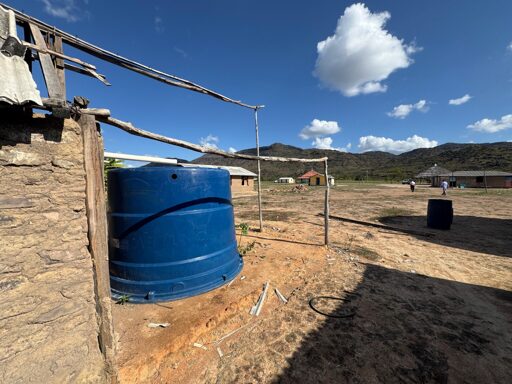
RAPOSA SERRA DO SOL, Brazil — Turned upside down on the dirt floor, next to an artisanal flour mill, a huge water tank catches the eye of those passing through the Bem Viver community, in the Raposa Serra do Sol Indigenous Territory, located 300 kilometers (186 miles) from Roraima’s state capital Boa Vista. Under the sun and rain, in the open air, the dusty object conveys an urgent message: Instead of storing drinking water for the Bem Viver (an Indigenous concept of ‘living well’ lifestyle prevalent in Latin America) village population, the 5,000-liter (1,320-gallon) container has remained unused for almost two years. The reservoir was provided to the community by the East Roraima Special Indigenous Sanitation District (DSEI in Portuguese), the managing unit of the federal government’s Indigenous Health Care Subsystem (SASISUS). It has not received a single drop of water — because it has not even been installed yet. Unable to use it, local residents were forced to devise an alternative plan: The mission consists of collecting water from a nearby waterfall connected to the village through an improvised network of pipes approximately 700 meters (2,296 feet) long. While the connection provides some water, it is consumed without proper treatment. At the same time, the thin and fragile pipes suffer from daily obstructions, almost always caused by the accumulation of leaves and debris. Improvised piping system for collecting water from a waterfall at the Bem Viver community in Raposa Serra do Sol, Roraima. Image by Felipe Medeiros. According to…This article was originally published on Mongabay
From Conservation news via This RSS Feed.