

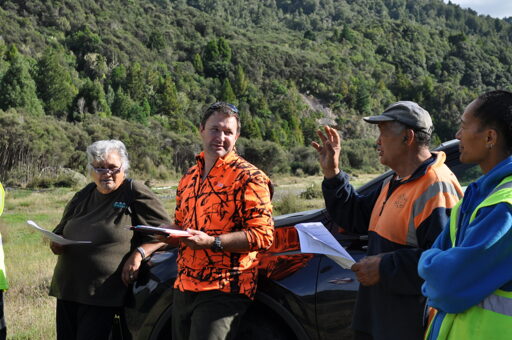
RAGLAN, Aotearoa New Zealand — Imagine a forest floor so thick with juicy, crunchy purple tawa (Beilschmiedia tawa) fruit in summertime that you can’t cross it without skidding and falling. Birds so fat with toromiro (Pectinopitys ferruginea) berries that they explode when you shoot them. Pigs that don’t bother to dig in the ground because there’s so much food on top of it for the taking. For elder Māori of the Tūhoe Tuawhenua and Ngāti Whare iwi (tribal groups) in Aotearoa New Zealand’s North Island, such phenomena used to be commonplace. But they’re now a distant memory. The fruits of the Te Urewera and Whirinaki forests used to set, ripen and drop with rhythmic regularity, and people who lived there were attuned to those beats and their impact across the food chain. In the past three decades, those patterns have started to falter. Over a decades-long engagement process, an Indigenous-led team of researchers has drawn on mātauranga Māori (Māori knowledge) to document and understand changes in these forests across the last 75 years. Their new study tracks, for the first time, fruiting changes in line with shifting climatic patterns in the country. Elders and scientists show how relatively subtle shifts like the timing of fruit ripening can cascade through such diverse issues as soil health, food systems and culture. Image by Jacqui Geux via iNaturalist (CC BY 4.0). The kererū, also known as the New Zealand pigeon (Hemiphaga novaeseelandiae). Image courtesy of Phil Lyver. “The forest itself has signaled change,…This article was originally published on Mongabay
From Conservation news via This RSS Feed.