

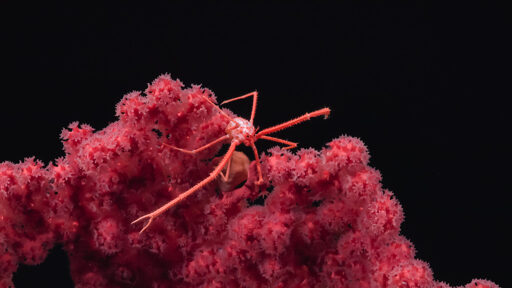
When I set sail on the MV NorSky in the summer of 2008 to probe the depths of Manus Basin off the coast of Papua New Guinea, I believed in the promise of deep-sea mining. As an early-career deep-sea ecologist, I was swayed by arguments in favor of this emerging industry. It offered a new way to obtain the metals needed for the renewable energy revolution, one allegedly free of the human rights and environmental abuses of terrestrial mining. The company was Nautilus Minerals, and the plan was to mine an active hydrothermal vent field called Solwara I. What is a hydrothermal vent and why would anyone want to mine one? When seawater is drawn down into the earth and heated under enormous pressure, it rises through cracks in the crust, erupting from the seafloor in metal-rich plumes. Those metals are deposited on the walls of a growing chimney. Deep-sea miners call this structure a seafloor massive sulfide. They can be rich in gold and silver, as well as copper, zinc, lead and rare earth elements. By most estimates, Solwara I is among the most valuable seafloor massive sulfides ever discovered. And it is not only rich in metals, it is rich with life. The dumbo octopus is a species only found in the deep sea. Image courtesy of the NOAA Office of Ocean Exploration and Research. The communities that grow around hydrothermal vents depend on the chemical energy of the vent plume. The geological process that deposits metals also…This article was originally published on Mongabay
From Conservation news via This RSS Feed.