

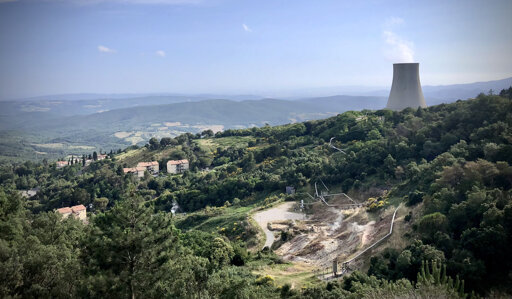
How can magma buried 5, 10, or even 15 km underground be detected without any surface indicators? The answer lies in ambient noise tomography, a technique that analyzes natural ground vibrations with high precision. A team from the University of Geneva (UNIGE), the Institute of Geosciences and Earth Resources (CNR-IGG), and the National Institute of Geophysics and Volcanology (INGV) has identified a vast reservoir containing approximately 6,000 km3 of magma beneath Tuscany.
From Earth News - Earth Science News, Earth Science, Climate Change via This RSS Feed.
You must log in or # to comment.