

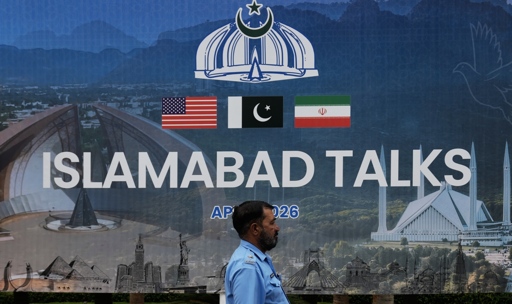
The failure of talks between the United States and Iran in Islamabad opened a new phase, marked by escalation and continued communication channels between Tehran and Washington. After more than twenty hours of fruitless negotiations, Washington’s response was to initiate a naval blockade aimed at restricting Iranian oil traffic through the Strait of Hormuz and its access routes in the Persian Gulf and the Gulf of Oman.
Why Negotiations Failed
The collapse of negotiations in Islamabad was not the result of minor disagreements, but rather a structural incompatibility between the positions of Washington and Tehran.
Three key issues blocked any sort of progress.
First, control of the Strait of Hormuz. For Iran, it is not only a strategic asset, but also the material guarantee of any future agreement. Accumulated experience — and deep distrust of the United States, especially under the Trump administration — has led Tehran to prioritize mechanisms of effective power over formal commitments.
Second, the nuclear program. Washington insisted on maximalist conditions: the complete elimination of enriched material, a ban on new activities for years — even decades — and an end to enrichment within Iran. For Tehran, this amounts to capitulation.
Third, the regional framework. Iran rejects piecemeal agreements and maintains that any understanding must encompass the entire region, including Lebanon and its relationship with Israel. The United States, on the other hand, seeks to compartmentalize conflicts and extract specific concessions.
Ultimately, the disagreement also centers on the timeline of the agreement. Washington demands immediate concessions in exchange for gradual relief; Tehran demands simultaneous reciprocity. This asymmetry makes any compromise unfeasible.
From the Iranian perspective, the United States is attempting to achieve through diplomacy what it failed to achieve militarily. This perception reinforces the refusal to concede on issues considered strategic.
Trump’s Strategic Impasse
For the moment, the military approach has exposed clear limitations. After weeks of intensive bombing by the United States and Israel, it failed to destroy Iran’s key capabilities or decisively alter the strategic balance of forces. The idea of forcing regime change through air superiority once again proved ineffective.
The diplomatic approach, in its first attempt, was blocked by the very conditions imposed by Washington, many of them aligned with the hardline positions of the Israeli government.
The result is an impasse: escalation entails increasing risks; retreating means admitting failure.
In this context, the ongoing naval blockade appears as an intermediate solution. Its logic is clear: to increase the cost to the Iranian regime without — yet — crossing the threshold of renewed direct confrontation. But its viability is questionable. It will require operating in close proximity to the Iranian coast, exposing U.S. forces to attacks in a highly hostile environment, while Iran retains the capacity to retaliate by escalating the conflict to energy infrastructure, ports, and even critical desalination plants in other Gulf countries. Furthermore, it effectively implies the possibility of intercepting vessels from third-party countries, including China, India, or Pakistan, with the consequent risk of further escalation. In this context, the margin for uncontrolled incidents — interceptions, attacks on ships, or miscalculations — is drastically reduced, increasing the risk of a sudden escalation.
Moreover, the threshold for U.S. losses is extremely low. The mere possibility of serious damage to one or two destroyers, or the disabling of an aircraft carrier by drone or missile attacks, would constitute a large-scale military and political catastrophe.
Added to this is the economic impact. The blockade, by restricting supply in an already strained market, pushes oil prices higher, fueling global inflation and, in particular, inflation in the United States. The pressure being exerted on Iran could quickly translate into a significant domestic political cost for Trump.
Furthermore, strangling the Iranian economy is no easy task. Tehran has developed alternative channels that mitigate the impact of sanctions, from the rail corridor to Asia to the growing Caspian Sea trade route. Rather than an immediate collapse, the most likely scenario is a prolonged period of adaptation.
In any case, a naval blockade against Iran is unlikely to force Iran to capitulate. If weeks of intensive military attacks failed to bring about a fundamental strategic shift, it is difficult to imagine how a blockade alone could produce a different outcome.
Growing Political Isolation
This strategic impasse has its political counterpart. Both Trump and Netanyahu face increasingly marked isolation, but in the American case, this isolation takes on a particular depth: it is no longer just international, but also internal, institutional, and even ideological, and it tends to worsen as the escalation materializes and begins to be reflected in growing tensions within the American establishment itself.
On the international stage, traditional allies have avoided fully aligning themselves with the escalation. Tensions with European powers are evident, while actors such as South Korea have expressed open criticism of Israel’s actions. At the same time, any attempt to disrupt Iranian maritime trade threatens to strain relations with key Asian countries, amplifying the risks of conflict.
However, the most significant development is the open crisis between Trump and Pope Leo XIV, a confrontation unprecedented in recent times that reflects the degree of political disintegration affecting American strategy.
The turning point came in January when the apostolic nuncio to the United States was summoned to the Pentagon, an extraordinary episode that reveals the level of tension between the two sides. The Pope’s criticism of the idea of ”just” wars and the rhetoric of total destruction — including the implicit reference to the use of nuclear weapons — clashes directly with the Trump administration’s escalation strategy.
This conflict strikes at the heart of Trump’s own political base. The president came to power with strong support from the Catholic electorate — especially the Hispanic community — and that support is showing signs of erosion. The tensions with the Vatican are creating a rift in a key bloc, while also fueling a crisis within the administration itself: Vice President JD Vance, a recent convert to Catholicism, has expressed reservations about the war, while Marco Rubio is forced to balance his religious affiliation with his political role.
But the crisis goes even further. A concern is beginning to emerge that touches a critical nerve within the military apparatus: the legitimacy of orders in a context of extreme escalation, including scenarios such as the use of nuclear weapons. Sectors within the military and religious establishments themselves suggest that certain orders could be morally questioned or even disobeyed. The spectrum of tensions within the armed forces — including episodes of indiscipline and unrest — introduces an additional element of uncertainty. In other words, the internal cohesion of the military apparatus is no longer a given.
The Cost to the Working Class and Opposition to Warmongering
As the escalation continues, the costs fall disproportionately on the working class, both regionally and globally.
In the Middle East, the consequences are direct: thousands dead, infrastructure destroyed, and economies devastated. In Iran and Lebanon, the population pays the immediate price of war.
Globally, the impact is channeled through energy and other raw materials. The disruption in the Strait of Hormuz — and the threat to Bab el-Mandeb — is driving up oil and gas prices. This translates into inflation, a loss of purchasing power, and a deterioration of living conditions.
But this process is not unusual; it is increasingly structural. Wars and international tensions are multiplying in the context of a crisis of the global order: the war in Ukraine drags on as a war of attrition with tens of thousands of victims; Israel acts with impunity in Gaza; and rearmament is accelerating from Europe to the Pacific, where military power is increasingly concentrated in the face of China’s emergence as a global player.
The accelerating crisis of U.S. imperialism’s hegemony is deepening this dynamic: more wars, more competition between powers, and an expanding arms race. Since January, Trump has attacked or threatened Venezuela, Cuba, Greenland, and Iran. The European and U.S. governments that supported the genocide in Gaza do not hesitate to justify the civilian casualties now in Iran and the death toll in Ukraine. It is this war that has become the obsession of the European powers. They are preparing for war with Russia and are ramping up rearmament and mandatory military service across the continent.
The result is clear: more military spending, more tensions, more risk of war. And this cost is not borne by the elites who make the decisions, but by the working class, through inflation, a decline in living standards, and ultimately, the possibility of being drawn into conflicts that pit them against workers from other countries.
Therefore, opposition to such warmongering is a vital necessity: to reject from the outset a logic that forces the majority to pay with their standard of living — and potentially with their lives — for wars that do not serve their interests.
Class Struggle and Anti-War Resistance
If escalations continue, the consequences will not be limited to the military or diplomatic arena. The war is beginning to spill over into the social sphere, and all indications are that resistance will soon emerge.
The first vector is economic. Rising fuel prices are already generating visible tensions. In Ireland, protests over energy prices nearly paralyzed the country, forcing the government to deploy the army to keep key infrastructure open and to deploy millions in subsidies.
Ireland is not an exception, however, but rather a harbinger. In a context of energy inflation, high debt, and stagnation, social pressure will tend to spread. France — which has a history of unrest over the cost of living — appears particularly vulnerable, while in much of Asia, the fiscal space to contain protests is simply limited.
In the United States, this process strikes at the heart of political stability. The rising cost of living, coupled with the strain of a war with no clear results, is eroding Trump’s social base. The pressure campaign against Iran threatens to backfire faster than it weakens its adversary.
But there is a second, deeper dimension: that of legitimacy. Wars based on extensive bombing, without clear objectives or visible results, tend to erode their justification even within the very societies that wage them. At the same time, resistance under attack — as is beginning to be reflected in the accounts emerging from Iran — generates the opposite effect.
As testimonies, chronicles, and reports from the ground circulate, a growing moral revulsion toward war is likely to intensify. Not only in the “Global South,” but also at the heart of the very powers that are waging the war.
This article was originally published in French on April 13 in Révolution Permanente.
The post Failed Negotiations, Deadlock, and Strategic Impasse in Iran appeared first on Left Voice.
From Left Voice via This RSS Feed.