

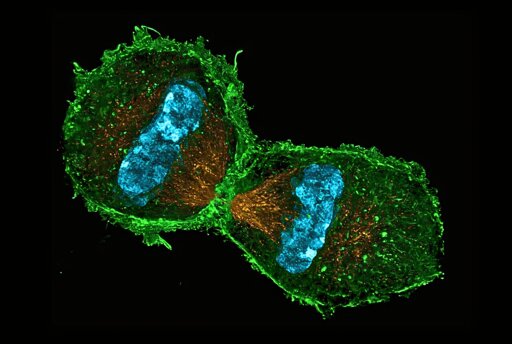
Weill Cornell Medicine researchers have found that temporarily disabling a protein complex that organizes DNA into loops inside the cell’s nucleus drastically disrupted the three-dimensional structure of the genome, but surprisingly, most genes continued to function as usual. However, they also discovered a small group of affected genes that play a critical role in guiding cells to become specific types, for example, heart, brain, or liver cells.
From Biology News - Evolution, Cell theory, Gene theory, Microbiology, Biotechnology via This RSS Feed.
You must log in or # to comment.