


Amelia Schafer and Nareh Vartanian
ICT + Marquette University
MILWAUKEE, Wisc. – In just 37 years, since the 1988 passage of the Indian Gaming Regulatory Act, the Native casino industry has grown to generate over $40 billion annually for tribes across the United States, according to a study conducted by the United States Census Bureau that was published at the end of 2025.
As of 2019, over 600 casino operations existed on tribal land in the United States.
Prior to the Indian Gaming Regulatory Act, roughly 31 percent of American Indian individuals lived under the poverty line, making under $30,000 as a household, compared to a 13 percent national average. As of 2024, that percentage has decreased significantly, with an American Indian poverty rate of 19.6 percent opposed to a national poverty rate of 12.1 percent, according to census data.
Not every federally recognized tribe operates a gaming facility, and some tribes have more than one facility. Roughly half of all federally recognized tribes, or 243 tribes, operate a gaming facility.
The first casino to open off of a reservation, the Forest County Band of Potawatomi’s Potawatomi Casino in downtown Milwaukee, has been going strong for 34 years. What started as a small bingo house has developed into a strong force in the city.
As one of the top 25 employers in Milwaukee County, the Potawatomi Casino employs around 2,300 people.
The casino’s philanthropy expands past what’s allowed by the Indian Gaming Regulatory Act, which prohibits casinos from funding programs serving children. However, through the Heart of Canal Street, a community program established by the Potawatomi Casino, the casino has found a way to help children.

The Potawatomi Casino in Milwaukee, Wisconsin is the oldest off-reservation casino in the United States. Credit: Asher Heimermann, Creative Commons Attribution 3.0
“Heart of Canal Street is our way of giving back to the community,” said Alexx Zawada, citizen of the Red Cliff Band of Lake Superior Chippewa and chief marketing officer at the Potawatomi Casino.
The Heart of Canal Street partners with children’s charities in the Milwaukee area.
The Potawatomi casino has a committee that goes through a list of charities that apply to be included in their fundraising efforts. The committee “picks out what we feel is best for our mission and how we want to help the community,” Zawada said.
Philanthropic causes vary from improving technology to aiding children with physical disabilities. Heart of Canal Street picks up to 30 charities and raises money for them throughout the year, allocating the gathered funds in December.
The casino was also a driving force in the initial establishment of the Indian Community School in Franklin, Wisconsin, which serves Native children from preschool through eighth grade. Potawatomi’s public relations team has set up small sponsorships with the school, but gaming regulations prevent more direct engagement. Due to this, the casino works closely with the Potawatomi Foundation.
“The foundation has less rules where they can support children,” Zawada said. The foundation has always been associated with the tribe, and it has its own grants, money and budgets. “We work very closely, hand in hand, with the foundation to make sure that certain organizations aren’t kind of double-dipping, but making sure that we’re giving equally through the community as well,” she said.
‘Closer to the American dream’
Economic revenue gained through tribal gaming enterprises can often allow for greater room and movement towards self-sufficiency and tribal sovereignty, said Victor Rocha, citizen of the Pechanga Band of Indians and the conference chair of the Indian Gaming Association.
“Tribal gaming saves lives,” Rocha said. “Tribal gaming brings Native Americans closer to the American dream where they deserve to be, yet we still have a long way to go, and that’s why we fight so hard.”
Economic revenue gained through tribal gaming enterprises allows for greater room and movement towards self sufficiency and tribal sovereignty.
“It’s allowing people to buy homes and create generational wealth,” Rocha said. “This is America, you get the justice you can afford and 50 billion dollars allows you to afford a lot of justice in this country.”
When tribal gaming is done right, you can’t tell where a non-Native community ends and a Native community begins, Rocha said.
‘We still have a long way to go’
However, the effectiveness of gaming is often dependent on geographic location. For instance, in the state of South Dakota, the nine federally recognized tribes are not permitted to create gaming facilities off of their respective tribal lands. This distinction was created as to not compete with the massive gaming industry in Deadwood, South Dakota, Rocha, who spent time living in South Dakota, said.
There are no tribally owned casinos in Deadwood, or within 2 hours of Deadwood. The one exemption to this is the Hard Rock Casino, whose international LLC is owned by the Seminole Tribe of Florida as of 2007.

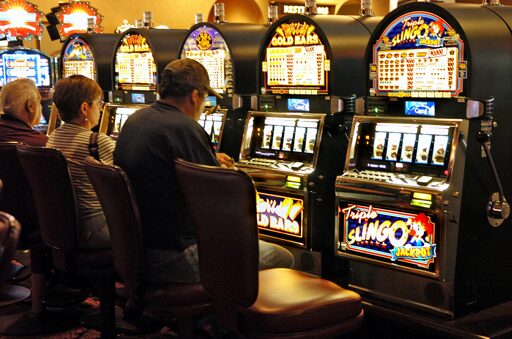
This photo taken, Thursday, March 5, 2015, shows video gaming terminals at Les Bois Park in Garden City, Idaho. Idaho’s Constitution used to ban any “lottery or gift enterprise,” but the prohibition on gambling has been tweaked over time, and now Idaho residents looking to try their luck can visit a gas station, grocery store, bar, race track or Indian casino. (AP Photo/Otto Kitsinger)
Per the Indian Gaming Regulatory Act, tribes may offer the same types of games already legal within a state. However, the state of South Dakota has limited most tribes to a maximum of 250 slot machines per its Class III gaming compacts – legally binding agreement to offer gaming between tribal governments and state governments.
Because of this, tribes in South Dakota, which are already geographically isolated hours away from metropolitan areas, struggle to bring in the foot traffic and revenue that tribes in other states do.
“I think the tribes could be so much more successful if the politicians weren’t so intent in keeping the tribes on the reservation,” Rocha said. “And you can look at the recent sports betting bill that they’re talking about, that’s floating around right now in the legislation and the tribes aren’t part of it. It’s all about Deadwood, you know? So we still have a long way to go.”
Take the Prairie Wind Casino in Oglala, South Dakota as an example. The casino, owned by the Oglala Sioux Tribe, is located nearly two hours southeast of Rapid City, South Dakota, which is regarded as the gateway to the Black Hills.
Because of its location right outside of the hills and 20 minutes from Mount Rushmore, Rapid City alone sees an upwards of four million guests per year bringing in $113 million per year in tourism revenue.
Tourism is South Dakota’s second-largest industry, amassing $5.9 million statewide in 2024, but many of the tribal gaming enterprises don’t see this tourism revenue or even a fraction of the foot traffic.
Oglala Lakota County, the largest county within the Pine Ridge Reservation in southwestern South Dakota, is also one of the poorest counties in the nation. Oglala Lakota county consistently has a poverty rate of over 50 percent, meaning that over 50 percent of families in the county live below the federal poverty line.
“The way South Dakota is taxed, they make all their money from those VLTs that are everywhere,” Rocha said. “I lived in South Dakota for about nine months in Sioux Falls, and you know, I saw them in the bars and the gas stations and the stores. That’s what creates the tax base, and the tribes are interfering with the tax base, just like prediction markets do with tribal gaming.”
Meanwhile, casinos located outside of major metropolitan areas such as Los Angeles, Milwaukee and Minneapolis see considerably more foot traffic, in line with their population size.
The post ‘Tribal gaming saves lives,’ new study finds appeared first on ICT.
From ICT via This RSS Feed.