

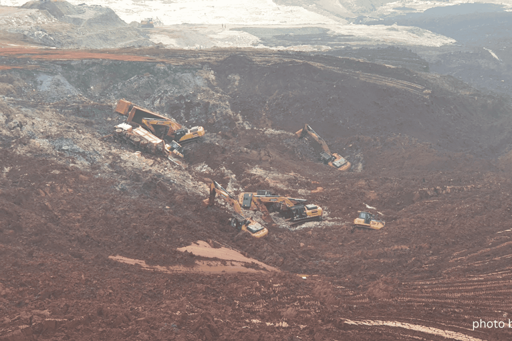
JAKARTA — In February 2026, videos circulating on social media showed a mass of mining waste rushing downslope like thick mud, engulfing excavators and bulldozers within seconds as operators scrambled to escape. That landslide of mining waste, or tailings as it’s known in the industry, occurred on Feb. 18 at a storage area in Morowali industrial area in Indonesia’s Central Sulawesi province, a key hub of the country’s nickel industry. The facility was operated by PT QMB, a tenant of the Indonesia Morowali Industrial Park (IMIP), and the incident left an excavator operator dead. Steven Emerman, a hydrogeologist and mining waste expert who reviewed the videos, concluded that they showed the phenomenon of liquefaction — a failure in which partially dried mining waste suddenly behaves like a liquid. “The video clearly shows liquefaction of a filtered tailings stack,” he told Mongabay. Filtered, or “dry stack” tailings are widely promoted as a safer alternative for storing mining waste than the wet sludge held behind conventional tailings dams. The material is filtered to remove its water content and stacked on land as a damp, soil-like mass. But a new report by U.S.-based environmental NGO Earthworks that Emerman contributed to raises concerns about how the technology is being applied in Indonesia. It says some facilities are being built “taller and contain more waste than they can safely hold,” and cites problems with design, drainage and quality control. These risks are compounded by the rapid expansion of Indonesia’s nickel industry, raising concerns about the…This article was originally published on Mongabay
From Conservation news via This RSS Feed.