


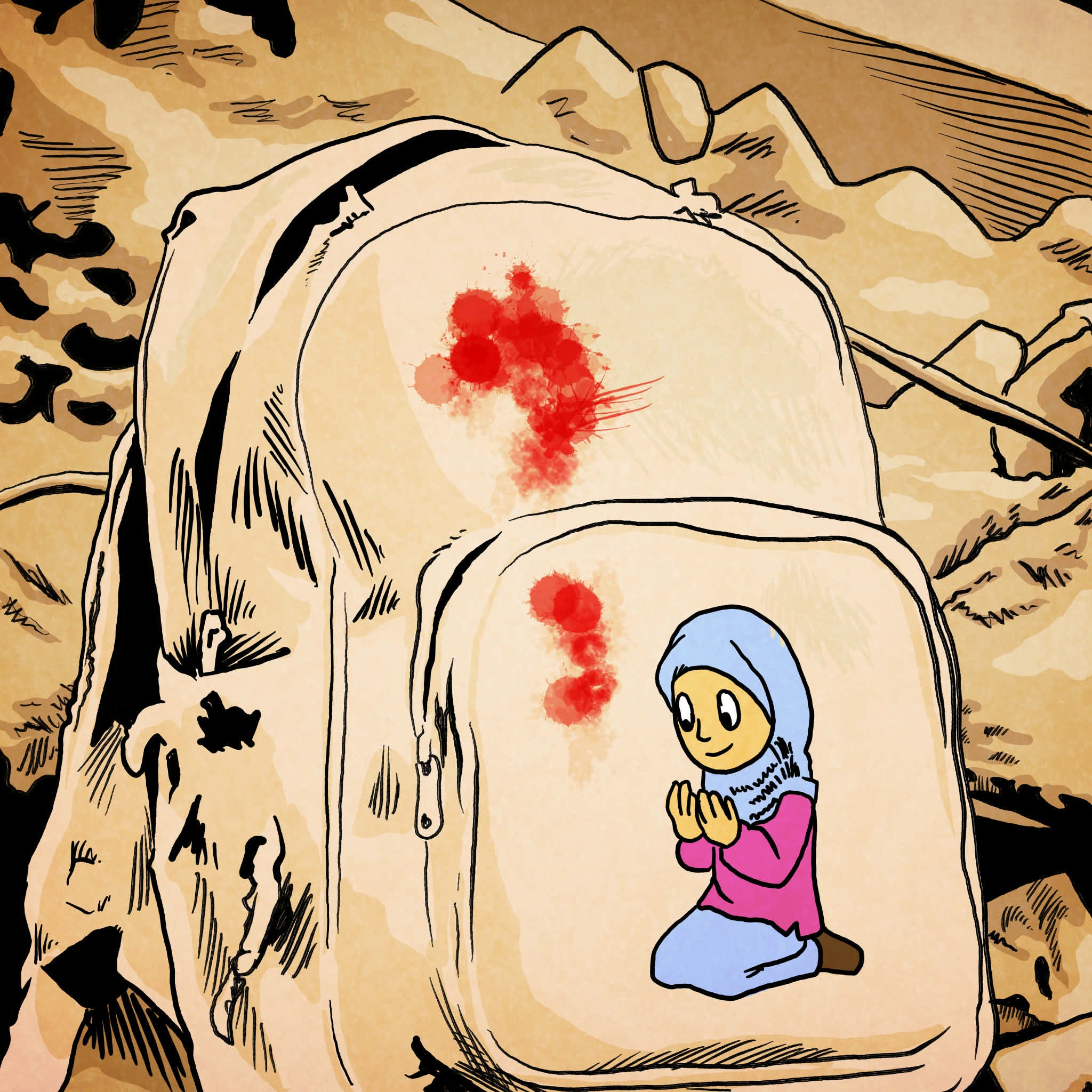
Just over a week ago, I participated in a debate on Spencer Case’s podcast about the war in Iran
Spencer is a philosophy professor at Bowling Green State University. He has a Ph.D. from UC-Boulder, where he wrote a dissertation defending moral realism. He’s the co-author of a book on the same subject from Routledge, and the author of a forthcoming book on patriotism. He also spent several years as an active-duty soldier, including one tour each in Iraq and Afghanistan. As I understand it, he now thinks those wars were misguided (though he resists any induction that the new war in Iran is just as bad).
Daniel Kodsi is a visiting scholar in the Philosophy Department at NYU. He has a doctorate from Oxford and he’s the editor-in-chief of The Philosophers’ Magazine. I don’t think it would be too uncharitable to say that you wouldn’t have guessed any of this from anything he said during our debate. In both substance and affect, he was indistinguishable from a young National Review writer participating in a cable-news segment. At one point he called me a “useful idiot.”
Everyone else, though, seemed to be committed to using their philosophical training in taking arguments apart and putting them back together again to reason more carefully about the matters of life and death we were there to talk about than anyone normally would on CNN or Fox. Whether any of us succeeded in that is something I’ll leave to the judgment of viewers and listeners. I’ve said what I have to say about that elsewhere. Here, I’ll focus not on evaluation of how anyone did but on a bit of further reflection on the core arguments brought up in the debate.
The fourth participant was on my side of the debate (although, as he pointed out, we’d strongly disagree on many other issues). Craig White has taught at the Political Science Department at UC-Boulder, although the more relevant part for the debate may be that he spent twenty years working as a diplomat, much of it in the Middle East. He’s a conservative Catholic who voted for Trump in the past (he regrets it) and he takes Thomistic just war theory seriously enough to be horrified by the war in Iran. He wrote a book on Iraq (Iraq: The Moral Reckoning) and one on technical moral philosophy (Acts, Intentions, and Moral Evaluation).
On a basic normative level, Craig is deeply suspicious of appeal to “future facts” (what adversaries might do in the future) to justify present aggression. And on an empirical level, he thinks that the track record of the Iranian regime consistently shows that its leaders are rational actors. They’re far from pacifists, and they’ve been willing to provide arms and support to militias and insurgent factions in nearby countries in an effort to form a regional counterweight to U.S./Israeli hegemony. Some of these forces have certainly committed war crimes. But none of this comes within a million miles of showing that the Islamic Republic is suicidal. The key “future fact” on which the case for war rests, that they’d initiate a nuclear first strike, is supported by exactly nothing in the last 47 years of Iranian foreign policy.
Spencer took a tentatively pro-war position, and Daniel a much more strident one. In both cases, the key argument seemed to go something like this:
(1) Iran’s leaders are Islamic fundamentalists
(2) The form of fundamentalism they subscribe to involves heavy emphasis on the end times
(3) It’s possible that someone somewhere thinks initiating a nuclear exchange would be a good way to bring about the end times
Therefore:
(4) There’s a significant danger that, if Iran (a) is pursuing nuclear weapons and (b) it succeeds in this pursuit, then © it would initiate a nuclear exchange
Also:
(5) There’s a non-negligible chance of (a) and (b) actually happening
So:
(6) The U.S. and Israel are justified in attacking Iran
At a few points, Spencer or Daniel also emphasized that Iran has a repressive and authoritarian political system. It certainly does. But what’s supposed to follow from that?
The world is full of repressive and authoritarian systems. The Kingdom of Saudi Arabia, for example, has practiced a much more repressive and authoritarian form of Islamic theocracy than Iran, and it’s awkwardly a close ally of the United States against Iran.
Moreover, Iran’s repressiveness would only be relevant to the case for war if anyone thought that the intention or likely effect of the war was to bring freedom to the Iranian people. Did anyone anywhere still think that after all the weeks of jaw-dropping American and Israeli war crimes in the city (Tehran) that’s home to the greatest concentration of secular liberals who’d form the backbone of any political transition? If so, I hope that the events of last Tuesday set them straight.
On the same day that the debate was released on Spencer’s podcast, Trump issued an outright genocidal threat to bring Iran’s “civilization” to an end. He flip-flopped by the end of the day but the episode should clarify exactly how much the people of Iran count for in the warmongers’ calculations.
Going back to the central argument summarized above, an obvious initial point is that (5) is extremely dubious. Trump’s own director of national intelligence flatly contradicted it in early 2025. And no one with a better memory than a goldfish should take such claims seriously from the Israelis. I’m pretty sure Netanyahu has been regularly claiming that the Iranians were 15 minutes away from acquiring a nuke since I was in high school.
I’m also deeply skeptical that (1)-(3) add up to much of a case for (4). American evangelical Christianity puts heavy emphasis on the end times too. I can remember when the Left Behind books were runaway bestsellers. But, my (long) list of concerns about conservative evangelicals holding political power in the U.S. never included the possibility that an evangelical president would try to speed up the end times by initiating a nuclear exchange.
It’s also worth noting that, even if we did all agree that (4) and (5) were true, that wouldn’t get us all the way to (6).
To get to an even a halfway plausible case for a war guaranteed to generate vast amounts of human suffering, at the very least you’d need to add:
(5.5) Going to war with Iran will make them less likely to pursue nuclear weapons (or succeed in that pursuit) in the future.
The truth of (5.5) is very far from obvious. As even Trump now seems to have realized, Iran in 2026 is vastly more capable of defending itself than Afghanistan in 2001 or Iraq in 2003. A ground invasion that could actually topple the government might well involve American casualties at a level that wouldn’t be remotely politically sustainable.
The Trump administration is so erratic, and the overall situation so chaotic, that it would be foolish to place much confidence in any prediction about how things will develop from here. As of this moment, though, it looks quite likely that (whether in a week or a month or ten years in the future) the war will end without regime change. And if so, after all the death and destruction, the likely effect of the whole thing will be to make the Islamic Republic much more likely to pursue a nuclear weapon, for the staggeringly obvious reason that what’s been done to them in the last six weeks wouldn’t have been done to a nuclear-armed state.
Of the three countries in George W. Bush’s “Axis of Evil” speech, the only one that hasn’t been targeted with such a war is North Korea, for the simple reason that it’s the only one that actually had Weapons of Mass Destruction.
Spencer hedged a bit on (6) (or at least on the sense in which he would accept (6)). As far as I can tell, his position is that (1)-(5) add up to a reason to think that “there’s a just war to be waged against Iran” in principle, but the pragmatic consequences of doing so might be bad enough that Trump and Netanyahu’s initial decision wasn’t justified.
His hesitation here flows from a more general principle that, when it comes to justifications for the use of violence, the moral and pragmatic aren’t entirely separate. Whatever other conditions you’ve met, you can’t be justified in taking human life without a high enough probability that doing so is going to lead to success in achieving some worthwhile goal. (I agree.)
Nevertheless, he thinks that, having started the war, the U.S. might have a moral obligation to finish it, since after going to war with a Pearl Harbor-style surprise attack while negotiations were ongoing, assassinating their head of state and wiping out much of their senior leadership on the first day of fighting, butchering 175 people, most of them young girls, at the Shajareh Tayyebeh school on the same day, Israel ethnically cleansing Shiites from much of Southern Lebanon on that front, and…well…etc…the Iranian regime will be in a far bigger hurry to develop nuclear weapons if it’s left in power.
What should we make of this argument?
I think it’s useful to separate a few questions here. On the more abstract issue, is it possible that there can be actions that (i) it’s wrong to initiate but (ii) it would be morally better to complete after starting? Sure. Anyone used to thinking about hypothetical thought experiments should be able to construct such a case without too much trouble. But this is consistent with thinking that a very strong default assumption should be that if an act is wrong, justice is best served by changing course. (In this particular case, my own position is that, as a show of good faith following impeachment or the use of the 25th Amendment to remove Trump from power, the U.S. should offer to pay Iran reparations and extradite Trump and Hegseth to stand trial at the Hague. I’m obviously under no illusions that this will actually happen. But I think it’s pretty damning that it won’t.) And I’ve already indicated that I think there are excellent reasons to suspect that in this particular case, continuing the war, for another week or another decade, will likely just lead to far more suffering and death without even removing the regime from power.
All of this is to say that, even if I did accept (4) (the claim, remember, that there’s a serious chance that a nuclear-armed Iran would perpetrate a first strike), I still wouldn’t support the war. To be clear, though, my actual position is that (4) is ludicrous on its face.
Daniel’s opening statement included an eye-rolling reference to Craig’s appeal to Thomistic just war doctrine. He wasn’t, he said, going to appeal to his “pet philosophical commitments” to explain how he could derive his position on Iran. Instead (and, while this is obviously a deeply unsympathetic paraphrase, I don’t think it’s an unfair one) he preferred to just run through a bunch of Fox News-style talking points about how Iran is Very Bad and anyone who doesn’t want to attack them must just not understand their badness.
This struck me as fundamentally wrongheaded. I don’t think everyone everywhere needs to have a fully worked-out, philosophically sophisticated account of when wars are justifiable. But, especially on a philosophy podcast (but not just in that context), I do think it’s a fair expectation that you should be able to give us some sense of what general principles you’re appealing to, if only so we can see whether you’re applying those principles in a remotely sophisticated way.
Apologists for bombing campaigns that kill vast numbers of non-combatants often like to say that war is hell. It seems to me that, as often as that phrase is uttered as thought-terminating cliche, it is a useful starting point for discussion. War is hell. Even wars fought with muskets and cavalry charges were hell, never mind the kind fought by sending missiles into population centers. Anyone who actually thinks war is hell should be extremely reluctant to plunge whole societies full of ordinary people trying to live their lives into that hell.
So, my view is that there should at the very least be an extraordinarily strong default assumption that initiating wars of aggression is wrong. Perhaps there could be a (realistic, non-hypothetical) scenario in which doing so would be justified. But, we should need a lot of convincing.
Iran’s actual behavior over the course of the last 47 years hasn’t provided the slightest shred of support to the idea that the regime would be eager to commit collective suicide as soon as it joined the nuclear club. In the entire time the Islamic Republic has existed, while it’s often given arms and support to ideologically aligned factions in conflicts around the region, it hasn’t used its own military to start a war with another country even once.
Here’s an exercise for the reader:
See if you can list off all the wars the U.S. and/or Israel have started since 1979. Then look them up to see if you forgot any.
I’d be surprised if you got them all on your first try.
Even when the U.S. has directly attacked Iran, for example by assassinating Soleimani during Trump’s first term, or the first surprise attack during negotiations (“Operation Midnight Hammer” last summer), Iran has been so concerned to avoid escalation that it’s often restricted itself to token retaliation, sometimes even warning the countries hosting the U.S. military bases it was planning to symbolically strike. We’re seriously supposed to believe that the same regime that acts this way would sacrifice its own existence in a nuclear exchange?
Sometimes war supporters will claim, a la Bush and Cheney’s speculation that Saddam Hussein might share WMDs with Al Queda, that Iran’s reluctance to use its own military in conflicts is irrelevant. Even if it wouldn’t initiate a nuclear exchange itself, it might share its nukes with one of the “proxy” forces it supports elsewhere in the region.
But this entirely misses the point. Iran’s whole incentive for restricting themselves to providing support for local factions rather than directly intervening in those conflicts is that the consequences the former has usually led to (e.g. sanctions) are vastly less severe than the likely consequences of direct involvement. And no one seriously believes that an Iranian nuke being lobbed at Israel by (for example) Hezbollah would lead to less severe consequences for Iran than it being directly sent by the Iranians.
An argument that both Daniel and Spencer both gestured at is that:
- Iran’s form of Islamic fundamentalism involves glorifying individuals fighting in various regional conflicts who become “martyrs” (e.g. through suicide bombing) therefore
- The entire regime would be willing to become a collective “martyr” by ceasing to exist in a nuclear exchange
But this is a non sequitur on its face. Nations, empires, churches, rebel militias, and so on throughout history have glorified people who were willing to give up their lives for a cause, without any of those entities being equally willing to give up their own collective existence. Leaders approving of individuals dying for the sake of preserving, defending, or extending a system (or those leaders even being willing to individually join their ranks by e.g. remaining defiant in the face of decapitation strikes) is no evidence at all that they’re willing to throw away the existence of the system itself.
There’s also the pesky matter of what possible motive Iran could have for engaging in a nuclear first strike against Israel.
Craig made a powerful point about this at the beginning of the debate that unfortunately got lost in the shuffle. Paraphrasing a bit, he asked:
Would Iran’s motive for a nuclear first strike be sheer Jew-hatred, or would it have something to do with the plight of the Palestinians?
If the former, why wouldn’t they start with the Jewish community in Iran? (No nukes required there!) And if the latter, why would they wipe out the Palestinianswith a nuclear strike on Israel?
In the comments on one of the YouTube videos on the debate, someone called me “one of the most sophisticated apologists” for Iran’s theocratic regime. I suppose that’s better than being an unsophisticated apologist.
As a matter of fact, though, I don’t have the slightest sympathy for that regime. It enforces gender apartheid, it’s killed lots of socialists and communists, and it brutally quashes anyone who tires to organize real independent labor unions. The world is full of systems I find unjust or abhorrent, but if we were going to rank countries by how far they are from my democratic socialist ideals, the Islamic Republic would occupy a pretty dismal spot on that list.
I can’t for the life of me, though, see how acknowledging that is supposed to lend any plausibility at all to the case for war.
One of the more obvious points you can make about all this is that Taliban-ruled Afghanistan would have an even more dismal place on the list. Nor was Saddam Hussein’s Iraq exactly a beacon of human rights. But who in America in 2026 still seriously believes that Bush’s wars were righteous and wise? Is the president of the United States, who scored political points in 2016 by retroactively criticizing the Iraq War, an apologist for Saddam Hussein? And if not, what’s the difference?
A slightly more interesting point is that positive political change in any society is far more likely to be historically durable when it comes from within that society. It’s not just that a domestic revolution is more morally legitimate than imperialist wars waged from the outside. The latter is also just far less likely to deliver the goods And that’s true even when democratization actually a goal or likely near-term effect of foreign intervention (which is, to put it mildly, not typically the case for America’s wars).
It’s less likely because, first, accepting the support of foreign conquerors has the entirely predictable effect of delegitimizing the revolutionaries in the eyes of vast swathes of the population who now see them as enemy collaborators, and second, the conquerors will pack their bags and leave as soon as the politics in their country no longer sustain the intervention. Structurally, the element of the conquered society that would benefit from the conquerors sticking around has no way to hold the conquering state accountable for abandoning them.
So, even if you think that it’s likely that continuing the war for another week or another year or another decade will result in regime change, and even if you think the new regime will be a democratic one (as opposed to, say, installing the Shah’s pathetic son), the idea that any of this would serve the long-term goal of positive change in Iran is dubious in the extreme.
The most viscerally powerful point about all this to me, though, is a lot simpler than any of that.
It’s just this:
The idea that anyone wants to turn Iran into a war zone, disrupt the lives of several tens of millions of people, make them mourn the friends and relatives who were in the wrong place at the wrong time when a missile hit, make them fear for their lives and the lives of their children and siblings and parents and cousins, because they care so much about their well-being is offensively absurd.
If you tell me frankly that you want to do this because you think it’s going to make Americans or Israelis safer in the long term, you and I have a disagreement. I don’t think it’s likely to have that effect, and in any case, I think that the Iranians count as much as we do. But fine. We can argue about all that.
If you tell me that you want to do this for the sake of the Iranians, though, that’s a bad joke.
Thanks for reading Philosophy for the People w/Ben Burgis! This post is public so feel free to share it.
From Philosophy for the People w/Ben Burgis via This RSS Feed.