


“We need to give rivers the space to live and breathe,” says earth scientist Dan Hikuroa. Pictured is Wairau River in Marlborough. (Photo: Peter Hamill, Marlborough District Council)
Our rivers need more space to be themselves, says earth systems scientist Dan Hikuroa, both to reduce the risks to people and infrastructure, and for their own health and vitality.
Here’s Dan in conversation with Connie Buchanan about why rivers need room to be rivers.
We’ve been focused on the landslide risks posed by severe weather in the last little while, and for very good reason. But in big weather events, rivers come under massive strain too. We’re seeing them burst their banks and flood, sometimes carving new channels, and generally not behaving as we’ve come to expect.
That’s partly because of something that many of us have forgotten: our rivers are heavily modified.
In Aotearoa, we adopted a mindset about rivers that was imported from overseas. The view came mainly from Europe, where rivers were seen for their utility and function — the more utility a river had, the better it was for people. Rivers in Europe were put to work, often constrained by canals and locks, so they’d behave in ways that suited human use. Or waste was dumped into them.
That kind of thinking, a command-and-control approach, came to Aotearoa New Zealand as part of the colonial project. Settler society was interested in how to make rivers work for people, especially as cities started to grow.
Command-and-control management practices sought to tame dynamic rivers, confine them, and straighten them, with heavily modified banks. In the process, they restricted a river’s capacity to adjust, regenerate and recover — all aspects of “normal” river behaviour.
But the command-and-control ethos is now failing. With increased storm frequency and intensity, rivers are bursting their banks seemingly every other week, changing course, and no longer staying under our control.
This situation is not unique to Aotearoa New Zealand. Around the world, many places are now under threat from rivers that were once confined and then had cities, towns and infrastructure built around them.
I talk about strangled rivers and zombie rivers to describe the effects of these historical ideas, which, in some places, are still common practice.
A strangled river is one we’ve forced to flow a certain way, and contained so it never bursts its banks. A zombie river is one that, as a result of that strangling, becomes increasingly devoid of life and diversity.
To illustrate this, I often ask a question when I’m speaking at conferences or in lecture theatres: “Who remembers a favourite waterhole when they were a child?” Many hands will shoot up. And then I ask: “How many of you would go and swim in that same waterhole today?” And the hands come down. Either the water might not be safe for swimming, or the waterhole itself might not even be there anymore.
This is the result of us strangling rivers so that some rivers don’t really flow at all anymore or are polluted to the point that people don’t see them as places of enjoyment or sustenance — and in some places, due to pollution or toxic algal blooms, they are genuinely unsafe.
And then, of course, there are rivers where we don’t see those impacts, because we no longer see the river itself.
We’ve been burying rivers and streams alive for almost two centuries now. They’re largely invisible in our cities. But every time we have one of these major flood events, the pipe networks can’t cope. We see cast-iron manhole covers on stormwater drains popping like corks. Or water bursting out of broken infrastructure and forming sinkholes.
These are the consequences of the mindset that we must command and control water. We’ve literally buried hundreds of kilometres of waterways. And we’re at a crunch point now.
We’re seeing many more weather events that cause rivers to flood. It’s terrible for those folks who are at risk and whose houses and livelihoods are damaged or washed away. My heart goes out to those people.
But when a river floods, it’s just a river being a river. And really, it’s our fault for putting things in the path of a river, which wants to behave as it always has. When we build on floodplains, for example, the hint is in the name — it’s a flat area that floods.
Every river is unique and has its own idiosyncrasies, yet we’ve historically used a cookie-cutter approach to control and command their paths. Now, under pressure from bigger weather events, that approach is costing us, mostly in infrastructure and money, and sadly (though thankfully not too frequently) in lives.
When we think about the way rivers react to floods, there’s a technical term — avulsion. To say a channel avulses is to mean that it shifts over time.
So a normal flowing river might experience a flood event and shift its course as a result. That’s the channel avulsing through time. It’s particularly obvious, for example, in the Canterbury Plains, in the braided river systems there. In flood events, a braided river might completely shift its course by hundreds of metres, which is entirely normal behaviour.
But if it hasn’t done that in the last few decades, people may put up fences, start putting livestock in, and farm the land, all based on its current path. And when that river next behaves as it always has, when it avulses, people assume that their livelihoods and their land are being impacted negatively by the river.
But what’s actually happened is that we’ve encroached on its natural space. The reality in Aotearoa is that all our rivers, not just braided rivers, have always naturally moved over time. Some have flow paths that were historically many kilometres wide.
There’s an idea that’s been emerging for a few decades, called “giving the river room to move”. There are now places in Europe where they’ve realised it’s a waste of time to try to force rivers to go certain ways and be certain things for human use. They’ve found that it’s actually cheaper and safer for human beings to make room for the river.
Now, that’s a tough message for folks whose houses and livelihoods are adjacent to rivers. But should we keep doing the same thing and expect a different outcome? Or is it time to consider something else, to ask where the river itself wants to be? Where might it have been in the past, and where might it go in the future?
We’re lucky in Aotearoa that we have a deep resource of knowledge to draw on when we ask such questions, and that’s mātauranga Māori.
Māori have a rich history of relating to rivers, which offers a different way forward. The standout example today is Te Awa Tupua and the 2017 act of parliament that enshrined legal personhood for the Whanganui River. But the same understanding of water that’s enshrined in that legislation is true for iwi and hapū around the country, and their relationships with other rivers and waterways. In Waikato, for example, where I whakapapa, we have always known that we are the river, and the river is us.
And from that relationship and the knowledge built on observations made over a very long time, an understanding emerges. This understanding is based on mātauranga that’s been compiled over a much longer timeframe than the western scientific and technical records, which have been used as the dominant evidence base to make management decisions.
So my colleagues and I are challenging the current approach. We’re saying that mātauranga Māori not only has a much greater temporal understanding of how these rivers have behaved through time, but also sees them as ancestors, which is an entirely different starting point for any kind of human management of the water.
From this starting point, it becomes obvious that we need to treat our rivers as taonga, not as toilets. We need to give them the space to live and breathe. We need to rethink the practice of burying them alive.
And I need to be crystal clear that this isn’t just some kind of academic utopian wish I have, where I sit in my office waving a wand. I’m very aware of the infrastructural, social and cultural investments we’ve made to establish our towns and cities. We can’t change the past. But let’s not be shackled by decisions made, some over a century and a half ago, and others more recently. The future is ours to decide.
We can reset our relationship with rivers. Where it’s still possible, let’s try to make room for the river.
Sadly, it’s the threat of disaster that means this message is now being heard by more people.
For example, there’s a National Climate Change Risk Assessment now underway. And I understand the risk assessment will include some pūrākau, or stories, of taniwha. This recognises that knowledge of a taniwha residing in a certain part of the river might reflect a flood risk in that area. Or a taniwha that lives in a certain area of whenua might signal a landslide risk. That kind of information is now being included.
This is common sense finally coming to the fore, because, of course, we need to draw on all the information that’s available to manage the very serious and challenging situation we face.
If we draw from just one type of knowledge, the one we’ve become accustomed to using, then we’re not fulfilling our responsibilities to each other. We need to use every source of knowledge we have, even if some of it is codified in different ways. I do think there’s more acceptance of that idea now.
Where decision-makers might once have thought our kōrero about taniwha were just fanciful stories, they’re now starting to see the sophistication and elegance of using pūrākau to pass on important information. The power of story as a teaching tool is well established for connecting with people, committing information to memory, and transmitting it across generations.
One of the major research projects I’m working on now is called Let The River Speak, which is self-explanatory — it’s about listening to the river. So when the river bursts its banks, or drains are popping manhole covers, that’s the river talking to us. It’s telling us: Hey, you’ve constrained me, you’ve constricted me, and I’m screaming and shouting about that.
Once we can shift that relationship element, which underpins everything, then the next decisions flow more easily. Decisions about what we build or don’t build near rivers, and whether we still use stop banks — that sort of thing.
Take a place like Westport, which is often in the news for floods and future flood risk. It’s built on a floodplain. It faces rising sea levels and increased storm frequency and magnitude. We could absolutely use engineering and management to try to keep that township safe. But it will be at an extraordinarily high financial cost.
And there is always a risk that the infrastructure and management might fail, and then people’s lives and livelihoods are even more at risk. Because stop banks keep you safe until they don’t. And then you’re far more vulnerable than you were before.
But singling out Westport isn’t fair, because so many of our towns and cities are built on floodplains. Christchurch is almost entirely built on floodplains, as are large parts of Auckland and Wellington. There are so many towns built in beautiful areas adjacent to water sources that now find themselves in harm’s way. We need to address this at a national scale, and have the ability to say: “Hey, this is tough to hear, but is this a sensible place to have a town?”
When it comes to resetting our relationship to rivers, obviously, we can’t dig everything up and restore the natural flow paths — that’s not going to work.
But we’re always planning to do new things tomorrow. We’re designing and paying for new things all the time. As we go through those processes, let’s have a new starting point, which begins with what the river itself wants to do.
The team I’m part of is very focused on helping communities hear the voice of their river. We help people understand that they live in a very geologically dynamic region where rivers have played a huge role in changing landscapes.
Our key message is: Get to know your river. Find out how it’s behaved in the past. That will give you really good information about how it might behave in the future. And then use that information in decisions. Otherwise, it’s going to be very costly in terms of infrastructure and maintenance — and maybe more lives lost.
Let’s listen to the knowledge and mātauranga that exist within iwi and hapū. Let’s respect our rivers. And where we can, let’s give them room to be themselves.
Whakarongo mai ki ngā awa. Listen to the rivers.
As told to Connie Buchanan.

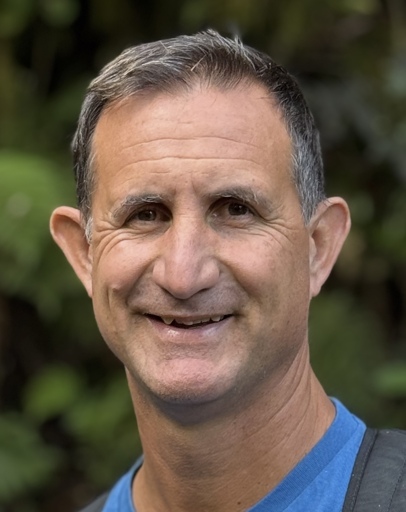
“Let’s respect our rivers. And where we can, let’s give them room to be themselves.” (Photo supplied)
Dan Hikuroa (Ngāti Maniapoto, Ngāti Mahuta, Ngāti Whanaunga, Pākehā) is a husband, father, surfer and gardener. He is an associate professor in Māori Studies at the University of Auckland, UNESCO New Zealand Commissioner for Culture, and a world expert on weaving Indigenous knowledge and science to realise the dreams and solve the challenges of the communities he works with.
The post Dan Hikuroa: Let the rivers speak appeared first on E-Tangata.
From E-Tangata via This RSS Feed.