

Peru goes to the polls Sunday, April 12, to begin choosing its new president. The scenario is marked by both uncertainty and popular disillusionment after years of political crises, impeachments, and corruption scandals.
Since 2018, the country has had eight presidents, leading to extreme instability in Peruvian political life, a reflection of a frenetic succession of interrupted mandates in recent years. Parliament has impeached four and forced two others to resign.
The population demonstrates strong skepticism and disinterest due to the history of systemic corruption, and analysts point out that this is one of the most complex disputes in the country’s recent history, with no clear favorites. In this context, Peruvian youth are seen as fundamental in the election, which has a record number of 35 candidates, but without options that excite them.
Those under 30 make up the largest group of voters in the country, with 26% of the electorate, and are a force with enough weight to tip the balance in an election where polls do not predict significant victories. 16% of voters don’t know who to vote for, and another 11% intend to cast a blank vote, annul their vote, or not choose any candidate, according to a recent Ipsos poll.
“None of them are convincing,” Ainhoa Hurtado, a 21-year-old student, told AFP. She will cast her vote for one of the leading candidates in the polls, the “lesser evil” among them. “Otherwise, my vote will be worthless,” she added.
Among the political trends, Fujimorism, a movement that originated with dictator Alberto Fujimori, who governed the country from 1990 until his impeachment in 2000, is seeking to reinvent itself in the Peruvian elections.
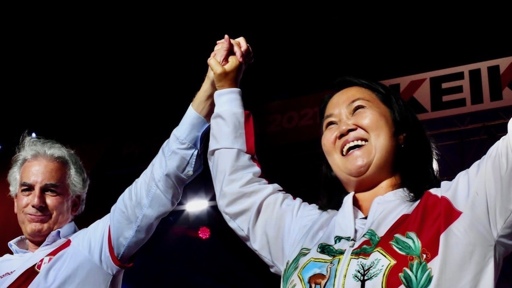
His daughter, Keiko Fujimori, a far-right candidate running for president for the fourth time , leads with 15% of the vote, according to an Ipsos poll released on Sunday, the last one authorized before the election. Competing to face her in a runoff election are former Lima mayor Ricardo Belmont, a centrist, right-wing comedian Carlos Álvarez, and the ultraconservative Rafael López Aliaga, with very small margins between them.
Belmont, an 80-year-old former television presenter, has seen a steady rise in search results in recent weeks thanks to a TikTok account run by one of his 18-year-old daughters.
The distancing of young Peruvians from the ruling elites does not imply disinterest in what is happening in the country. Last October, Generation Z, made up of Peruvians aged 18 to 29, staged strong protests against the political class that led to the impeachment of Dina Boluarte (2022-2025), in a context of rising crime that is now the main concern of voters.
First published by Brasil de Fato
The post A coup and three interim presidents later, Peru heads to polls appeared first on Peoples Dispatch.
From Peoples Dispatch via This RSS Feed.