

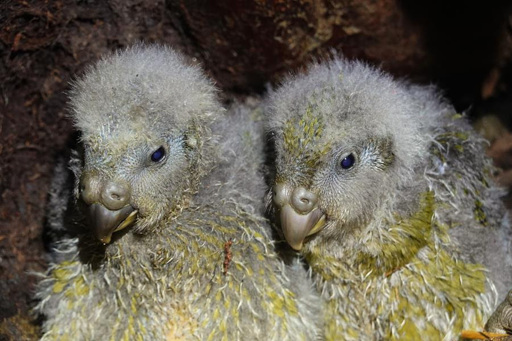
The kākāpō is a flightless bird endemic to Aotearoa New Zealand, and one of the heaviest parrots in the world. It’s also critically endangered; after the introduction of predators to the islands off New Zealand, the adult kākāpō population plummeted to just 235 today. But this year, following a standout harvest of rīmu (Dacrydium cupressinum) berries, a staple of the kākāpō diet, at least 95 chicks are now growing. The previous record, in 2019, produced 73 fledglings. “2026 is now officially the biggest on record,” New Zealand’s Department of Conservation wrote on its kākāpō recovery Instagram account. In the photo above, kākāpō (Strigops habroptilus) siblings Tīwhiri-A3 and Tīwhiri-A4, both named after their mother, are pictured on Pukenui Anchor Island in southern New Zealand, a predator-free island chosen as a kākāpō sanctuary. The photo was taken by Sarah Manktelow, a kākāpō recovery program ranger at the Department of Conservation. The chicks will be officially added to the species’ population count once they reach 150 days old, after which they’re considered fledglings. Not all the chicks are expected to make it to this stage. Ten chicks have died so far, and three more are currently receiving veterinary care. Every Friday, the Department of Conservation released data on the progress of the eggs, with an uploaded photo of the tally written in marker on the department’s refrigerator. This year, 80 nests produced at least 256 eggs. Of these, 148 were fertile, and 105 hatched. “Infertility and low hatching success is a key obstacle for the program, and…This article was originally published on Mongabay
From Conservation news via This RSS Feed.
Finally some good news, this means so much! Thank you!