

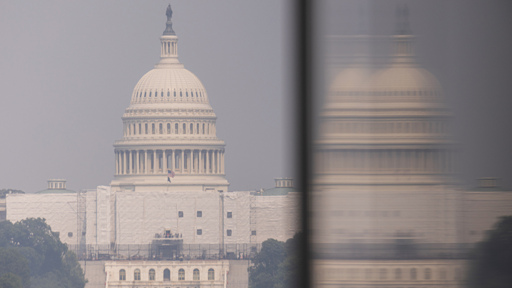
When President Donald Trump talks about climate change, he often recycles one well-known, shaky argument: that doing anything about it will be a financial disaster. After pulling out of the Paris climate agreement, he said it was costing the U.S. “trillions of dollars that other countries were not paying.” He’s also said that President Joe Biden’s plan to boost electric vehicles threatened the auto industry with “economic destruction” (before Trump “saved” the industry by reversing it, of course). Trump has tried to scare other countries into following suit, telling world leaders last year, “If you don’t get away from this green scam, your country is going to fail.”
If you look at the Trump administration’s justification for scrapping environmental protections, it always comes back to money. Officials justify these moves with estimates that almost always avoid or downplay the stunning costs of letting climate change continue unchecked, even as extreme weather brings the risk into focus. A record-breaking spring heat wave scorched the Western U.S. at the end of March, worsening wildfire forecasts and threatening the snowpack that’s crucial for the region’s water supplies. The costs are already hitting home: An analysis from the Brookings Institution in September found that the effects of climate change, from rising insurance rates to the health threats from wildfire smoke, are costing the average American household between $219 and $571 a year, depending on how much bad weather you attribute directly to climate change. For some households, the costs exceeded $1,000 a year.
It’s clear that taking action to prevent such disasters doesn’t hurt the economy as a whole, said Gernot Wagner, a climate economist at Columbia Business School, but it does hurt some industries — namely, oil companies. For decades, the fossil fuel industry has been promoting the story that taking action on climate change is too costly. “There is this prevailing narrative out there, and I guess what I would say is that this is not by accident,” Wagner said. In the early 1990s, the American Petroleum Institute began commissioning economists to produce research that made any effort to rein in greenhouse gases appear prohibitively expensive. One industry-funded study in 1991 calculated that imposing a carbon tax of $200 a ton would shrink the U.S. economy by 1.7 percent by 2020. It ignored the cost of failing to act on climate change.
The tradition continues today through the Trump administration’s cost-benefit calculations for repealing environmental regulations. For decades, the Environmental Protection Agency accounted for the health benefits of cutting air pollution — such as avoided asthma attacks and premature deaths — when it created cost-benefit analysis for approving clean air rules. That changed in recent months, when the Trump administration’s EPA revamped the practice so that it now effectively treats the value of saving human lives at $0. It has also thrown out the “social cost of carbon,” a metric that estimates the economic damage from floods, droughts, and other effects of global warming, which the Biden administration had set at $190 a ton. Last June, an investigation by The Associated Press found that Trump’s EPA consistently emphasized the costs of pollution rules while omitting their benefits — even though for 17 of the 20 rules AP examined, the benefits outweighed the costs, sometimes by a lot.
When the agency rescinded its fuel efficiency standards for vehicles in February, along with its own ability to regulate climate change, it promised that the new fuel standards would save Americans $1.3 trillion in car payments by 2055. But a chart buried in the EPA’s regulatory impact analysis found that fuel purchases, vehicle repair, insurance, and other costs would add up to $1.5 trillion over that same time period, outpacing any savings from the repeal. Another problem became clear after the U.S. and Israel’s war on Iran caused average gas prices in the U.S. to surge above $4 a gallon: The administration’s savings estimate had assumed that gasoline prices would stay around $3 per gallon over the next 30 years.
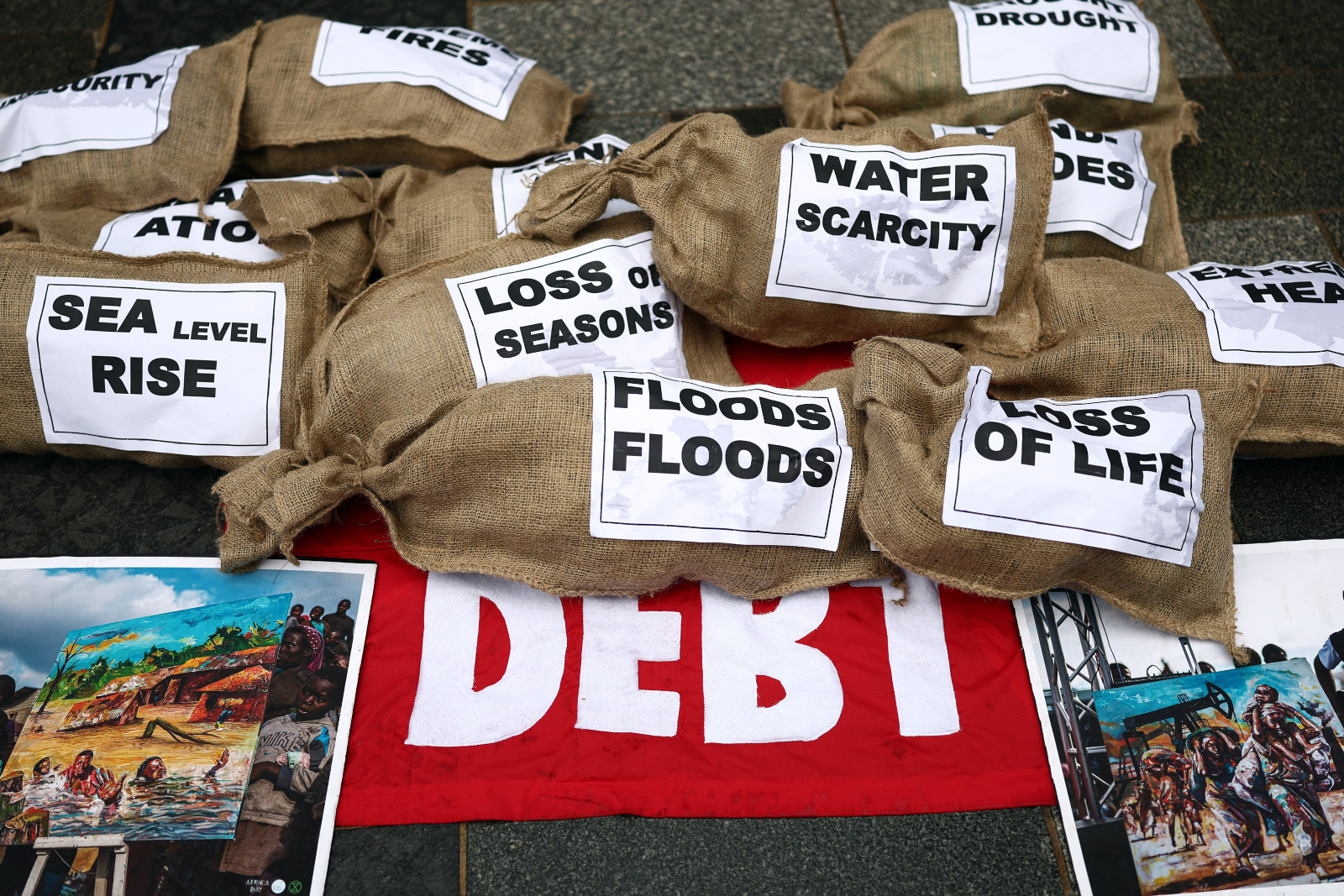
A protest in Edinburgh, Scotland, in 2024 calls on the U.K. government to end the use of fossil fuels and pay its fair share of the climate debt owed to countries in the Global South. Jeff J Mitchell / Getty Images
Though you wouldn’t know it from the Trump administration’s projections, protecting the environment can provide a boost for the economy. The Clean Air Act, passed in 1970, not only succeeded in reducing pollution, it also helped economic growth and productivity. Research has shown that the United States’ gross domestic product was 1.5 percent higher in 2010 than it would have been without the legislation, because exposing kids to less air pollution made for more productive workers later.
And if buying clean technology costs you money — well, that’s a boost for the economy, too. “If the government forced you to cut your gas line and install an induction stove and a heat pump, OK, you might hate it because you are forced to pay money for it, but somebody is going to benefit,” Wagner said. “The economy benefits.” He spent $100,000 to renovate his 200-year-old, 750-square-foot loft in Manhattan, installing energy-saving appliances — including a heat pump, an induction stove, and a more efficient fridge — switching to LED light bulbs, and improving insulation, among other measures. “So we spent a lot of money,” Wagner said. “That added $100,000 to the economy.” Eventually, it should save his family money too: The changes cut their utility bill down to about $100 a month, from a high point of $450, though it could take decades for them to recoup the upfront costs.
Of course, it’s one thing for countries with a lot of resources, like the U.S., to invest in technologies to cut emissions and prepare for the impacts of climate change. It’s another thing for cash-strapped countries around the world, who are facing historically high debt levels, to do so. But a recent study looked at decades of data from 172 countries and found that there’s “no inherent trade-off” between adapting to climate change and keeping government finances stable. “There are ways to invest in better preparation for climate change that not only do not endanger fiscal stability, but over the long term can actually contribute towards it,” said Jorge M. Uribe, an author of the study and a professor of economics and business at the Universitat Oberta de Catalunya in Spain. The study, published in the European Journal of Political Economy, found that measures to improve people’s shelter, protection, and comfort can improve public finances.
Uribe hopes that his research can counter the entrenched idea that there’s no common ground between protecting people from climate change and protecting the economy. The frame is so persistent, it often goes unnoticed. For decades, Pew Research has been asking people to pick which of these two statements they agree with: “Stricter environmental laws and regulations cost too many jobs and hurt the economy,” or “Stricter environmental laws and regulations are worth the cost.”
Anthony Leiserowitz, the director of the Yale Program on Climate Change Communication, says he’s always hated that question. “It’s a forced trade-off, when we know that environmental protection often has positive economic benefits, yet the framing of that question forces people to choose one or the other,” Leiserowitz said. The Yale program’s surveys have found that most U.S. voters say that protecting the environment is actually good for the economy, with 59 percent agreeing it improves economic growth and provides new jobs. Only a small minority, 18 percent, say that it hurts growth and jobs.
“Look, there are some hard choices that we need to make, right? There are,” Wagner said. “At the same time, I think it’s pretty darn clear that when most people say that there are trade-offs — when most people say it’s the climate versus the economy — they’re wrong.”
This story was originally published by Grist with the headline How the Trump administration’s climate math doesn’t add up on Apr 10, 2026.
From Grist via This RSS Feed.