

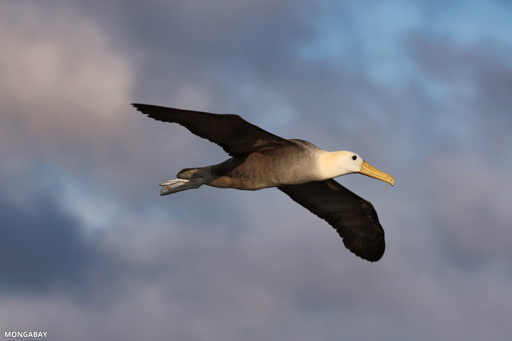
Animals that cross borders often encounter conservation systems that stop at them. Migratory species move through jurisdictions with little regard for political boundaries, relying on habitats spread across large distances and governed by different rules. The result is patchy protection, overlapping threats, and declining populations. Seabirds make this problem clear. They range across entire ocean basins, breeding on remote islands, feeding in distant waters, and passing through multiple national zones along the way. Nearly half of migratory species are in decline, and seabirds are among the most threatened groups. Their conservation requires coordination across places and seasons, which has been difficult to sustain. On land, one organizing idea has helped. The concept of “flyways” groups migration into broad, recurring routes. It has been used to align governments, focus research, and guide investment. Over time, it has helped coordinate conservation efforts, especially for waterbirds. A policy paper, published last month in the British Ecological Society’s Journal of Applied Ecology, applies the same framework to the ocean. Overlap of the marine flyways and national waters (Exclusive Economic Zones (EEZs) in dark blue lines). Purple colored national waters denote CMS Parties and green represent Non- Party states. Maps are in Robinson projection, with (a) centered at 0° and (b) centered at 140° W. From Morten et al (2026) Recent advances in tracking have made this possible. By analyzing the movements of long-distance pelagic species, a team of researchers from BirdLife International, the Royal Society for the Protection of Birds (RSPB), and multiple…This article was originally published on Mongabay
From Conservation news via This RSS Feed.