

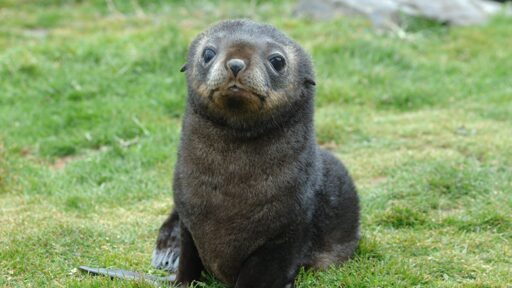
Antarctic fur seals are the smallest of the polar seals and live almost exclusively on the island of South Georgia. The latest assessment by the IUCN Red List of Threatened Species, the global conservation authority, upgraded fur seal extinction threat from least concern to endangered. The last assessment was carried out in 2014. Recent research found that Antarctic fur seal (Arctocephalus gazella) populations have more than halved over the last 25 years, plummeting from nearly 2.2 million adult seals in 1999 to 944,000 in 2025. That’s a huge population loss in just three generations, Jaume Forcada, who has been studying fur seals at the British Antarctic Survey for more than 20 years, wrote in a statement. “Unless we address the root causes of climate change, we risk losing even more,” he added. The IUCN attributed the 50% population loss to reduced food availability: Warmer temperatures and shrinking sea ice caused by fossil fuel emissions led large schools of krill, the seal’s main prey, to move into deeper and colder waters. Fur seals are also competing with large fishing vessels, harvesting krill mostly for use as feed in aquaculture. In October 2025, Norway proposed doubling the krill catch limit in the Southern Ocean. Young seal pups under the age of 1 year are the most impacted by the habitat change; many are unable to survive to adulthood without sufficient food. The southern elephant seal (Mirounga leonina) was also listed as vulnerable in the IUCN’s April 9 announcement. An outbreak of the…This article was originally published on Mongabay
From Conservation news via This RSS Feed.
Climate change is a factor no doubt, but I imagine the massive Antarctic krill harvesting industry that has grown over 400% in the the last decade or two and still exponentially increasing - using krill in everything from vitamin supplements to pet food to farmed animal feedstocks - is a much larger impact on the near-coast surface krill that the seals feed on.
On paper it’s a regulated industry by the independent international Marine Stewardship Council group - but go have a look in shops and see if you can find a single bottle of ‘Antarctic krill oil’ that has the MSC council ‘blue fish tick label’ that certifies the supply chain has been independently assessed to be sustainable.
I have not found a single one.
