

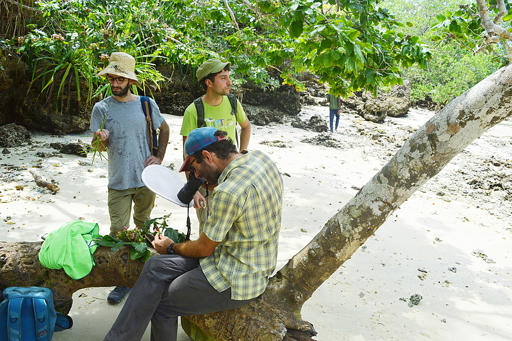
A small group of mahogany trees were found growing along a 200-meter (650-foot) stretch of shoreline on Pemba Island, Zanzibar. Scientists have recently confirmed the tree is a new species, but with fewer than 30 left in the wild, it’s already critically endangered. “It’s an extraordinary finding that none of us expected,” Silvia Ceppi of Istituto Oikos, a conservation nonprofit working in the area, told Mongabay. Ceppi said the mahogany trees were hiding in plain sight. The beach along the Tondooni peninsula where they grow is visited by thousands of residents and tourists each year. The trees, named Afzelia corallina after the ancient fossilized coral beds where they grow, also produce sweet-smelling crimson, white and pink flowers that resemble coral, the botanists write in a paper describing the species. Mongabay was with the team of researchers in December 2024 when they stumbled upon the first of these flowering trees during a botanical expedition to the 2,000-hectare (nearly 5,000-acre) Ngezi-Vumawimbi Forest Reserve, in the north of Pemba. The team initially thought it could be one of the rare Intsia bijuga trees that grew in the reserve’s nearby patch of coastal forest. But closer examination confirmed it was an Afzelia, or mahogany. Like a number of other mahogany species, the timber is attractive and sought after for furniture, which could explain why there are so few surviving on Pemba, located just 50 kilometers (31 miles) from the Tanzanian mainland. A follow-up expedition in January found one of the 30 surviving trees was…This article was originally published on Mongabay
From Conservation news via This RSS Feed.