

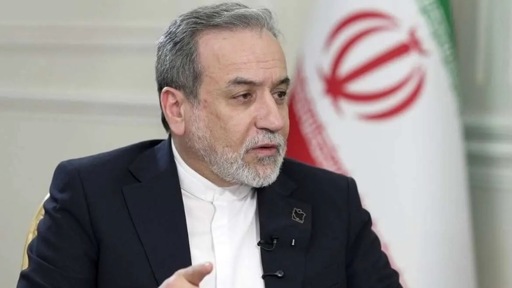
The United States has agreed with Iran to cease hostilities for two weeks. The illegal US and Israeli imposed war has not ended but has a break, although not in Lebanon which was supposed to be part of the deal. Just before the ceasefire was announced, the Iranian authorities released a ten-point peace plan that promises far more than a cessation of hostilities; it is, in fact, a grand bargain for peace across West Asia (US President Donald Trump initially said of this plan that he believes “it is a workable basis on which to negotiate,” and then supposedly threw “it in the garbage” a few hours later). The United States has, apparently, drafted a fifteen-point plan, but this has not been released to the public.
The Iranian plan has been welcomed in many quarters (such as by Malaysian Prime Minister Anwar Ibrahim), largely because it is not merely intended to defer the next war but to attempt to build a foundation for peace. It is worthwhile to go over, briefly, each of the ten proposals to assess their current validity. We will do so not in the order that these proposals appear but grouped to better evaluate them.
Guarantee non-aggression
The United States should commit, in principle, to guarantee non-aggression (no. 1), Withdrawal of US combat forces from the region (no. 9), and Cessation of the war on all fronts, including against the heroic Islamic resistance in Lebanon (no. 10).
In West Asia, for decades now the United States has played a role either directly or indirectly that should be described as aggressive. After World War II, the United States intervened in Iran through Operation Ajax (1953) to remove the democratically elected president Mohammad Mossadeq and then intervened in Lebanon through Operation Blue Bat (1958) with over fourteen thousand troops. The culmination of these interventions was the illegal wars prosecuted by the US against Iraq (2003 onwards) and Iran (2025 onwards).
The US has at least twenty military bases in West Asia with a large and permanent contingent of troops stationed in them. Israel, the United States’ closest ally, has been occupying Palestine for decades and conducting illegal wars against Lebanon since Operation Litani (1978). The current campaign – Operation Roaring Lion (2025-26) –has killed thousands of civilians and displaced one out of five people in Lebanon (including massive bombardment of congested civilian neighborhoods in Beirut on April 8).
Considering this, Iran’s proposals on non-aggression are reasonable and can be institutionalized through the United Nations and through the Gulf Cooperation Council (GCC, which includes six members including Saudi Arabia and the Gulf Arab states). There are essentially three items on the table: first, a guarantee from the UN and other agencies that the campaign of violence against Iran since 1953 will end; second, that there be an immediate Israeli ceasefire and withdrawal of Israeli troops to the Blue Line with Lebanon (Pakistan, which brokered the ceasefire, said explicitly that Lebanon was included in the ceasefire); third, that the GCC countries pass a resolution on the withdrawal of foreign military bases (Saudi Arabia already removed the last US military base from its territory in 2003).
Saudi Arabia has shown that it is keen to find a path to peace with Iran. Since 2021, Iraq has hosted Saudi Arabia and Iran for five rounds of direct talks, then after a breakdown of negotiations, the two began a new round brokered by China in 2023. The March 2023 Beijing Agreement saw the first major attempt at a grand bargain, which was then followed by close consultation around the genocide against the Palestinians, and furthermore by Saudi condemnation of the June 2025 bombing of Iran by the United States and Israel. For the current attack on Iran, Saudi Arabia has said that did not permit its airspace or airports to be utilized by the United States. Evidence for a broad peace deal exists in this attitude by Saudi Arabia, the most important of the Gulf Arab states.
Compensation claims
Payment of compensation for damages inflicted on Iran (no. 8) and Iran’s continued control of the Strait of Hormuz (no. 2).
Even though the United States has conducted at least two illegal wars in West Asia (against Iraq and against Iran) and has not paid compensation for the damages inflicted on both countries is striking given the fact that Iraq paid compensation to Kuwait for its invasion in 1990. After that invasion, the UN created the UN Compensation Commission, which oversaw damages – paid through oil revenues –to the tune of USD 52.4 billion (paid to 1.5 million claimants). The last payment was made in January 2022. This is the precedent for the UN Commission to work with Iran on a claim that should be made against the United States. But, of course, it will require a UN Security Council resolution, which will be vetoed by the United States.
Considering that, it is sensible for the Iranians to claim control over the Strait of Hormuz and to charge oil tankers that leave its waters and that of Oman. Perhaps it would be better for the Iranians and the Omanis to charge the tankers going to the West a higher rate than tankers going to the poorer nations to make sure that the tax is a form of compensation rather than a penalty against all people. The UN Convention on the Law of the Seas (1982) has a rule that permits sovereign waters to be treated as the high seas if there is the need for passage through them, however the United States has not ratified this treaty and Iran has always objected to this rule in the convention.
Lifting the blockade on Iran
Iran’s uranium enrichment right should be accepted (no. 3), Lifting of all primary sanctions (no. 4), Lifting of all secondary sanctions (no. 5), Termination of all UN Security Council resolutions (no. 6), and Termination of all IAEA Board of Governors resolutions (no. 7).
Iran does not have a nuclear weapons program, and – since the June 2025 attack by the US and Israel – whatever civilian nuclear energy program it once had has been severely disrupted. It is, therefore, reasonable to demand an end to the entire legal structure enforced by the US to suffocate Iran behind a barricade that prevented Iran from normal commercial activity, that froze its assets, and that disrupted Iran’s development plans. The removal of the sanctions, including the illegal secondary sanctions, and the termination of the UN resolutions, would allow Iran to resume standard economic relations with all countries – as is its desire – including Europe, which is desperate to get access to Iranian energy supplies. As these restrictions are lifted, it is necessary for the International Atomic Energy Agency (IAEA) to reevaluate the resolutions on Iran’s nuclear energy program, and to reaffirm Iran’s right to enrich uranium for energy supplies and for medical needs. The pressure mechanisms on Iran must be lifted as a fundamental point of discussion from Tehran.
None of these three points, which contain the ten that Iran has listed, are unreasonable. In fact, a serious commitment to their fulfillment may very well provide the basis for a stability long stolen from the region by continuous war. They require a serious discussion with serious actors. Neither the United States, led by Trump, nor Israel, led by Netanyahu who does not want to stop the bombing in Lebanon, will sit at the table and accept Iran’s handshake. But the world requires that handshake.
Carlos Ron is Co-Coordinator of the Nuestra America office of theTricontinental Institute for Social Research. He is a former Venezuelan diplomat. Vijay Prashad is an Indian historian and journalist. He is the author of forty books, including Washington Bullets, Red Star Over the Third World, The Darker Nations: A People’s History of the Third World, The Poorer Nations: A Possible History of the Global South, and How the International Monetary Fund Suffocates Africa, written with Grieve Chelwa. He is the executive director of Tricontinental: Institute for Social Research, the chief correspondent for Globetrotter, and the chief editor of LeftWord Books (New Delhi). He also appeared in the films Shadow World (2016) and Two Meetings (2017).
This article was produced by Globetrotter.
The post On Iran’s ten-point proposal for peace appeared first on Peoples Dispatch.
From Peoples Dispatch via This RSS Feed.