

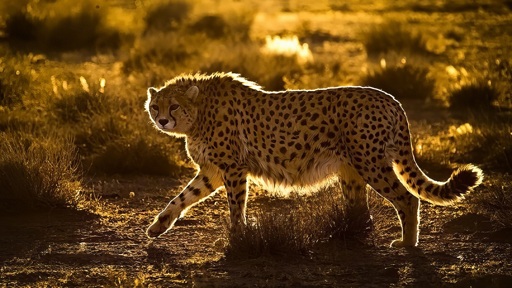
Before the war began in February 2026, there was some rare good news for Iran’s imperiled Asiatic cheetahs. Rangers spotted and filmed a female in the North Khorasan province accompanied by five cubs — a first. No more than four had ever been seen before, and every individual counts. The Asiatic cheetah (Acinonyx jubatus venaticus) is the world’s most endangered big cat, and the number counted in the wild rose to 27. Bagher Nezami, national director of the Conservation of the Asiatic Cheetah Project, told Iranian state-controlled media that these were “ID-carded” cheetahs, known individuals being monitored by researchers. Another five remain in breeding sites and six in captivity, he said. This represented a significant leap: In August last year, the Tehran Times reported that just 20 were left in the wild. Nine days after the sighting of the five cubs, the United States and Israel launched coordinated strikes on Iran, prompting a swift retaliation that has since escalated into a regional conflict with global repercussions — and poses a new threat to a big cat that hovers on the brink of extinction. Kushki (male) is one of the last surviving Asiatic cheetahs in northeastern Iran’s Miandasht Wildlife Refuge. Image by Ehsan Kamali / Tasnim News Agency via Wikimedia Commons (CC BY 4.0). A species on the brink The Asiatic cheetah was once found throughout Central and Southwest Asia, with a range that spanned from the Arabian Peninsula to the Caspian Sea and as far east as India. However, this…This article was originally published on Mongabay
From Conservation news via This RSS Feed.