

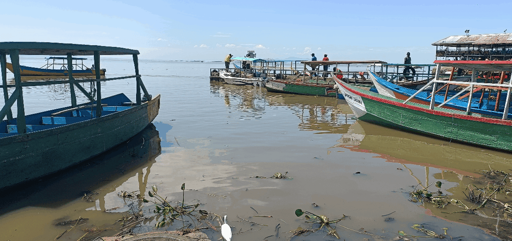
KISUMU, Kenya — On a December morning, the early sunshine casts a golden sheen on the waters of Lake Victoria in Kenya’s Kisumu county. The breeze from the lake carries the melody of birds, as a small wooden boat bobs gently on the languid waves. Occasionally, an African sacred ibis (Threskiornis aethiopicus) strikes, trapping a fish in its beak. The atmosphere at Dunga Beach, on the lake’s shore, is serene. In a few hours, fishmongers will arrive to haggle with fishers who have spent the night pulling up their nets. Victor Ochieng’ Didi, 32, leads a group of Kenyan tourists down the wooden boardwalk on the lakeshore. They’re bird-watchers, here at the culmination of a full year’s planning to catch a glimpse of the papyrus gonolek bird (Laniarius mufumbiri), a near-threatened species found only in the wetlands of Central and East Africa. The possibility of bird-watching at this spot is the result of years of efforts by conservationists, especially youths from this region. Momentum to preserve the Dunga wetland, identified by scientists as a Key Biodiversity Area (KBA), has ebbed and flowed, but activists say they hope a push to designate it as a gazetted wetland under Kenyan law will bring more lasting protections. Bird-watching guide Victor Ochieng’ Didi. Image by Achieng’ Otieno for Mongabay. A home for rare wildlife Dunga Beach is part of the wetland that’s also known as the Dunga swamp. It’s not only a habitat for rare species, but also an important carbon sink. The papyrus…This article was originally published on Mongabay
From Conservation news via This RSS Feed.