


Mark Wagner
Special to ICT
For all the changes that have happened in the past 100 years in Oklahoma, the blackjack oaks have endured.
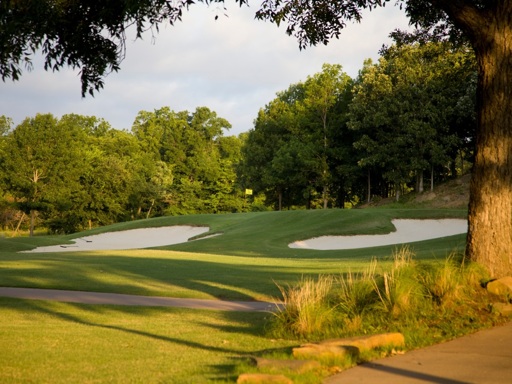
They were there when the Indian Hills golf course was first built in 1924, and they survived one of the worst tornadoes in the state’s history. Today, as part of the tribally owned Cherokee Hills Golf Club, the trees still stand as symbols of resilience.
“They survived an F4 tornado,” said Darcy Stephens, communications director of the Cherokee Nation, who noted the 1993 tornado, among the deadliest in the state’s history, “took down the clubhouse and pretty much anything else in its way.”
Now those oaks, along with the Cherokee Hills Golf Club, will take their places in the 18-course Oklahoma Golf Trail, a project launched by the Oklahoma Legislature in 2025 as a means to grow the state’s tourism.
Created by a bill put forward by then-state Rep. Sheila Dills of Tulsa, the golf trail is championed by the office of Lt. Gov. Matt Pinnell and includes three Native-owned courses, including Cherokee Hills… The Oklahoma Golf Trail also includes the WinStar Golf Club, owned by the Chickasaw Nation, and the Peoria Ridge Golf Course, owned by the Peoria Tribe of Indians of Oklahoma.
The trail is shaped by the “Mother Road,” Route 66, and covers 400 miles. Packages and green fee deals, as well as golf tours, are in developmental stages. Other tribally-owned courses — Cherokee Springs and Cherokee Trails — are considered potential additions. The commission responsible for the planning and administrative aspects of the trail will establish the basic foundations for promoting and maintaining the project.
‘Golfers like challenge’
Ken McLeod, a commission member who is also director of the Oklahoma Golf Hall of Fame and the founder of Oklahoma Golf, said Cherokee Hills is a clear draw for visitors.
“The course has nurtured a tremendous array of golf talent,” he said.
Cherokee Hills reports 40 percent of the 24,000 average annual rounds of golf played there are by tribal members, and the Cherokee Nation oversees golf operations.
As to bringing in golfers from around the country, McLeod chuckles.
“It’ll kick your butt,” he said, “but golfers like challenge, and the Hills are memorable. It’s hosted eight major championships, and [Perry] Maxwell’s 18th is the hardest finishing hole you’ll ever play.”

The WinStar Golf Club in Thackerville, Oklahoma, owned by the Chickasaw Nation, is one of 18 golf courses featured on the Oklahoma Golf Trail, a new tourism effort to draw visitors to the state. Credit: Photo courtesy of Oklahoma Golf Trail
At the time of the 1993 tornado, Cherokee Hills was called Spunky Creek, privately owned by D. Huntley. In 2001, Cherokee Nation purchased the club and hired Tripp Davis to renovate the original design by Maxwell.
With respect to Oklahoma golf history and course design, the names of Maxwell, Davis and Bland Pittman are legendary. Together, their designs make up half of the designs of the 18 courses on the trail. Besides Cherokee Hills, Maxwell’s signature can also be found on Dornick Hills and Oakwood Country Club.
Maxwell’s name is also on an early tribal foray into golf in Pawhuska, Oklahoma, designed as Buffalo Hill during the Osage Nation’s experience with sudden wealth in the 1920s, but only the skeleton of that course remains. The Mescalero Apaches got into golf when they built the cherished Inn of the Mountain Gods in 1975.
With the growth of tribal gaming following passage of the federal Indian Gaming Regulatory Act of 1988, tribes have turned increasingly to golf to boost their tourism numbers.
From 1988 to 2013, tribal gaming surged from $100 million to $28 billion annually, and the number of tribally-owned golf courses grew during the same time from one to about 65.
An economic impact study commissioned by the American Golf Industry Coalition and conducted in 2022 by the National Golf Foundation found that golf contributed almost $102 billion in direct impact to the U.S. economy and that its indirect and secondary impacts brought the total to more than $226 billion.
The game of golf enables more than 1.65 million jobs, including more than one million directly tied to the industry.
One of the most economically successful tribes — the Shakopee Mdewakanton Sioux Community — purchased Lone Pine Country Club in 2002 in Minnesota. The course was completely remodeled, and reopened in late summer 2005 as The Meadows at Mystic Lake. The golf course has since drawn numerous awards and recognitions.
The success highlights the way golf has woven its way into Native culture, with the emergence of a new generation of Native golfers, teachers and golf industry workers.
“One in 100 jobs in America is related to golf,” Jim Beatty, CEO of Beatty Golf Ventures and executive editor of the African American Golfer’s Digest told ICT.
Beatty has long promoted economic opportunities in the golf industry and points up the difference between golfers and golf jobs. He admits to never winning a golf tournament, but his endeavors have generated over $3 billion in capital investment in Nebraska and elsewhere.
His mission includes a call for inclusive practices to place these jobs within minority populations. A native of Nebraska, Beatty notes, “how that affects people of color and Natives is directly related to employee hiring and dollars spent in and with the businesses controlled by those groups.”
To measure the results
While the Oklahoma Golf Trail project is in its infancy, it parallels successful efforts in South Carolina and Alabama, where golf trails bring in a share of the millions of dollars to the state economies.
The state of Alabama estimates the Robert Trent Jones trail employs 180 workers and generates more than $30 million each year. Oklahoma does not publish a statewide “total golf” dollar figure, but the new golf trail may provide an impetus to measure golf as an economic driver.
For its part, the 2024 annual report of the Cherokee Nation reports the tribe contributes more than $3.1 billion annually into the Oklahoma economy through its operations, including its three golf courses.
Another factor that has been measured and documented is the surprising history of Native players in the game, which includes many great players from Oklahoma. The notable standout is Orville Moody, Choctaw, whose grandmother walked the Trail of Tears.
Moody, who won the 1969 U.S. Open, could be seen as the patron saint of many great Oklahoma golfers, including Rickie Fowler, Navajo; Peyton “Beans” Factor, Chickasaw; and Robert Komahcheet lll, Comanche, an elite golfer who is a blood relative of the great Jim Thorpe.
What the future holds for players and tourism in the state remains to be seen. At present, the Oklahoma Golf Trail is advertising in regional markets to promote the state as a travel destination – for fishing and golf.
Tribal sponsors of the golf trail project include the Chickasaw Nation, Cherokee Nation, and WinStar Golf Course. Here are the tribally-owned golf courses on the Oklahoma Golf Trail.
Oklahoma Golf Trail
Tribally-owned courses
*WinStar Golf Course
Chickasaw Nation
Thackerville, Oklahoma
Chickasaw Nation runs a First American Youth program for any Chickasaw citizen between 10-18 years of age, who has a citizenship card or CDIB card. The tournament is also a qualifying competition for the Team Chickasaw golf team. The tribe-specific programs play out on a course designed by Champions Tour player D.A. Weibring, and WinStar’s 27-hole layout stretches across 280 acres of vast green in the Red River Valley.
*Cherokee Hills Golf Club
Cherokee Nation
Catoosa, Oklahoma
Designed by Perry Maxwell in 1924 as Indian Hills, Cherokee Hills Golf Club is still very much alive and was renovated by Tripp Davis, who is known for his attention to the environmental impact of golf courses. The course has nurtured a tremendous array of golf talent, including many members of the tribe. Nearly 40 percent of the 24,000 average annual rounds of golf played there are by members, and the Cherokee Nation oversees golf operations.
*Peoria Ridge Golf Course
Peoria Tribe of Indians of Oklahoma
Miami, Oklahoma
Peoria Ridge Golf Course is an 18-hole championship layout in Miami, Oklahoma, owned and operated by the Peoria Tribe of Indians of Oklahoma. Designed by Oklahoma architect Bland Pittman — who created Bailey Ranch, which is also on the Oklahoma Golf Trail — the course broke ground in September 1998 and opened all 18 holes in spring 2000. Peoria Ridge uses native grasses, tree‑lined fairways, and several ponds and water hazards to create a scenic, park‑like look. According to its website, the combination of water features and open vistas gives it a more “up‑country” feel than many flat‑land Oklahoma courses.
Other courses on the trail
In addition to the tribally-owned courses, 15 other golf courses are included on the Oklahoma Golf Trail:
*Bailey Ranch Golf Course, Owasso
*Boiling Springs Golf Club, Woodward
*Canyons at Blackjack Ridge, Sand Springs
*Chickasaw Pointe Golf Club, Lake Texoma
*Dornick Hills Country Club, Ardmore
*KickingBird Golf Club, Edmond
*LaFortune Park Golf Course, Tulsa
*Lincoln Park Golf Course, Oklahoma City
*Oakwood Country Club, Enid
*Patricia Island Country Club, Grove
*Riverside Golf Course, Clinton
*Shangri-La Golf Club, Afton
*The Coves at Bird Island, Afton
*The Territory Golf Club, Duncan
*Winter Creek Golf & Social, Blanchard
Dr. Mark Wagner is a golf historian and regular contributor to ICT. His book, “Native Links, the Surprising History of Our First People in Golf,” was published by Back Nine Press in 2024. He can be reached at markgwagner@charter.net.
The post Oklahoma’s new tourism initiative puts spotlight on tribally-owned golf courses appeared first on ICT.
From ICT via This RSS Feed.