

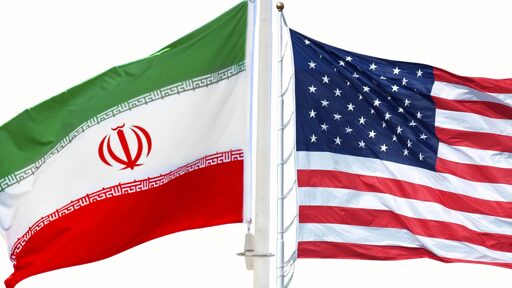
MANILA – Iran and the United States announced a ceasefire on April 8, with the negotiations to take place in Islamabad, Pakistan for two weeks.
However, it is clear for Iran that the war has not yet ended.
“The enemy, in its cowardly, illegal, and criminal war against the Iranian nation, has suffered an undeniable, historical, and crushing defeat,” Iran’s Supreme National Security Council said in a statement. “Our hands are on the trigger, and the moment the slightest error is committed by the enemy, it will be responded to with full power.”
Both governments claim to be pursuing military objectives. However, Iran rejected the deadlines imposed by US President Donald Trump. Notably, Trump escalated rhetoric by warning that “a whole civilization will die,” a statement widely criticized for implying genocide.
“We received a ten-point proposal from Iran and believe it is a workable basis on which to negotiate,” said Trump in a statement referring to Iran’s proposal, which includes US military withdrawal from West Asia and the lifting of US sanctions.
He added: “Almost all of the various points of past contention have been agreed to between the United States and Israel.”
Iran’s ten-point proposal underscored the controlled passage through the Strait of Hormuz in coordination with Iran’s armed forces, the necessity of ending the war against all the components of the Axis of Resistance, the withdrawal of US combat forces from all bases and deployment points in the region, the establishment of a secure transit protocol in the Strait, the full payment of Iran’s damages, the removal of all primary and secondary sanctions and resolutions of the Board of Governors and the United Nations Security Council (UNSC), the release of all blocked Iranian properties and assets abroad, and its enforcement in a binding UNSC resolution.
The war started when the US and Israel launched an unprovoked military attack on Iran on February 28.
The series of bombings killed the Iranian Supreme Leader, Ali Khalemenei and dozens of students at an all-girls primary education school, which violated the International Humanitarian Law.
This prompted Iran to retaliate and target facilities in countries in the West Asia region that host US forces.
More than 2,000 have been killed by US-Israeli attacks – 240 women and 212 children – in Iran and over 26,500 injured, according to the data of Iran’s Health Ministry.
Meanwhile, Israel’s health ministry reported at least 26 Israelis killed. The US has disclosed the deaths of 13 of its troops.
“We must be vigilant that the US and Israel will respect the declared ceasefire, unlike in Gaza where the US-backed Zionist regime continued its relentless attacks despite the supposed ceasefire deal that Trump brokered,” said International League of People’s Struggles (ILPS)-Philippines in a statement.
ILPS-Philippines dubbed the US and Israel as the most dangerous force undermining global peace stability for the following reasons: Endless wars, coercive sanctions, a global network of military bases, and the deployment of troops and weapons to control the world’s territories.
The US has military bases in 19 locations in the West Asia region. They have eight permanent bases in Bahrain, Egypt, Iraq, Jordan, Kuwait, Qatar, and Saudi Arabia, and the United Arab Emirates.
Trump has long threatened Iran over false claims that the country is developing nuclear weapons.
These claims have been refuted in numerous reports and statements, including by the International Atomic Energy Agency (IAEA) and the US’ own intelligence community.
“Like how George W. Bush fabricated Iraq’s weapons of mass destruction to justify the US imperialist invasion of Iraq in 2003, Trump concocted the lies of Iran’s nuclear weapons to legitimize its regime change agenda in Iran and consolidate its control over West Asian territories and resources,” ILPS-Philippines added.
The Philippines, despite its non-participation in the war, is one of the most affected countries by the war of aggression of the United States and Israel. The International Coalition for Human Rights in the Philippines published a primer focusing on the war’s impact on the Filipinos: over 2.4 million Overseas Filipino Workers (OFWs) are scattered across UAE, Saudi Arabia, Qatar, Kuwait, Israel, and Iran.
Fuel prices have also increased by more than 200 percent, paralyzing the country’s transportation system – from P49.90 (less than $1) liter of diesel in February to P150 ($2.5) as of this writing.
The Philippines imports 98 percent of its oil from West Asia, the vast majority of which transits through the Strait of Hormuz.
The largest concentration of overseas Filipino Workers (OFWs) also resides in West Asia, with over 2.4 million Filipinos scattered across the UAE, Saudi Arabia, Qatar, Kuwait, Israel, and Iran.
“It is clear that the massive oil price spikes and rapid deterioration of living conditions in the country today are brought about by US-Israel imperialist aggression against a sovereign nation, made worse by defective economic policies,” ILPS Philippines said. (AMU, JDS)
The post Iran maintains vigilance on ceasefire with United States appeared first on Bulatlat.
From Bulatlat via This RSS Feed.