

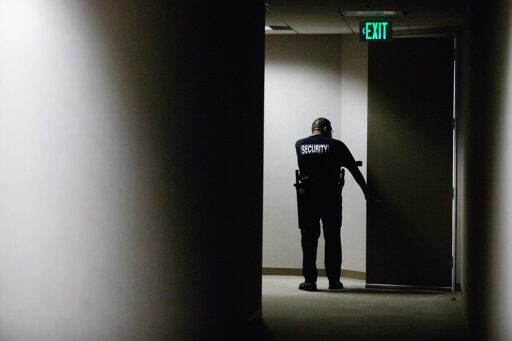
Nearly a year after workers voted to authorize a strike, non-union city and commercially contracted security officers in Baltimore, MD, will walk off the job on April 9 in an Unfair Labor Practice strike against their employer, Abacus Corporation. In their yearslong effort to unionize and secure more job security, better pay, accessible healthcare, and safer working conditions, workers at Abacus have reported rampant union busting and violations of their labor rights. In this episode, we speak with Laura Dixon, a veteran security officer and Abacus employee, and Jaimie Contreras, executive vice president of the Service Employees International Union, Local 32BJ.
Additional links/info:
- SEIU Local 32BJ website, Facebook page, and Instagram
- Katherine Wilson, Baltimore Sun, “Baltimore contract security officers at city properties prepare to strike”
Featured Music:
- Jules Taylor, Working People Theme Song
Credits:
- Audio Post-Production: Jules Taylor
Transcript
The following is a rushed transcript and may contain errors. A proofread version will be made available as soon as possible.
Maximillian Alvarez:
All right. Welcome everyone to Working People, a podcast about the lives, jobs, dreams, and struggles of the working class today. Working People is a proud member of the Labor Radio Podcast Network and is brought to you in partnership with In These Times Magazine and the Real News Network. This show is produced by Jules Taylor and made possible by the support of listeners like you. My name is Maximillian Alvarez, and today we are going back to the picket line. We’ve got another strike update episode for you guys, and this time we’re talking about a strike that’s happening right here in our hometown of Baltimore. As stated in a press release from the Service Employees International Union Local 32BJ, the largest property service workers union in the country, quote, “On Thursday, April 9th, non-union city and commercially contracted security officers will walk off the job on strike over unfair labor practice charges against their employer, Abacus Corporation.
Charges filed in 2025 and 2026 include allegations of discrimination, coercion, and firing workers over participation in legally protected union activities. Baltimore City Council members, Odette Ramos, Jermaine Jones, and Mark Parker will also join a strike rally. Abacus has received over $45 million in taxpayer funds through contract renewals, increases, and extensions since 2017, without a competitive bid for the contract during that whole time. Abacus employs around 200 mostly city contracted officers. Security officers employed by Abacus, Metropolitan Protective Services, and urban development solutions are also on strike at city and commercial sites, including Harbor East, the water treatment facility, the Able Woolman Building, police stations, and housing developments among others.” Now, this struggle has been going on for a while, and this strike has been a long time coming. Workers actually voted to authorize a strike back in July of 2025. As Catherine Wilson reported at the time in the Baltimore sun, “Contract security officers who patrol Baltimore city facilities have authorized a strike, if necessary, against their employer, Abacus Corporation, protesting their health insurance plans and unsafe working conditions.” Security officer Laura Dixon, 59, has patrolled the Ashburton water filtration plant for 25 years, but she noticed a change when Abacus took over the city security contracting about a decade ago.
Dixon walks with a cane because of a knee problem. She hasn’t been able to get treatment for a few years because she can’t afford her company’s health insurance and isn’t covered by any plan. Aside from paying out of pocket for cleaning supplies, which her employer didn’t provide, Dixon has also been held at gunpoint while manning her security post. “They don’t care about us, “Dixon said. To talk about this, I am really grateful to be joined on the show today by Laura Dixon herself, as well as Jaime Contreras, executive vice president of SEIU Local 32BJ. Laura, Jaime, thank you so much for talking with me today. I want to start by asking you to give listeners more of a sense of the workers who are employed by Abacus, the kind of work that they do around the city. And if you could talk about the working conditions and what those are like for city contracted security guards in Baltimore.
Laura Dixon:
Hi, everybody. My name is Laura Dixon. I’ve been with Advocate Security for a while now. I’m just trying to get healthcare. I haven’t had healthcare in years since Obamacare. I just turned 60 and it’s ridiculous. I can’t get no one to even look at my situation unless I have money down. I cannot afford that. Advocates does not care about us. All they care about is there’s fancy cars out front and everything else in the building that’s going on in Abacus. I was held by gunpoint a few years ago when I did the impound lot. They did not come and check a free days later, see how we was doing. They didn’t offer no kind of therapy to see if we was okay with what was going on. No one said anything. I was doing security at Ashburn Water Plant a few years back when two Pakistanian guys came and they said they was from a gas and electric company.
No one told me anybody was coming from gas electric company. I’m glad I didn’t let them in. It’s very dangerous. I think we should be getting everything that we should be getting. It’s only fair. It’s only fair. I want to come home and see my four kids, even though they all grown, but we need healthcare. We need everything. It’s not fair. This money that they given us, I’d rather have healthcare than the money. It’s not fair at all.
Maximillian Alvarez:
Laura, I wanted to ask if you could just say a little more for folks who are listening. What does a typical day or week on the job look like for you and your coworkers?
Laura Dixon:
We come in and we make sure everyone is safe. We walk the hallways. We make sure doors are locked. We make sure everybody’s where they’re supposed to be. No one is to come past me unless you’re not allowed upstairs anymore since COVID happened. So no one is allowed upstairs anymore. If someone wants to come down, we have to call them to come down to meet with their clients. No one comes and check on us unless something is absolutely wrong. I mean, I guess that’s kind of great and it’s kind of bad too, because I want to at least be checked on at least once a week. No one comes to check on us unless there’s a problem with employees. If something was to happen, we have nobody.
Jaimie Contreras:
Thank you again, Maximillian for having us. And thank you, Ms. Dixon, for making the time and tell listeners about what’s going on with this company. So I want to make just one thing very clear that this is not a dispute with the city of Baltimore. It is a dispute with the city contractors. So I wanted to make that clarification. And part of the reason workers decide to form a union is because of exactly what Ms. Dixon just described. When you’re not represented, you’re basically an at-will employee. When you work for a company that has charges filed against them for both in 2025 and 2026 this year, March of this year, that include discrimination, coercion, firing workers who are participating in legally protected union activity. Avakas may not know or they’re probably ignoring the fact that workers have rights. Forming a union is a right that workers have in this country.
Another charge, which is ridiculous to me is that’s been filed against these companies for a supervisor allegedly threatening to fire officers after they, as a group, collectively pointed out to their supervisors problems that they believe contributed to break-ins at the site that they work in and basically affected their working conditions. They basically were threatening to fire them for doing their jobs. And shamefully, Abacus is not the only one doing this. Punishing workers were simply trying to improve their lives through a union. So it’s not right in Baltimore, it’s not right anywhere in the country. People have rights and employers have to respect them. Going on strike is not a thing that workers just decide to do from one day to the next. It’s just the last resort that they have as workers. So security officers in Baltimore, they’re striking against Abacus, against an employer, Urban Development Solutions, Metropolitan Protective Services in places like Harbor East, the water treatment facility, Able Woolman, building police stations, housing developments and other locations.
And it’s not an easy decision, but when you work for an employer like Abacus, who has received over $45 million of yours taxpayer money since 2017 without competitive bid, for the last nine years they’ve had this contract and yet they’re stopping black workers from forming a union, which is both against the law and another nail in the coffin of Martin Luther King’s dream, who this week actually, April 4th, 1968, that passed away was assassinated for fighting for workers trying to form a union in Memphis, Tennessee. This is not how we honor people like Martin Luther King.
Maximillian Alvarez:
I really, really appreciate you both laying that out. And I just wanted to make it really crystal clear for our listeners, that we’re talking about non-union workers who have been working to unionize at the same time that they have been trying to raise concerns with their employer like Abacus over unsafe working conditions and just unaffordable healthcare and issues like that. Do we have that right for folks who are listening to this?
Jaimie Contreras:
Yes. You absolutely have the right to be part of an organization that’s going to protect your … Things like job security, they don’t come without a union contracts. That’s the only thing that guarantees you, job security, guaranteed wage increases that keep up with inflation, given how expensive things are. Workers are rising up and saying, enough is enough. And when your employer discriminates you, coerces you or tries to fire you for trying to organize, it’s just illegal. You can’t do that. And Avakas isn’t just flowning basic labor laws. They’re lacking basic human distancy and morals for doing this. These are people who’ve been working for them for years, and it’s time that they respect their rights and listen to them.
Maximillian Alvarez:
So I want to just put all our cards on the table here for a second.This is a show about workers for workers. Over the years, I’ve interviewed folks working in manufacturing, education, healthcare, transportation, farmers, baristas, lumberjacks, sex workers, graduate students, you name it. But this is kind of a trickier story because obviously there’s a lot of stigma and a lot of not great feelings towards security guards. And for a lot of us, from the time that we’re little and being shooed out of this mall or being told that we can’t enter that property, it’s like we either don’t interact with security guards at all, or when we do interact, it’s not exactly a fun experience. So I wanted to ask if we could just sort of address that for a moment. What would you guys say to folks who are listening right now and who are maybe in that camp?
They’re feeling some reluctance about rallying behind these workers just because of those negative feelings that they may have about security guards in general.
Jaimie Contreras:
Well, I’ll tell you, my little girl, when she was little, she’s now 19 almost, the security guard, and actually my other kids too, their security guard at their school was like their best friend. They love those security officers. We can’t paint everyone with one brush. And frankly, these jobs are dangerous jobs. They’re difficult jobs and stressful jobs. So when you have Ms. Nixon here saying she was held at gunpoint and she never received any meaningful follow-up from their company. It is a standard procedure in the industry to follow up with officers after traumatic incidents, including offering free employee assistance programs such as professional counseling. That did not happen. So these are really, really stressful jobs, low pay jobs without benefits, without job security. You have to be in the shoes of the officer to be able to describe what the job is like. So when we have a bad interaction with one person, it doesn’t mean you can’t paint everybody with a brush and that goes for security or any other job.
And whether you work at a fast food restaurant, you came in and then somebody had an attitude with you, you’re going to get an attitude back. And that’s just human behavior. But these jobs are really stressful jobs. They’ve been low paying jobs. People have no job security. Employers don’t treat them correctly. They abuse their rights when they try to form a union to improve their working conditions. So I think we should also look at that part of the story as well.
Laura Dixon:
I like my job. I really do like security. I mean, very good people. I’m a people person. Yeah, I think it’s wrong. They don’t check on us. They don’t give us supplies. Even down to the paper, the city even supplies the paper that we have to keep our attendance on or we have to keep log paper. I mean, we do have log books, but the papers that need to be Xerox over again, we have to go to the city for everything. I don’t think it’s fair that advocates does not supply the supplies, not even the cleaning supplies. When COVID was going on, we didn’t have masses. They didn’t come around. They didn’t have cleaning stuff. They didn’t have a lot of things and it was unfair. And we had to be there during COVID. We was essential. We had to be there. Everyone else went home, but we had to be there.
I’ve been with a lot of companies in Baltimore City since I graduated in 83, a lot of companies. I have never been treated like Abacus is treating us now. So I need healthcare. I need bereaved. My dad just passed. I didn’t have bereavement. I didn’t have a lot of anything and I’m still struggling. I’m trying to get my knee right so I could continue to work. It’s hard. It’s hard.
Maximillian Alvarez:
I want to talk about that for a second, right? Because if you talk to Abacus, they are telling a very different story as bosses so often do. And back in July of 2025, when y’all voted to authorize a strike, Abacus released this statement and they said, “Abacus Corporation has been alerted that there is a rally scheduled organized by a labor union alleging unfair labor practices and poor working conditions at City of Baltimore job sites. We strongly disagree with the allegations being made. For over 80 years, Abacus has been a highly responsible employer based in Baltimore and cares deeply about our employees. Abacus recently negotiated a new agreement with the city that provided a 20% pay increase for each employee resulting in among the highest wages for any unarmed security officers in the region. In addition, Abacus offers affordable health insurance as defined by the ACA, dental, vision, and short-term disability insurance.
Each of our employees also receives paid time off as required by the Maryland Healthy Working Families Act. Anyone who claims otherwise is not telling the truth. We have always advocated for and highly prioritized employee welfare and have done so in a direct relationship with our employees and intend to continue to do so. ” So that’s what Abacus is telling people. I wanted to give you both. Ms. Dixon, starting with you, I just want to give you a chance to respond directly to that statement.
Laura Dixon:
I say not. Why am I still limping? Why my knee is still hurting? I’m still getting up four o’clock in the morning to get to work. And even if I wanted time off, I can’t have time off because I don’t have no time. It’s crazy. It’s not fair and it’s not true at all. I’m so upset right now. I can’t even really think. All I see is red.
Jaimie Contreras:
Maximilian, let me jump in here because I know these things are hard for workers like Ms. Dixon who, again, has been through some trauma or her job. So this company is basically saying they give the bare minimum. So first of all, it wasn’t until the union came around that they went to the city and asked for more money. Why didn’t they do that five, 10 years ago? Why do they keep paying people the bare minimum that is required by law? They didn’t do that because I guess the union wasn’t talking to workers back then. And so the union comes around all of a sudden they get this jump. And the only reason they do it is to keep workers from forming a union. But workers know that you can give me 20, 30 bucks an hour, but without guarantees in a union contract, you can fire me the next day and there goes my 20, 25, $30 an hour job.
Not having a union gives you no guarantees that you’ll be able to keep those jobs. And when it comes to healthcare, the ACA, there’s premiums that people have to pay. The cost is very unaffordable for somebody barely making a living and living from paycheck to paycheck, and yet they expect people to pay a premium and then they have to pay a whole lot of money out of pocket before the coverage even kicks in. Give me a break. That’s just such a dirty life from them. And yeah, okay. So the Maryland lawyer requires them to give them a bare minimum pay time off. What about some vacation? Now, shouldn’t people make enough money, have enough time off so they can go on vacation and take their families on vacation? Why do people like Ms. Dixon have to work two jobs or work a full-time job and still be living paycheck to paycheck in a city like Baltimore?
When this company’s … Again, for the last nine years, they’ve seen a 45 million contract pay for taxpayer money in the city to provide these types of jobs for people like Ms. Dixon. It’s shameful and we’re not going to stand by it. Workers know that the only way that they can have, again, guaranteed pay time off, healthcare, vacations, sick days, and guaranteed wage increases. And just as important job security is through a union contract. And that’s why they’re going on strike because they’re trying to do just that. And this company turns around and embrace the law and threatens them, fires them, and tries to coerce them so they don’t form a union. That’s just not going to fly in the city of Baltimore. And 32BJ is going to do everything in its power to make sure that these officer’s rights are respected on the job.
Maximillian Alvarez:
Ms. Dixon, maybe let me reframe the question this way. If you could speak directly to the bosses at Abacus who are responding to you and your coworkers and the needs that you have, they’re telling you, “No, you’re fine. You don’t need a union. Your healthcare’s great. Your working conditions are fine.” If you could talk directly to them, what would you want to say to them?
Laura Dixon:
I beg to differ. I need healthcare. We need more time, more PTO time, bereavement, 401k. We need all of that. I’ve been working for Becker’s for a long time and I come to work every day. I don’t miss no time. I try to be there every day and on time, and I try to do my job the right way. And I think they should have some respect for their employees that’s been there for a long time and give them what they want. I can’t live off of what they was giving me. I couldn’t even see my way out. When Thursday, when Friday come, I be broke by Saturday after paying off the bills that we have to pay. Prices going up, but our paychecks are staying the same. That’s not fair.
Maximillian Alvarez:
No, I think that’s all that needs to be said. I mean, it’s what I hear from working people in Baltimore and all over this country every single week is exactly what you just said. It’s like, man, the cost of everything is going up. Our paychecks are staying flat. It’s like we’re all working harder and harder to stay in the same place and we’re not even doing that. Now we got to worry about this stupid war and gas prices being through the roof. At the same time,
Laura Dixon:
You
Maximillian Alvarez:
Got companies in Baltimore like BG&E raising all of our utility rates. It’s like we’re all getting squeezed and you can’t squeeze blood from a stone. At some point, there’s just nothing left to squeeze out of us.
Laura Dixon:
Enough is enough. If you want your company ran the right way, then you need to give us what we need so we can run it the right way. So we can feel comfortable running it for you guys. You trusted us to hire us, trust us to keep it going. Give us enough so we can keep going ourselves. That’s not no fun trying to get money to come to work Monday when you just got paid Friday. I can’t even stretch out enough to have bus fare or have Uber fair to get the work.
Jaimie Contreras:
Yeah. I mean, I think Ms. Dixon summed it up, right? I mean, the reality is that we live in the richest country in the world. We have money for everything, but except giving workers a decent salary and decent benefits that they can raise a family on. So every worker in Baltimore or anywhere in this country should be able to work a full-time job, make enough money, have enough paid time off, have a retirement, have healthcare. Those things should be a right and not a privilege. Unfortunately, that’s not the reality for most workers in this country, which is the main reason. Again, workers are forming unions so that this abuses and this unfairness are corrected. It’s been going on for too long in this country. I know workers who work two and three jobs and still have a hard time making ends meet, and that shouldn’t happen.
Again, a full-time job, you should be able to raise a family, you should be able to have a decent retirement, you should be able to have healthcare, and you should be able to have guaranteed time off and job security on the job. That’s why these workers are forming a union and Abaqus is trying to stop them by threatening them, firing them, or coercing them for trying to do what’s well within their right to do, which is to be part of a union.
Maximillian Alvarez:
Well, let’s wrap things up by focusing in on that, on this union struggle. And let’s bring things back to the strike this Thursday, April 9th. So for folks out there listening, what’s going to be happening on Thursday? And what will it take for Abacus to bring this labor conflict to a resolution? And do you guys have any final messages out there for people listening in Baltimore and beyond about what they can do to support y’all and stand in solidarity with y’all?
Jaimie Contreras:
Well, April 4th, 1968, Martin Luther King was assassinated. So April 4th is this week for supporting sanitation workers who were on strike. He believed that the right to collective bargaining was essential to achieving racial justice in this country. Abacus workers dreams basically of having a union are being torn apart because advocates is standing on their way. And workers have said, enough is enough. Workers are going to be on strike again, places like the water treatment plant and other facilities in Baltimore because they’ve had enough of this abuse for their employer. The way to deal with this is for advocates to come to the table, sit down, face their workers, and do what’s right for them, and sit down and bargain with them. That’s how this goes away. There’s no other way.
Laura Dixon:
You should come support us because maybe someone in your family is a security guard, or maybe your children are in college and their job as security guard officers. And I mean, we are the ones on the front line and it’s very scary and it’s very scary when people don’t come check up on you after things happen to you. And another thing is, I’m 60. I don’t have no retirement. I don’t have no pension. I don’t know what I’m going to do. I’m dependent on Jesus to see me through. Yeah, you might say it’s my fault. Why did I stay so long? I got comfortable. And once I got comfortable, my knees started acting up. So I had no choice but to stay. No one’s going to hire me with a bad knee. So I had no choice but to stay. But I’m going to fight the good fight and who’s I was going to be a security guard, I’m just going to fight for you.
My grandchildren, my children, whoever wants to be a security guard, it’s nothing wrong in our honest pay and honest work. There’s nothing wrong with it.
Maximillian Alvarez:
All right, gang, that’s going to wrap things up for us today. I want to thank our guests from SEIU Local 32BJ, Laura Dixon, a security officer and Abacus employee with many years of experience and Jaime Contreras, Executive Vice President of Local 32BJ. And of course, I want to thank you all for listening and I want to thank you for caring. We’ll see y’all back here next time for another episode of Working People. And in the meantime, go explore all the great work that we’re doing at the Real News Network, where we do grassroots journalism that lifts up the voices and stories from the front lines of struggle. Check us out across our YouTube channel, our podcast feeds, our website, and our social media pages, and help us do more work like this by going to the realnews.com/donate and becoming a supporter today. I promise you guys, it really does make a difference.
I’m Maximillian Alvarez. Take care of yourselves, take care of each other. Solidarity forever.
From The Real News Network via This RSS Feed.