

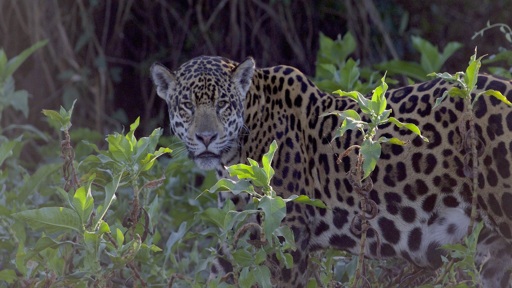
Conserving the dwindling jaguar population in Brazil’s Atlantic Forest won’t be possible without protecting its prey. That’s the conclusion of a new study, which found that the absence of deer, peccaries and other animals that sustain these big cats is driving it toward local extinction. Jaguars (Panthera onca) once ranged from the southwestern U.S. to Argentina and is the Western Hemisphere’s largest cat. Today it’s locally extinct or imperiled across much of its former territory, including the Atlantic Forest biome where it’s critically endangered. In this region, the study notes, some 85 % of jaguar habitat is gone and only small fragments remain within what’s considered one of the world’s most degraded tropical forests. As a result, jaguars have declined dramatically here, especially over the past two decades. The new study highlights one reason why: There’s not much for them to eat. Medium and large prey have diminished greatly, including white-lipped peccaries (Tayassu pecari), collared peccaries (Dicotyles tajacu), brocket deer (Mazama spp.) and tapirs (Tapirus terrestris). “We are facing a silent extinction of prey species in the Atlantic Forest,” says study lead author Katia Ferraz, a wildlife biologist at the University of São Paulo. “We talk a lot about jaguar extinction, but we talk little about the extinction of peccaries and deer, for example, that are important prey.” Ferraz and her colleagues assessed jaguar prey species in nine protected areas in the Atlantic Forest. To do so, they carried out the most extensive camera-trap survey ever conducted in this biome. They…This article was originally published on Mongabay
From Conservation news via This RSS Feed.