

Bullets:
Except for in Russia and (ironically) Iran, the war in the Persian Gulf has blown up energy markets everywhere.
Worldwide, no country is self-sufficient in all its energy needs, and disruptions in a supply chains anywhere result in major problems everywhere.
China is the largest refiner of jet fuel in Asia-Pacific, and has enormous reserves of crude stashed away, which can last months.
But immediately after the war on Iran began, China locked down its exports of jet fuel. The effect on prices across Asia was felt immediately, with costs more than doubling in just six weeks.
In the United States, fuel prices also soared, and also by over 100%.
Inside China / Business is a reader-supported publication. To receive new posts and support my work, consider becoming a free or paid subscriber.
Report:
Good morning.
Recently we pointed out that there was a wide divergence, a large “spread”, between what options and futures traders in the United States thought that oil prices should be, compared to the market prices set by real buyers and sellers of energy. Now though the real-world realities of the global energy market are driving prices higher in the United States too.
The idea that the US would be insulated from a severe supply-side shock in the Persian Gulf comes from a fundamental misunderstanding of how energy markets work. Except for Russia, and ironically perhaps Iran, this is everyone’s problem. It starts here.
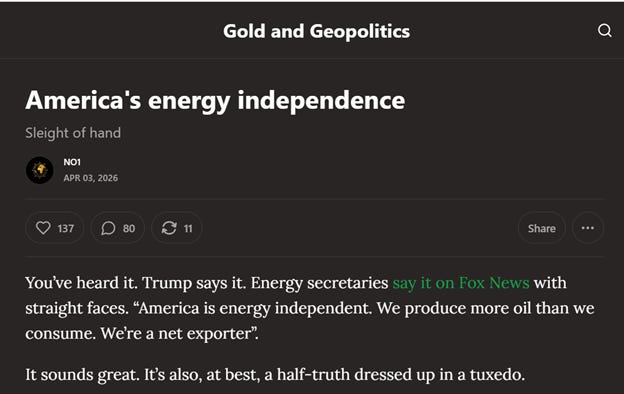
The United States is energy independent, and is a next exporter. On the surface that is true—last year the US pumped 13.6 million barrels of oil a day, and that’s a record high, and more than anyone else.
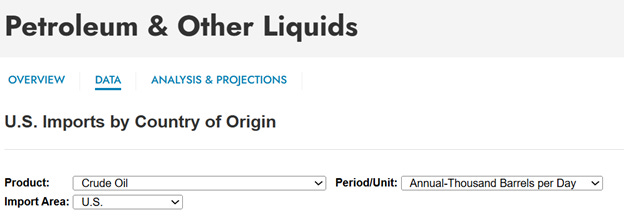

But the United States is also major IMPORTER of crude oil—at 6.2 million barrels a day. Four million barrels are exported, with 6.2 million going in, which results in a reliance on imports by over 2 million barrels per day.
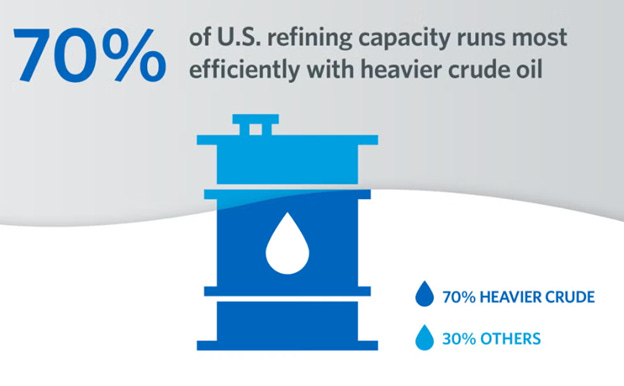
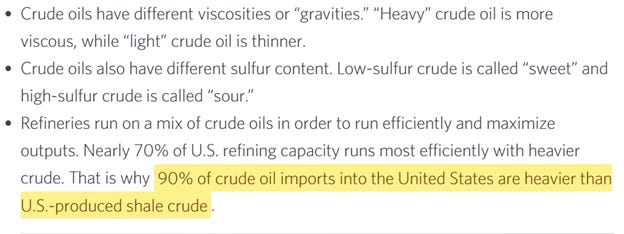
That is a function of the American refining industry—the oil coming from the shale patch is lighter and sweeter than what US refineries are set up to handle: 70% of total US refining is for heavy crude, and so the US exports the light sweet to be refined elsewhere:
So the conventional wisdom with respect to American energy independence falls apart when we see where the numbers come from. “Petroleum” is crude oil, and that term also includes natural gas products. The boom in NGL—natural gas liquids—was the result of the shale revolution that really took off around fifteen years ago, and which drove exports of NGL’s from a hundred thousand barrels a day to over 3 million barrels a day:
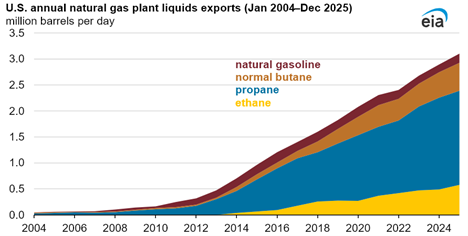
Add that to the crude oil that is exported, and magically it looks like the US is energy independent and a large net exporter. But for everything that is burned to drive a car or a plane, it’s a global market, and all those prices are racing higher, no matter where.
Disruptions anywhere result in big problems everywhere. China is the biggest refiner of jet fuel and kerosene in Asia-Pacific, and their exports fell 40% immediately after the war began. Effects of that are being felt, right now, in Asia. Australia and Japan will be affected the most, along with other major markets for aviation. But Canada and the United States will also be deeply impacted, which probably comes as a surprise to many.
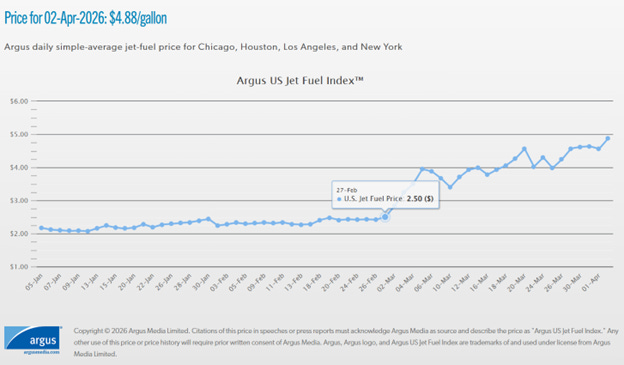
Prices for jet fuel have doubled in just six weeks. That’s also true in the United States. On 27 February, the average jet fuel prices across the major US hubs were $2.50 a gallon, and now they’re $5.00 a gallon.
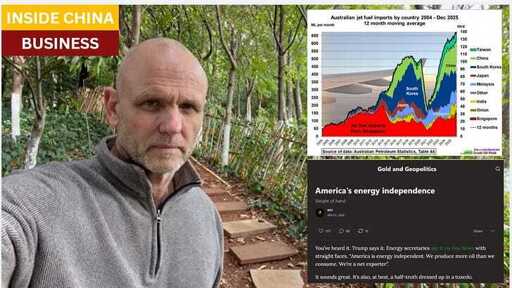
But it’s markets like Australia that are in big trouble. Executives at Qantas look here to the countries which supply them with jet fuel. China has just instructed their traders to stop exports. So that’s 28% of their total supplies, gone:
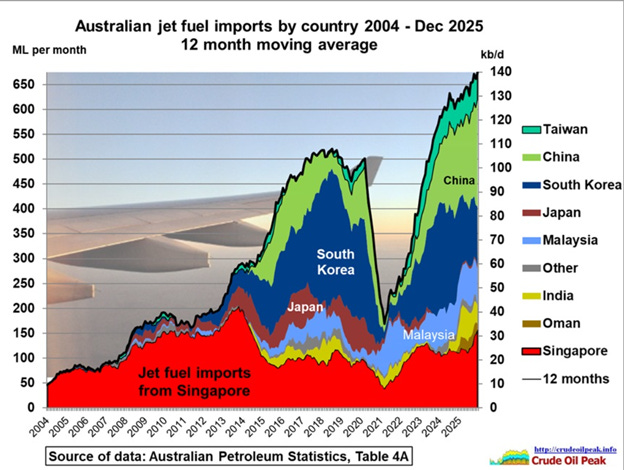
There is zero good news coming from any other countries on that chart, either. After China, South Korea and Singapore are the biggest suppliers of jet fuel. But South Korea just declared strict rationing of fuel supplies. Singapore’s oil supplies from the Gulf are shut off, and that means Australia has big problems. There’s nowhere to hide, and even the dumb futures traders in New York eventually are learning where stuff actually comes from.
Be Good.
Resources and links:
$140, and going higher: That’s the real price of oil, right now. Oil traders will be wiped out.
Singapore’s major oil source is blocked and experts warn Australians will pay
https://www.abc.net.au/news/2026-04-02/singapore-oil-refineries-energy-shock-response/106504438
Australia and Japan face jet fuel supply crunch as China cuts exports
https://www.scmp.com/economy/china-economy/article/3348642/australia-and-japan-face-jet-fuel-supply-crunch-china-cuts-exports
Daily Jet Fuel Spot Prices
https://www.airlines.org/dataset/argus-us-jet-fuel-index/
America’s energy independence
[ Gold and Geopolitics
America’s energy independence
You’ve heard it. Trump says it. Energy secretaries say it on Fox News with straight faces. “America is energy independent. We produce more oil than we consume. We’re a net exporter…
Read more
5 days ago · 175 likes · 102 comments · No1](https://no01.substack.com/p/americas-energy-independence)
US crude oil exports decreased by 3% in 2025 despite higher production (+3%)
https://www.enerdata.net/publications/daily-energy-news/us-crude-oil-exports-decreased-3-2025-despite-higher-production-3.html
Petroleum & Other Liquids, Imports by Country of Origin
https://www.eia.gov/dnav/pet/pet/_move/_impcus/_a2/_nus/_epc0/_im0/_mbblpd/_a.htm
China set to extend fuel export ban with small exemptions, sources say
https://www.reuters.com/world/asia-pacific/china-set-extend-fuel-export-ban-with-small-exemptions-sources-say-2026-03-31/
South Korea to enforce 5-day vehicle rotation system as Mideast conflict hits energy supplies
https://www.aa.com.tr/en/asia-pacific/south-korea-to-enforce-5-day-vehicle-rotation-system-as-mideast-conflict-hits-energy-supplies/3877074
Inside China / Business is a reader-supported publication. To receive new posts and support my work, consider becoming a free or paid subscriber.
From Inside China / Business via This RSS Feed.