

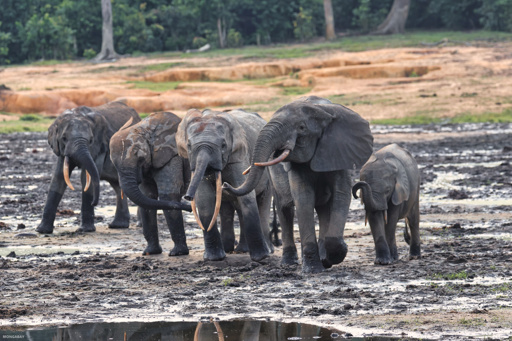
BAYANGA, Central African Republic — For many outside the country, the Central African Republic remains defined by a set of familiar images: conflict, instability, weak infrastructure and a state that struggles to extend its authority much beyond Bangui, the country’s capital. These realities are not imaginary. They continue to shape daily life across much of the country. Roads are in poor condition, health services are fragile and insecurity persists in certain areas. For years, these conditions have overshadowed nearly every other story. But they do not tell the whole story. Hundreds of kilometers southwest of Bangui, near the borders with Cameroon and the Republic of Congo, a more low-key experiment is taking shape in the forests of Dzanga-Sangha. It is an attempt to build a local economy centered on wildlife, conservation and tourism in a country rarely associated with these three elements. In Bayanga, a small town serving as the gateway to Dzanga-Sangha National Park, visitors come for Dzanga Bai, one of the most famous forest elephant (Loxodonta cyclotis) gathering places in tropical Africa, where dozens — and sometimes well over a hundred — elephants can gather in a single area. They also come for the western lowland gorillas (Gorilla gorilla gorilla) accustomed to human presence, the dense forest of the Congo Basin, and a conservation landscape that remains, in many ways, raw and un-finished. Dzanga Bai, one of the best-known forest elephant clearings in tropical Africa, where dozens and sometimes well over a hundred elephants can gather in a…This article was originally published on Mongabay
From Conservation news via This RSS Feed.