

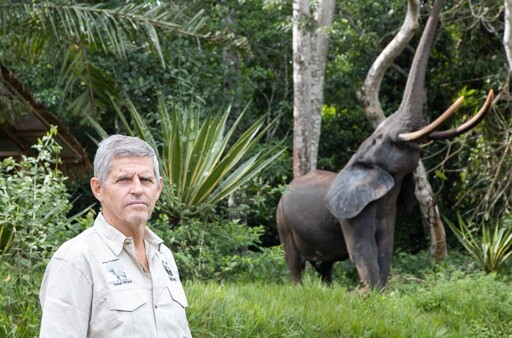
SALONGA, Democratic Republic of Congo — At nearly 70 years old, Spanish conservationist Luis Arranz is taking on what he calls a new “impossible mission”: changing the fate of Salonga National Park in the Democratic Republic of Congo. “I like difficult missions,” Arranz told Mongabay during a recent visit to the park. “I like impossible missions.” Salonga is far more than a protected area. Covering 36,000 square kilometers (nearly 14,000 square miles), it is Africa’s largest tropical forest national park and, according to WWF, one of the largest in the world. Larger than Belgium, the park is vast and remote. Many areas are accessible only by river or air. From Kinshasa, the capital, the journey by boat can take several weeks. Unlike parks such as Virunga National Park, which attract international attention and tourists, Salonga remains largely inaccessible and little known, despite its importance as a refuge for bonobos, forest elephants and other unique Congo Basin species. For Arranz, that’s precisely what makes the mission appealing. A river cuts through dense rainforest in Salonga National Park in the Democratic Republic of Congo. Image by Rhett A Butler/Mongabay. “The difference is that Virunga has millions of people around it. Salonga is immense,” he said. “We cannot do everything. We must start small, show that it is possible, and then gradually expand.” Arranz is no stranger to difficult terrain. Nearly five decades ago, he first arrived in Africa by road, crossing the Sahara Desert to reach Equatorial Guinea. Since then, his career…This article was originally published on Mongabay
From Conservation news via This RSS Feed.