

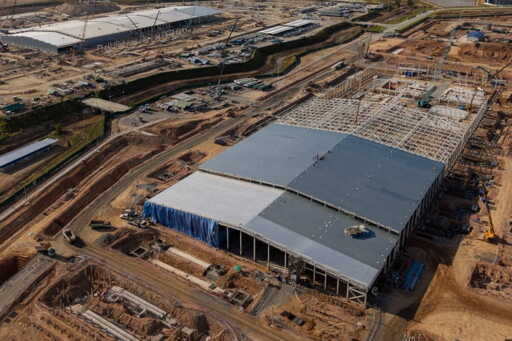
Thailand’s massive surge in data center development is prompting concerns about water shortages and pollution in already stressed regions. Mongabay’s Gerry Flynn reports that more than 70 data center-related projects are planned or underway, driven by global demand for AI and supported by government tax incentives. These projects are concentrated in the country’s Eastern Economic Corridor (EEC), a special economic zone aimed at expanding the region’s petrochemical, auto and electronics hubs while attracting future tech industries. Some residents said water scarcity was their primary concern. Data centers require enormous amounts of water for cooling — one planned facility is expected to require 3.3 million cubic meters (116.5 million cubic feet) of water annually, roughly equivalent to the consumption of nearly 37,000 residents, according to Mongabay’s calculations based on a study on water in the EEC area. Such water demands put tech giants like Google and Microsoft in direct competition with local farmers and fishers who are already struggling with water shortages. Water levels in reservoirs, like Chonburi province’s Khlong Luang reservoir, are already dropping, leading to fears that further industrial development will leave residents without running water. Beyond water shortages, observers warn of additional hidden environmental costs. Cooling systems often use chemicals, such as chlorine, to prevent bacterial growth, which can contaminate local waterways and harm ecosystems, including crab farms. Thailand’s electricity grid is heavily dependent on fossil fuels, roughly 85% from gas and coal, so increased electricity demand from data centers risks driving up carbon emissions and air pollution.…This article was originally published on Mongabay
From Conservation news via This RSS Feed.