


Pauly Denetclaw
ICT
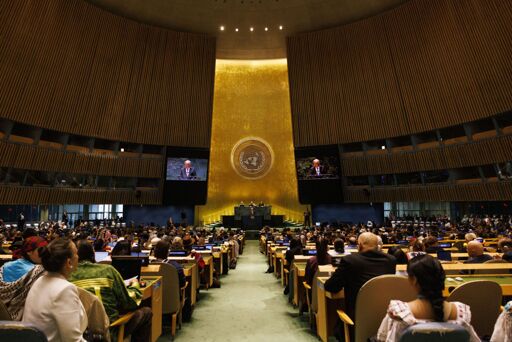
Indigenous people from all over the world will gather at the United Nations Headquarters in New York City for the 25th Permanent Forum on Indigenous Issues in two weeks.
However, the money woes at the United Nations will impact the forum, and possibly who can afford to attend. It has also impacted the timeline for a global plan of action on Indigenous health that was supposed to be created this year by the World Health Organization, which the United States is no longer a part of.
The United Nations cannot start to address Indigenous peoples health until a global plan of action is created. It is critical to coordinating resources, Indigenous communities and nations, countries, nongovernmental organizations, academia and civil society.
The theme for this year’s forum is “Ensuring Indigenous Peoples’ health, including in the context of conflict.” The forum will take place from April 20 to May 1.
The forum provides a platform for Indigenous people, communities and nations to amplify the issues they are facing. The Permanent Forum on Indigenous Issues is led by a board of mission experts. There are 16 people who are ultimately appointed by the president of the UN Economic and Social Council — eight are nominated by Indigenous peoples organizations who represent the seven socio-cultural regions and eight are nominated by countries.
Geoffrey Roth, Standing Rock Sioux, served as an expert for two terms. His term ended in 2025.
“We focus on all kinds of different issues that are part of the mandate, including health, the environment, biodiversity, violence prevention and others,” Roth said. “It’s a space for Indigenous people to have input in global policy issues all together.”
In 2000, the United Nations Economic and Social Council passed a resolution that mandated the Permanent Forum to “discuss Indigenous issues within the mandate of the Council relating to economic and social development, culture, the environment, education, health and human rights.”
Last year, the attendance at the Permanent Forum was smaller than usual. People were afraid to travel to the United States, on top of that, travel visas were being delayed.
This year the United States has refused to pay its membership fees to the United Nations, which accounts for 22 percent of the UN’s regular budget. The United Nations relies on mandatory assessed contributions, essentially membership fees, from the United States and China to operate. Collectively, the two countries provide 42 percent of the UN’s regular budget and nearly 50 percent of the peacekeeping budget.
The United States refusal to pay the United Nations has dramatically impacted the international organization.
It’s also impacted the funding that helps Indigenous people travel to the United Nations.
“I’m hearing that some of the countries that have traditionally donated money to that are not doing it in a timely manner,” Roth said. “That directly affects the ability of Indigenous people to be in meetings, and to meaningfully participate in policy making decisions.”
The number of meeting times has also been adjusted this year.
“Because of austerity issues and other money concerns right now, they have cut down the number of meeting times that they’re going to be able to do,” Roth said.
After every permanent forum, a report is created by the United Nations. This year that report will be impacted by funding issues.
“They’ve cut down the size of the reports that can be produced,” Roth said.
The United States leaving the World Health Organization, as well as cutting foreign aid has impacted global health policy, said Roth.
“The disengagement of the Trump administration from the [World Health Organization] is having significant impact globally on health policy. The [World Health Organization] is in the middle of having to lay off a lot of staff. We’re seeing changes in priorities,” Roth said. “In fact, a resolution that was passed by the World Health Assembly, three years ago, that required the WHO to present a global plan of action for Indigenous health is getting delayed because of staffing concerns and other issues.”
A finalized global plan of action will be delayed by a year.
“We’re not going to see it this year,” Roth said. “Hopefully we’ll see it next year, assuming that resources are found to support that.”
As part of the global plan of action process, in-person consultations were supposed to be held in the seven socio-cultural regions around the world. In March, virtual consultations were held with Indigenous peoples, according to the UN website. Virtual meetings impact who can participate. Those without access to electricity, internet, computers, smartphones or cell service, would have a challenging time participating.
“It makes me very concerned because, working with government entities, especially ones that don’t have a lot of experience with Indigenous peoples, I see them take a lot of liberty in what they believe is going to be right for Indigenous peoples, when they when they don’t hear from us in a meaningful way,” he said.
Regardless, there is still important work to be done, said Roth.
“Frankly, I think we [Indigenous people] can provide some solutions that don’t currently exist within the UN policy making framework,” Roth said. “I’m hopeful that we’re going to continue to have good policy conversations about how to move forward.”
The post United Nations forum on Indigenous peoples impacted by ongoing budget issues appeared first on ICT.
From ICT via This RSS Feed.