

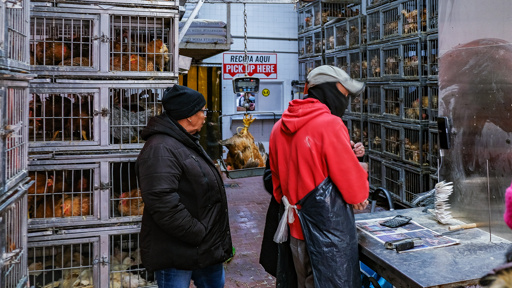
NEW YORK — Catherine Quayle has been caring for sick and injured wild animals in New York City for the past 12 years, first as a volunteer at the Wild Bird Fund, the city’s only wildlife rehabilitation center, and now as that NGO’s communications director and a licensed rehabber. Despite all her experience, she is stunned by what she’s seen at the clinic lately. “We certainly deal with viruses on a day-to-day basis, but nothing like this,” Quayle said, speaking from the nonprofit’s clinic on the Upper West Side. For the past four years, the fund has been dealing with a rising tide of suspected highly pathogenic avian influenza cases and operating in “triage mode” — setting up isolation areas, adopting new H5N1 virus protocols and relying on protective gear and regular testing. “People call us every day,” about sick and dying birds, Quayle said. “About Canada geese, especially.” Geese are just the tip of the iceberg. In New York state, the H5N1 virus has killed bald eagles, red-tailed hawks, great horned and snowy owls; swans and geese in Central Park; ducks and wild birds at the Queens and Bronx zoos; shorebirds on Long Island; small mammals including raccoons, skunks, opossums, red foxes, bobcats, gray squirrels, muskrats and feral cats. Nationwide, more than 130 domestic cats have been infected since 2022. “At this point, it’s pretty safe to assume that highly pathogenic avian influenza could appear anywhere in New York state at any time,” said Kevin Hynes, wildlife program leader…This article was originally published on Mongabay
From Conservation news via This RSS Feed.