

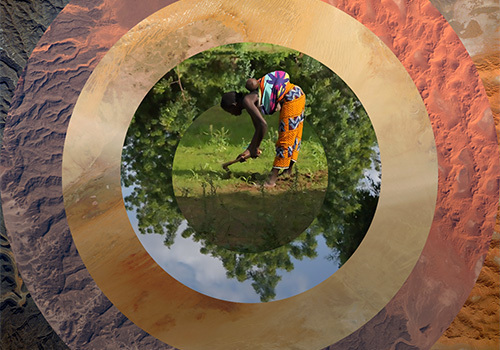
The images in this dossier, photographed in 2025 by Pedro Stropasolas and edited by Tricontinental’s art department, feature members of the Watinoma Women’s Association in Burkina Faso. Through these images, we highlight the collective efforts of these workers to reclaim and regenerate the land, bearing witness not only to daily labour, but also to the solidarity, knowledge, and stubborn hope that sustain it.1
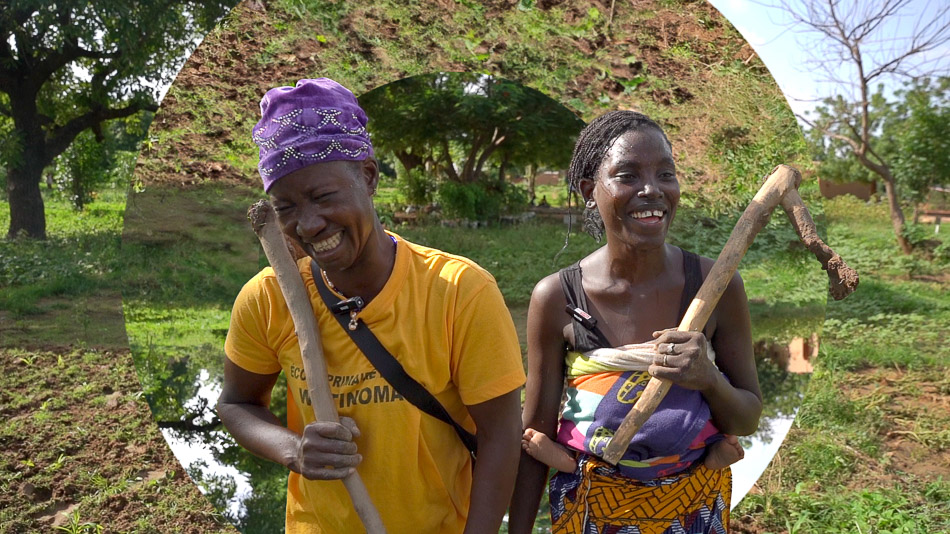
In Koubri, roughly forty kilometres from Burkina Faso’s capital, Ouagadougou, members of the Watinoma Women’s Association begin the day’s work with song.
Since the colonial era, conflicts in Africa have been explained by every imaginable category – tribal antagonism, ethnic hatred, religious extremism, governance failures, population pressures, and resource scarcity, to name a few – except the one that underlies them all: class. While these categories undoubtedly shape Africa’s contradictions, they cannot be explained without an assessment of the relations of production. Each period of Africa’s postcolonial history has produced new explanations that share one feature, namely the systematic erasure of how imperial extraction and class exploitation organise violence and reproduce instability.
Many, including sections within the anti-colonial struggles, have insisted that the categories of class analysis and class struggle do not apply to Africa because a class-based society has not formed on the continent. Fifty years ago, Issa Shivji’s Class Struggles in Tanzania advanced two key arguments that countered this thesis:
- Capitalist relations of production on the African continent have divided populations into classes, reshaping other social relations – ethnic, kinship, communal – through the pressures of class formation.
- Therefore, class as a category is analytically necessary to understand the African reality.2
In Saviors and Survivors, Mahmood Mamdani argued that the war in Darfur cannot be understood without considering the colonial reorganisation of land and political identity, particularly the divide between tribes with recognised homelands (dars) and those without. He showed how these divisions, combined with desertification and the intensifying competition over resources, exacerbated class tensions and violence, particularly as the Sahel region grew increasingly arid.3
While climate change is playing an undeniable role in shifts in the region, the dominant ‘climate conflict’ framework routinely – and falsely – frames climate-driven resource scarcity as the root of violence and instability in the Sahel.
The institutional architecture of the ‘climate conflict’ framework was consolidated in the 2010s. The UN Environment Programme’s Livelihood Security: Climate Change, Migration and Conflict in the Sahel identified climate change as a ‘threat multiplier’ driving farmer-herder conflict, while the UN Security Council’s 2018 debate on climate-related security risks positioned climate as a threat requiring military response.4 This ‘climate-security nexus’ discourse emerged during a period shaped by the 2008 global financial crisis, the NATO destruction of Libya in 2011, and the subsequent militarisation of the Sahel through expanded US and French military presence – context that the framework itself systematically omits.
Class Struggle and Climate Catastrophe in the Sahel argues that the escalating conflicts in the Sahel can only be understood if they are analysed as being grounded in the class struggle, given that they operate within the political economy of imperialist extraction: the climate catastrophe is an accelerant that intensifies pre-existing contradictions – not its root cause. The second part of the dossier looks closely at Mali and Sudan as examples of these changes in the Sahel.
Part I: The Desiccation of the Sahel and Its Political Impact
The Climate Catastrophe
The Arabic word Sahara means ‘desert’, i.e. an arid place with little rainfall. However, this is a misleading term. There have been long periods, influenced by changes in the Earth’s orbit and by solar insolation,5 when the Sahara has experienced pluvial phases. One such period, known as the ‘Green Sahara’ or the ‘African Humid Period’, spanned the end of the last Ice Age and the early Holocene, between 14,800 and 5,500 years ago, when lakes, rivers, grasslands, and savannahs as well as dense vegetation were present in the Sahara and along the southern edge of the Sahel (Arabic for ‘shore’ or ‘coast’). At this time, societies organised around communal pastoralism (mobile herding with shared access to water and grazing lands), adapting to climate oscillations through collective coordination of movement rather than relying on privatised resource control.6 From the sixteenth to eighteenth centuries, parts of the Sahel-Sahara fringe again experienced humid conditions before shifting to a long cycle of aridity in the twentieth century.7
Though these ‘regime shifts’, as climate scientists call them, tend to occur relatively abruptly, their pace over the last few decades has accelerated much more quickly than anything the planet has experienced in previous periods.8 According to the drylands assessment of the UN International Fund for Agricultural Development, over the past thirty years the Sahel ecological zone has shifted from 50 to 200 kilometres southward, leading to major losses of biodiversity and arable land.9 While the African Humid Period is generally understood to have ended ‘rapidly’ in paleoclimate terms, even high-resolution plant-wax biomarkers and lake-level reconstructions (fine-grained sediment-core records of past rainfall and water-balance change) show that the main transition from humid to arid conditions spanned several centuries, not decades.10 ‘The past’, as one scientific paper argues, ‘is not the future’.11
In the Sahel, recent anthropogenic (human-induced) warming and associated multi-decadal rainfall shifts are occurring at rates that have no clear precedent in the Holocene record.12 Recent studies show that the Sahel has warmed about 1.5 times faster than the global average over the past few decades, despite contributing less than 1% of global greenhouse gas emissions (for instance, Africa accounted for less than 3% of cumulative global CO₂ emissions from 1750–2021 while Sub-Saharan Africa, excluding South Africa, contributed just 0.6%). By contrast, the contiguous United States, which is warming at a similar rate (1.6 times faster than the global average), accounts for 25% of global emissions.13 The sixth assessment report of the United Nations’ Intergovernmental Panel on Climate Change (2023) confirms with ‘high confidence’ that 1) Africa’s temperature has increased more rapidly than that of any other region in the world, 2) continued warming will accelerate extreme temperatures, and, importantly, 3) that ‘human-induced climate change [has been] the dominant driver’.14
These are not new findings. A scientific paper from 2001, for instance, showed that the Sahel ‘provides the most dramatic example worldwide of climate variability that has been directly and quantitatively measured’.15 Between the early 1980s and late 1990s, the Sahel region saw an increase in rainfall and vegetation, recovering from the severe drought of the two previous decades. However, from 1999, the upward trends flattened out.16 While earlier scholarship suggested that the severe droughts that took place from the late 1960s through the 1980s were caused by deforestation – which remains a concern – better data and analysis show that the rainfall variability in the Sahel is caused by the rise in sea surface temperatures in the Mediterranean Sea, the North Atlantic, and the tropical oceans. In other words, this variability is due to overall anthropogenic warming trends, which are largely the result of Western industrial greenhouse gas emissions.17 Future climate shifts, including those influenced by ocean-driven changes, could easily reverse or further destabilise this fragile balance in the Sahel.18
Oscillating weather patterns in the Sahel have also caused problems with the water table, fuelling conflict between different communities. Long-term statistical analysis of weather patterns has shown a strong rebound from droughts, but then a plateau, indicating that there has been no permanent recovery. This plateau is also largely attributed to the rise in sea surface temperatures driven by global industrial emissions concentrated in the Global North.19 Using the Sahel Rainfall Index, derived from rain gauge observations, these studies show that what has changed is the nature of rainfall: rain is now more intense but intermittent, resulting in more extreme weather patterns, including both floods and droughts.
The Social and Economic Catastrophe
With temperatures in the Sahel rising 1.5 times faster than the global average, agriculture and pastoralism have come under severe stress.20 A high correlation has been documented between rainfall variability in the Sahel and yields of staple rain-fed crops such as millet and sorghum.21 There is strong scientific evidence that herders in the Sahel are facing declining pasture availability due to warming and delayed rains. As a result, they must migrate longer distances, often into unfamiliar grazing territories. Recent research on Sahelian pastoralism shows that rising temperatures, erratic rainfall, and land degradation are shrinking accessible rangelands and pushing herders to extend their seasonal mobility. A 2025 synthesis on climate and pastoral livelihoods notes that in the Sahel, reduced grazing availability due to warming and irregular rains is driving herders into longer migrations across unfamiliar territory in pursuit of diminishing pasture and water sources, thereby reshaping traditional transhumance calendars and routes (the customary or demarcated corridors used for seasonal livestock movements between grazing areas and water points).22 Earlier work by the Food and Agriculture Organisation similarly documented that reduced grazing availability has required longer-distance and longer-duration movements, with herd routes shifting southwards into more humid and often unfamiliar zones.23
This intensified mobility becomes catastrophic not because mobility itself is inherently harmful, but because colonial and postcolonial land tenure regimes dismantled legal protections for transhumance corridors, post-independence development prioritised sedentary agriculture, and from the 1980s onwards decades of structural adjustment eroded public regulation of land and water.24 Under these conditions, climate-induced mobility increasingly exposes poorer pastoralists to land enclosure, rent extraction, criminalisation, and violence, converting an ecological stress into a class-mediated crisis of reproduction.
These dynamics are not abstract; their consequences have been registered most acutely in the bodies of the young. The droughts of the late 1960s to 1980s, and the climate and environmental shocks that they produced, resulted in severe food crises and famine.25 Research on climate and food systems shows that even when rainfall and harvests rebound, the long-term deterioration of children’s health has been dramatic. One study, for instance, links rising temperatures, declining and increasingly variable rainfall, and seasonal disruption to low birth weights and child stunting, driven by a combination of in-utero heat stress and undernutrition resulting from repeated crop and livestock losses. Where subsistence and small-scale farming dominate, chronic seasonal losses translate directly into enduring health deficits.26 This correlation between climate variability and child health reflects how World Bank and International Monetary Fund (IMF) structural adjustment programmes (SAPs) eliminated the grain reserves, subsidised inputs, and extension services that previously buffered against harvest failures while enforcing export agriculture that prioritises European markets over local food security.
As climatic shifts intensify, the crisis of hunger has been slowly but surely met with the crisis of disease, leading to a political catastrophe in the region. For instance, the epidemic belt of malaria has moved northward to the Sahel-Sudan transition zone, with increased fatality rates among children who do not have immunity to malaria and other associated illnesses.27 Meanwhile, there has been an intensification of Tuareg (Amazigh) rebellions in the north of Mali and Niger rooted in long-standing grievances against the state; of the Islamist rebellions that resulted from the destruction of Libya at the hands of the North Atlantic Treaty Organisation; and of tensions between herders and sedentary agriculturalists. From food insecurity to disease outbreaks, the region has deteriorated into violent conflicts, driving internal and cross-border migration as well as mass displacement and rapid urbanisation.28
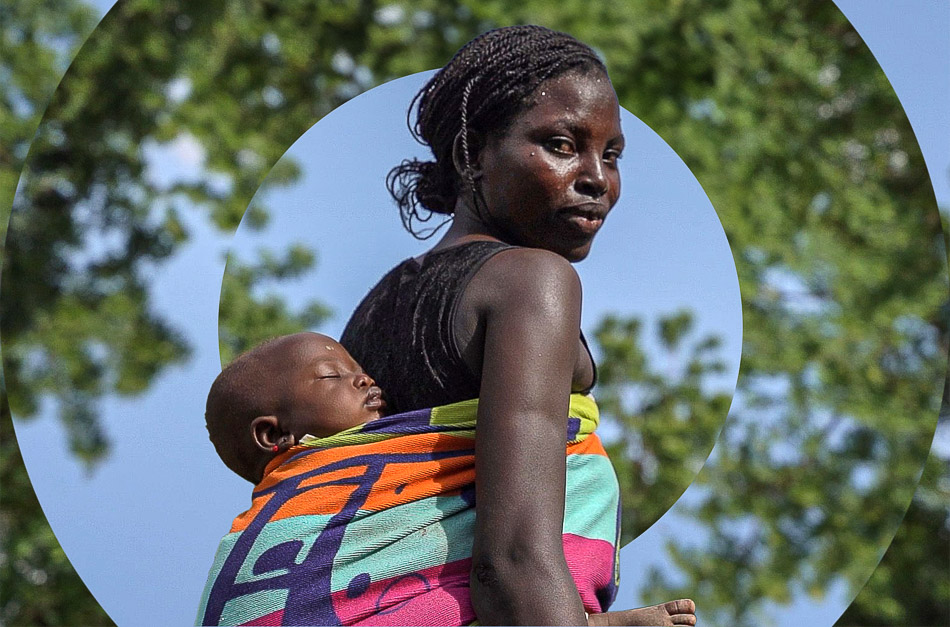
Approximately 30 members of the Watinoma Women’s Association work a plot of land, using agroecological practices to grow food for their families, for schools, and for local markets in the Koubri region.
The Political Catastrophe
As droughts intensify, rain grows erratic, and agrarian and pastoral livelihoods collapse, the entire social and political order is being reshaped. The thinning of pasturelands and shrinking of water sources have brought farmers and herders into increasingly violent confrontation. As grazing routes dry up and wells fail, pastoralists are forced to push further into farmlands, while farmers – facing their own declining harvests – become less willing to accommodate mobile herds in the absence of effective mediation. This intensification of competition does not occur in a vacuum: changing weather patterns make vital resources scarcer within land regimes shaped by colonial dispossession, postcolonial state bias toward sedentary agriculture, and the erosion of public regulation.29
These localised tensions escalate into national crises precisely because Sahelian states – weakened by decades of marginalisation, uneven development, and externally imposed economic restructuring – lack the capacity to manage these pressures. In peripheral regions such as northern Mali, Niger, and Chad – where the state’s presence has long been minimal – climate shocks interact with chronic underinvestment to further erode already fragile state capacity. The state’s failure to provide water access, manage pastureland, and protect the population from violence during drought periods undermines its legitimacy, deepens resentment, and accelerates political fragmentation by instrumentalising religious and ethnic identities.30 This vacuum of authority, shaped by the state’s retreat and by political neglect, provides fertile ground for armed groups, particularly under the conditions created by ecological stress. Insurgent movements, from Sahelian jihadist networks to Boko Haram, have learned to exploit ecological distress as an opportunity for political expansion. When people lose livestock, crops, or income due to drought, they are more vulnerable to recruitment – not because this ideology suddenly becomes irresistible, but because armed groups offer a semblance of livelihood, protection, and dispute resolution. Studies from Kenya, Mali, and northern Nigeria show that climate-induced livelihood collapse increases the likelihood that young men will join militant groups, with evidence from Nigeria showing recruitment spikes in drought-affected regions.31 The climate crisis thus reshapes the political battlefield: armed groups step in where the state retreats, often providing water access, arbitrating local conflicts, or distributing spoils – functions that can mimic governance.
Yet the collapse of long-standing coping mechanisms is not only institutional but cultural and political. The people of the Sahel have long developed intricate systems of knowledge to read ecological cycles, anticipate rainfall, and coordinate herd movements across vast and unforgiving territories. These were not mere customs; they were forms of governance embedded in rituals, social obligations, and intercommunal agreements. Climate volatility has destabilised these knowledge systems, whose functioning depended on relatively predictable ecological rhythms. Erratic rainfall renders indigenous agricultural calendars unreliable, while disrupted grazing cycles force pastoralists to abandon long-standing migratory routes.32 As these cultural technologies fall apart, communities lose their ability to self-regulate resource use, creating more openings for conflict and further delegitimising both customary authorities and state institutions.
Women and girls sit at the heart of this intertwined climate-political crisis, though their experiences are often misclassified as social rather than political. As water and firewood grow scarcer, women must walk longer distances each day, reducing time for economic or civic participation.33 Climate shocks can lead families to pull girls from school or push them into early marriage – a retreat that further weakens the social foundations of democratic participation and gender equality. There is also evidence that economic stress brought on by drought correlates with an increase in intimate partner violence.34 These pressures constrain women’s political agency and their capacity to engage in community decision-making, peacebuilding, or local governance. Climate change, therefore, is not only reshaping physical landscapes but narrowing political space for half the population.
Taken together, the dynamics outlined above – resource conflict, the erosion of state authority, the expansion of armed groups, the breakdown of non-state governance systems, and the narrowing of women’s political capacity – form an interlocking political crisis in which climate stress intensifies contradictions rooted in imperialist intervention, uneven development, and the weakening of public and communal institutions. Climate change does not operate as an external shock but as a force that reorganises power, reshaping struggles over land, mobility, and authority across the Sahel. These processes do not unfold uniformly across the region; they are mediated by national histories, state trajectories, and political choices. To understand how the climate crisis becomes a political crisis in practice, it is therefore necessary to examine these dynamics within context of specific countries. Unless climate justice, equitable adaptation, and strengthened social institutions are placed at the centre of the region’s political strategy, the downward spiral will continue, turning climate shock into political upheaval and environmental degradation into state collapse.
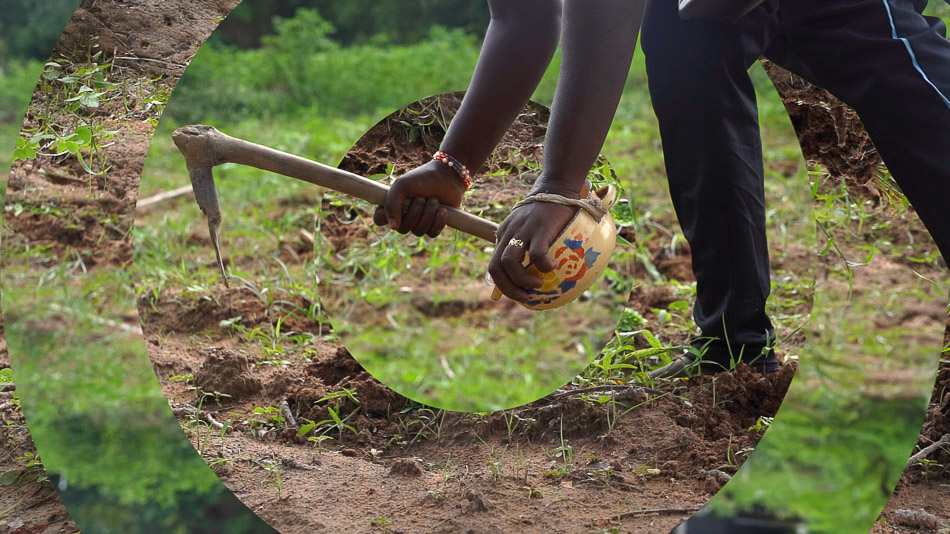
Driven by the defence of food sovereignty, growing organic maize has become part of peasant resistance to the expansion of genetically modified seeds in Burkina Faso.
Part II: Mali and Sudan
Mali
Before French troops invaded the Niger River Bend in the 1890s, West African societies had developed systems for governing land, water, and pastoral mobility. In Mali, Timbuktu manuscripts produced from the fifteenth to nineteenth century linked political legitimacy to the protection of livelihoods, combining legal reasoning with astronomical observation to anticipate seasonal rainfall and floods.35 The Macina Empire (1818–1862) later formalised this approach through the dina (a comprehensive legal code regulating the use of the Niger River’s vast seasonal floodplain – the Inner Niger Delta – among Fulani herders, Dogon and Bambara farmers, and Bozo fishers). This system was overseen by a hierarchy of authorities, including pastoral chiefs known as jowros who coordinated seasonal cattle entry, maintained livestock corridors, and mediated resource conflicts based on observed flood patterns.36
These manuscripts and governance systems show that resource and environmental management in Mali was inseparable from political legitimacy, social obligation, and productive labour, rather than treated as a technical security problem. Environmental stress was understood as political failure when rulers did not protect livelihoods. What is now described as ‘climate-driven conflict’ is instead the outcome of the systematic destruction of the state capacity required to run regulatory systems – first by French colonialism, then by neocolonial state formation, and today intensified by anthropogenic climate change operating within structures of arrested development.
French colonialism dismantled the regulatory capacity of existing institutions while preserving their extractive functions. In Mali, statutory land law stripped pastoral chiefs of legal standing while continuing to use them to control pastoral access and collect fees, producing a condition of dual illegitimacy as they lost both customary and legal authority. By recognising only individually held title deeds, colonial land law subordinated customary and pastoral land-use rights, privileging sedentary agriculture and rendering mobile pastoralism legally precarious.
Mali’s first president, Modibo Keïta (1960–1968), challenged this inheritance. Inspired by Third World socialism, his government withdrew from the French Community,37 left the French-backed monetary system known as the CFA franc zone, nationalised key industries, and pursued state-led development aimed at restoring public authority over land and resources in a context of growing environmental variability, including efforts to curtail the political power of intermediary pastoral elites. This included rejecting French-backed schemes to externalise resource control in Mali’s desert regions – most notably the Organisation commune des régions sahariennes (Joint Organisation of the Saharan Regions), a late-colonial French project that sought to retain control over Saharan territory and resources across colonial borders by stoking divisions between ethnic groups.
The military government of Moussa Traoré (1968–1991) that overthrew Keïta in a 1968 coup d’état reversed these measures and restored a privileged role for French firms and finance in trade, banking, and public procurement in the 1980s. This restoration of French commercial privilege revealed the Traoré regime’s function within the Françafrique system (an informal matrix of French political and economic mechanisms of control in its former African colonies). As with other radical nationalist leaders in Francophone Africa, Keïta’s challenge to neocolonial control was abruptly terminated.
Under Traoré, pastoral chiefs were gradually rehabilitated, but within legal and administrative structures that had lost their coordinating function precisely as environmental variability intensified. Land codes recognised only individually held title deeds, reducing customary rights to weak use rights and transforming pastoral chiefs from resource managers into rent-extraction agents. As rainfall became increasingly irregular following the droughts of the late 1960s to 1980s and the partial ‘recovery’ in the 1990s, which plateaued by 1999, access to grazing corridors and floodplain pastures became more contested, allowing politicians to redefine cattle entry as a revenue source. Although pastoral chiefs remained responsible for managing these corridors, they had no statutory authority over them and became dependent on local government officials who controlled access and extracted rents. Rising fees to access floodplain pastures, driven by the need to finance bribes to local officials, disproportionately burdened dryland pastoralists. Unlike agropastoralists, they had no farmland to fall back on, and their herds depended on seasonal access to the delta’s floodplain pastures. Meanwhile, state agencies such as the rice development authority Office riz Mopti (Mopti Rice Office) confiscated nutrient-rich pastures without providing meaningful compensation for lost grazing access to the pastoral communities they nominally served while courts issued deliberately ambiguous rulings amid pervasive bribery, perpetuating conflict to ensure continuous extraction. Though the institutions of pastoral governance formally remained, their capacity to coordinate land, water, and mobility under growing climatic stress was systematically dismantled.38
Structural adjustment programmes (SAPs), implemented from 1988 and deepened through the 1990s, deepened this crisis by dismantling the state’s capacity to regulate land, water, and mobility precisely as rainfall variability intensified. World Bank and IMF conditionalities cut veterinary and agricultural extension staff, removed input subsidies (with sharp increases in fertiliser prices), privatised water-point maintenance, and imposed a 50% currency devaluation in 1994, collapsing rural infrastructure while forcing export-oriented commercialisation.39 As mediation capacity disappeared, land competition intensified and pastoral mobility was criminalised, producing continuous rent extraction from pastoral economies. Lower-class Fulani herders were systematically dispossessed while state officials and pastoral elites accumulated rents. Pastoral governance was converted into a mechanism for extraction. Climate change intensified these conditions by reducing available pasture, increasing the stakes of access control, and forcing longer migrations into unfamiliar territories where predatory extraction was more easily imposed.40
As the state retreated from its governance functions, armed groups – not as liberation movements but as actors exploiting the vacuum left by institutional collapse – moved to address the material grievances that no political authority would confront. Between 2015–2018, Katiba Macina (the Macina Liberation Front) – an armed jihadist group formed in 2015 that drew its base primarily from marginalised Fulani pastoralists and, from 2017, operated under the al-Qaeda-affiliated Jama’at Nusrat ul-Islam wa al-Muslimin (Support Group for Islam and Muslims, JNIM) – abolished all grazing fees. These fees had been imposed by pastoral chiefs in order to gain access to nutrient-rich floodplain pastures and had consumed a substantial share of pastoral cash income.41 Fee abolition removed a major source of rent extraction, easing cash burdens and improving access to pastures for dryland pastoralists. For the poorest households, this meant immediate material relief – often the difference between viability and dispossession.42
In this context, the class divide within both Fulani and Dogon communities shaped patterns of armed mobilisation. Among the Fulani, wealthy pastoral chiefs and cattle-owners stood against poor dryland pastoralists. Dogon farming communities were similarly stratified between landowners tied to state schemes and land-poor farmers facing food insecurity. State policies weaponised these class divisions. The Mopti Rice Office shifted pastoral corridors and grazing access in ways that favoured wealthy farmers, often without meaningful compensation to pastoralists. As state forces withdrew from rural areas after 2015, Malian authorities delegated local security to Dozo hunter militias (traditional fraternities repurposed as armed groups) and provided them with training, weapons, and financial support. The most structured of these, Dan Na Ambassagou, recruited largely from poor Dogon youth, whose dispossession they channelled into ethnic hostility that targeted Fulani communities rather than the elites dispossessing both. The consequences were devastating: in the Ogossagou massacre of March 2019, Dan Na Ambassagou fighters killed approximately 160 Fulani civilians – an atrocity that forced the prime minister’s resignation but produced no lasting accountability.43
Though climate stress did not create this class divide, it multiplied its effects: erratic rainfall and degraded pastures meant that timely delta access became even more critical, transforming exploitative fees into existential barriers. It was this intensification of pre-existing extraction, not scarcity itself, that drove pastoralists to armed resistance.
Despite imposing coercive social codes – including restrictions on women’s movement and violence against dissenters – Katiba Macina was able to settle land disputes, regulate grazing access, and enforce compensation for crop damage, providing governance functions that the neocolonial state had abandoned. The concrete economic impact of fee abolition helps explain why dryland pastoralists supported Katiba Macina, and later JNIM more broadly, since it was addressing grievances that no other political force confronted. After Katiba Macina reinstated smaller fees in 2018 following pressure from jowros, many dryland pastoralists shifted their allegiance to Dawlat il Islamia (the Islamic State in the Greater Sahara, ISGS), a new Islamic State-aligned faction formed in late 2019, whose call for land collectivisation and ending payments for pasture access directly appealed to lower-class Fulani.44
The split between JNIM and ISGS was not about religious doctrine or climate adaptation strategies – it was about whether Fulani elites could continue to extract rents from poor pastoralists. ISGS’s call for land collectivisation directly challenged the class power of pastoral chiefs, drawing support from lower-class Fulani who faced both environmental stress and systematic class exploitation. Climate stress amplified these dynamics by making access to resources more critical, but the struggle itself was a contest over who would set the rules of mobility, pasture access, and compensation in the delta. The state-sponsored ‘ethnic conflict’ narrative has served to obscure these class dynamics. By presenting violence as a primordial Fulani-Dogon antagonism, it both impedes solidarity between poor farmers and herders who face extraction at the hands of the elite and justifies military operations as a form of ‘counterterrorism’.
In this context, the Alliance of Sahel States (AES) – formed in September 2023 by Mali, Burkina Faso, and Niger and formalised as a confederation in July 2024 – represents an attempt to break from neocolonial dependency and reclaim resource control that opens space for comprehensive climate adaptation. Mali’s planning documents, National Strategy for Emergence and Sustainable Development 2024–2033 and Mali Kura ɲɛtaasira ka bɛn san 2063 ma (A New Mali: A Vision for 2063), explicitly frame sovereignty as a prerequisite for environmental restoration and promote policies such as public investment in irrigation and pastoral infrastructure, the restoration of grazing corridors, and prioritising food sovereignty over export-oriented agriculture.
Yet the AES faces profound challenges, such as inherited debt, limited industrial capacity, ongoing armed conflict, and French and ECOWAS (Economic Community of West African States) pressure. Mali’s reliance on foreign investors raises crucial questions about whether the AES will be able to achieve genuine sovereignty or fold to the interests of French imperialism. Nonetheless, this alliance echoes Keïta’s recognition that environmental crises cannot be addressed without confronting imperialism.
Sudan
Darfur, from the Arabic Dār Fūr, means ‘homeland of the Fur people’. Yet today, the word often elicits a sense of enduring natural crises. Branded ‘the world’s first climate change conflict’ by humanitarian organisations, UN officials, and foreign policy analysts, this designation erases as much as it explains.45 When former UN Secretary-General Ban Ki-moon declared in 2007 that ‘the Darfur conflict began as an ecological crisis, arising at least in part from climate change’, he performed a familiar sleight of hand, acknowledging environmental stress while systematically obscuring the political economy that transformed drought into genocide.46 The narrative proceeds predictably: as the Sahara Desert advances one mile per year and rainfall declines by 15–30%, Arab pastoralists and Black African farmers compete for shrinking resources and ancient ethnic hatreds ignite. Climate becomes the prime mover. Class disappears entirely.
The violence that erupted across Darfur in 2003 and later spread into Kordofan and the Blue Nile was neither a sudden outbreak of ethnic conflict nor a spontaneous combustion of scarcity. It was precipitated by a structural convergence in which accelerating climate disruption intersected with a political economy forged by long-term neoliberal restructuring and state predation. The conflict is, in essence, an ecological-class war. The state has systematically dismantled traditional livelihoods, privatised communal resources, and created a dispossessed population dependent on a militarised economy – all factors that have amplified environmental precarity. The outcome is more than a humanitarian crisis; it is the violent restructuring of society for capital accumulation.
The physical deterioration of Sudan’s environment is acute, with 40% of the years on record (between 1943 and 2017) in South Darfur classified as drought years, alongside the southward creep of desertification.47 This is not neutral ‘scarcity’: it is a geographically uneven consequence of the global economic order, which has externalised its ecological costs onto the periphery. In Sudan, the acceleration of anthropogenic warming acts as a brutal amplifier of existing vulnerabilities.
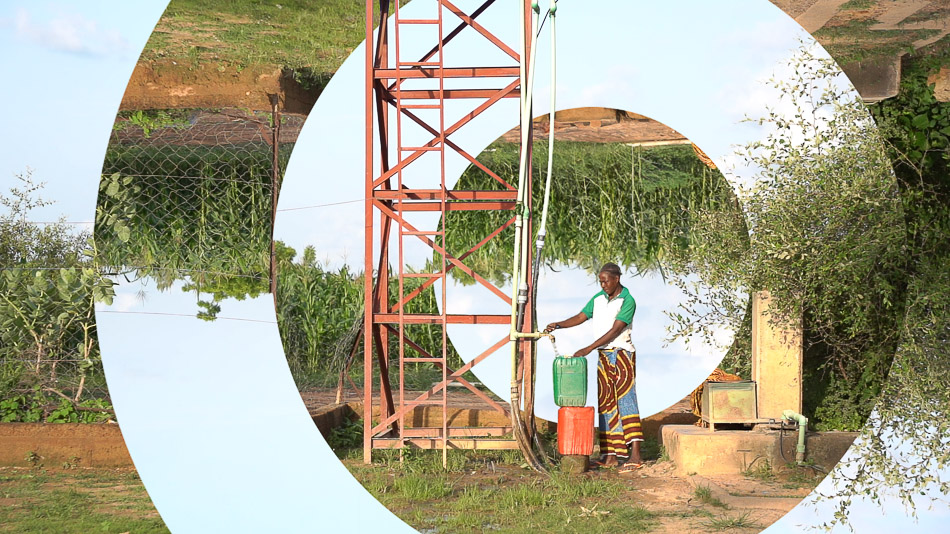
One of the achievements of the Watinoma Women’s Association was the installation of a well with a solar-powered pump and a 15-cubic-metre reservoir, guaranteeing access to water even during the dry season.
Ecological stress becomes a catastrophe only when it meets a political system that centres profit over people. In Sudan, the pivotal turn came with the 1989 coup and neoliberal restructuring under Omar al-Bashir, enforced by IMF and World Bank SAPs, which mandated the removal of agricultural subsidies, the privatisation of communal lands, and the gutting of state support services.48 This strategic state retreat shattered the social contract in rural Sudan. The Bashir regime actively weaponised this new political ecology, transforming land from a communal resource into a patronage currency allocated to regime-aligned elites who mechanised farming, blocked pastoral corridors, and dispossessed farmers.49 To suppress the resulting unrest, the state outsourced violence to pastoralist militias – the Janja’wid (devils on horseback) – giving them a carte blanche to seize livestock, harvests, and land.50 In this process, assets were violently transferred from communal to private hands, creating a new class of militarised accumulators.
The twenty-first-century gold rush, driven by global markets, layered frenzied extractive logic onto this system. Militias, notably the Rapid Support Forces (RSF), evolved into capitalist enterprises that controlled mines and smuggling routes.51 The climate-driven displacement of the population has created a pool of desperate labour and opened new territories for resource capture, effectively monetising human and ecological displacement.52
The ‘Arab vs. Black African’ narrative is a potent political tool that is actively cultivated and weaponised by the regime to curtail a burgeoning class conflict. This strategy ethnicised what was fundamentally a crisis over the means of production – above all fertile land and water – under conditions of engineered scarcity. It has prevented a unified front of the dispossessed and allowed armed groups to recruit along fragmented lines of identity, capitalising on the anguish of a people whose hope for a decent life has been obliterated.
The path to radicalisation follows a clear circuit of dispossession. Young men, severed from agrarian or pastoral livelihoods by combined ecological and economic shocks, find their labour power commodified in its most brutal form: as armed fighters. The RSF, therefore, is not merely a militia; it operates as a governing enterprise that offers wages, dispute resolution, and protection in zones where the state offers only neglect or violence. Joining it becomes a rational survival strategy in a collapsed economy, turning ecological stress into military manpower.53
In this context, international actors are integral components of the system that shapes and exploits the crisis – not external saviours. Among these actors are:
- The United Arab Emirates and Saudi Arabia, who have financed the RSF as a mercenary force in order to access Sudan’s gold. This represents a new imperial modality, where Gulf capital uses militarised accumulation to secure resources and project power.54
- The European Union, whose funding, channelled through the Khartoum Process to Sudanese state agencies for border control, effectively resourced and legitimised forces – including units linked to the RSF – that were tasked with stemming migration. This policy directly militarised the response to climate-displaced populations, treating the victims of this political-ecological crisis as a security threat.55
- Western financial institutions, which created the conditions for state collapse and social vulnerability – such as through debt and SAPs – making Sudan a fertile ground for the subsequent waves of crisis.56
The 2019 Sudanese revolution and the enduring resistance committees (neighbourhood-level bodies that coordinated the uprising and continue to organise civilian governance amid the war) represent a profound challenge to this entire structure.57 Their demands for democracy, justice, and peace are both anti-imperialist and ecological, since a progressive, sovereign project in Sudan would require dismantling the war economy, renationalising and democratising control over land and mineral wealth, and launching a massive agroecological restoration to rebuild communal resilience. This would directly confront the interests of the local militarised elite and their international backers – interests that both domestic actors in the current war (the Sudanese Armed Forces and the RSF) seek to protect. This war is, tragically, a battle between competing factions of this elite over the spoils of the system, ensuring that the masses remain trapped in the ecology of dispossession. A true resolution will not be brought about by a ceasefire between generals that represent this elite, but by a revolutionary transformation of the political-ecological relations that define Sudanese life.
Conclusion
Across the Sahel, conditions of life have long been defined by the desert. Artists such as Tinariwen, a Tuareg band considered to be the pioneers of ‘desert blues’, have sung of exile, dispossession, and thirst in northern Mali. Their song ‘Tenere Maloulat’ (The White Desert) describes a condition familiar to most in the region is described: ‘lost in the night, my thirst, my desire for water awakened me’. Neither a metaphor nor a statement of natural fact, this song encompasses the lived political conditions of the people of the Sahel. When Sahelians sing of water denied, of land lost, of life pushed to the margins, they name what this dossier has argued: climate catastrophe across the Sahel is not experienced as an abstract environmental shift, but as the intensification of an already violent political economy. Drought, heat, and erratic rains become catastrophic where imperialism, neoliberal restructuring, and state predation have dismantled collective protections and transformed land, water, and labour into sites of extraction. Thirst, in the Sahel, is created by capitalism.
What is at stake is a struggle over sovereignty, class power, and the social organisation of nature itself. Any path forward must therefore break with climate securitisation and instead centre food sovereignty, democratic control over land and water, and the rebuilding of public and communal institutions that are capable of managing environmental variability. The Sahel’s future will not be secured by border walls, bases, or markets, but by confronting the capitalist and imperialist structures that convert climate stress into dispossession and war. In this sense, the struggle unfolding in the Sahel is not peripheral to the global fight against capitalism – it is one of its sharpest frontlines.
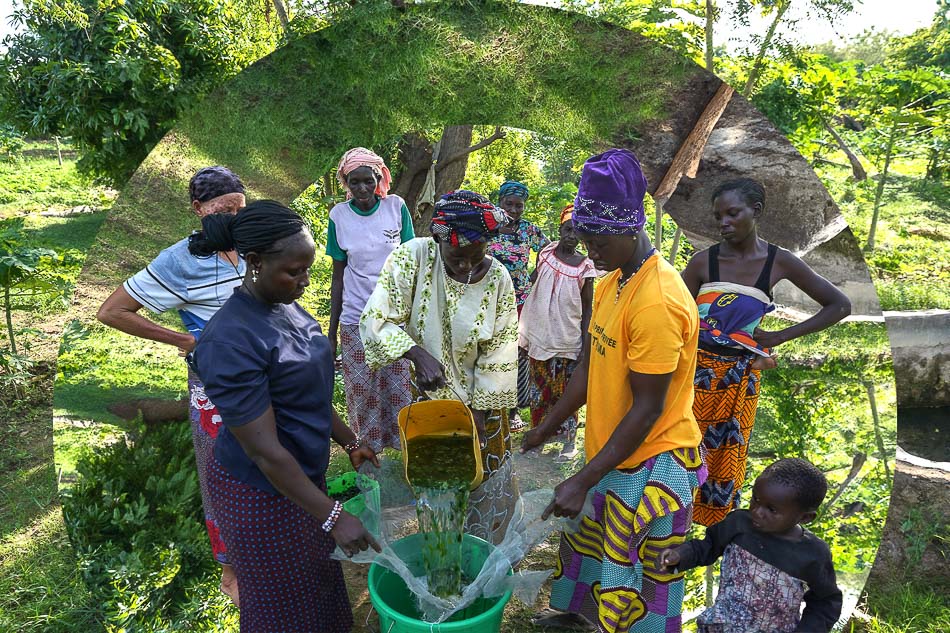
Among the association’s agroecological practices is the use of a biopesticide made from neem leaves, pounded ginger, garlic, and chilli pepper, which helps repel insects and reduce crop damage.
Notes
1 You can find the full report where the unaltered photographs were published in Brasil de Fato’s ‘Como Burkina Faso está vencendo o deserto com agroecologia’ [How Burkina Faso Is Conquering the Desert through Agroecology], 8 November 2025, https://www.brasildefato.com.br/2025/11/08/entenda-como-a-agroecologia-e-um-dos-pilares-da-revolucao-agricola-em-burkina-faso/.
2 Issa Shivji, Class Struggles in Tanzania (Johannesburg: Inkani Books, 2025; 50th anniversary edition).
3 Mahmood Mamdani, Saviors and Survivors. Darfur, Politics, and the War on Terror (New York: Pantheon, 2009). For an excellent essay that critiques the use of the tribalist framework to understand Kenya’s politics, see Peter Anyang’ Nyong’o and Caroline Karugu, ‘Tribe and Tribalism in Kenya’s Politics’, CODESRIA Bulletin, no. 5, April 2023. The classic critique is Archie Mafeje, ‘The Ideology of “Tribalism”’, The Journal of Modern Asian Studies 9, no. 2, August 1971.
4 See United Nations Environment Programme, Livelihood Security: Climate Change, Migration and Conflict in the Sahel (Geneva: UNEP, 2011); United Nations Security Council, Understanding and Addressing Climate-Related Security Risks, S/PV.8307 (New York: UN, 11 July 2018).
5 Solar insolation refers to the amount of solar energy received by a region, which varies due to the Earth’s axial tilt and orbital variations, influencing temperature and precipitation patterns.
6 Peter deMenocal, Joseph Ortiz, Tom Guilderson, Jess Adkins, Michael Sarnthein, Linda Baker, and Martha Yarusinsky, ‘Abrupt Onset and Termination of the African Humid Period: Rapid Climate Responses to Gradual Insolation Forcing’, Quaternary Science Reviews 19, no. 1–5 (2000): 347–361.
7 Clive Spinage, ‘The Changing Climate of Africa. Part II: West Africa and the Sahel’, in African Ecology (Berlin: Heidelberg, 2012).
8 Jonathan A. Foley, Michael T. Coe, Marten Scheffer and Guiling Wang, ‘Regime Shifts in the Sahara and Sahel: Interactions between Ecological and Climatic Systems in Northern Africa’, Ecosystems 6, no. 6 (September 2003): 524–532.
9 International Fund for Agricultural Development (IFAD), Sahel, West and Central Africa, 22 March 2024, https://www.ifad.org/en/west-and-central-africa/sahel.
10 James A. Collins, Matthias Prange, Thibaut Caley, Luis Gimeno, Britta Beckmann, Stefan Mulitza, Charlotte Skonieczny, Didier Roche, and Enno Schefuß, ‘Rapid Termination of the African Humid Period Triggered by Northern High-Latitude Cooling’, Nature Communications 8, No. 1372 (2017).
11 Martin Claussen, Victor Brovkin, Andrey Ganapolski, Claudia Kubatzki, and Vladimir Petoukhov, ‘Climate Change in Northern Africa: The Past is Not the Future’, Climate Change 57, (March 2003). Also see, Anne-Marie Lézine, Christelle Hély, Christophe Grenier, Pascale Braconnot, and Gerhard Krinner, ‘Sahara and Sahel vulnerability to climate changes, lessons from Holocene hydrological data’, Quaternary Science Reviews 30, no. 21–22 (2011).
12 The 2021 Intergovernmental Panel on Climate Change’s (IPCC) Sixth Assessment Report, Working Group I concludes that current warming rates have no precedent in at least the last 2,000 years. In the Sahel specifically, the droughts that began in the late 1960s and persisted through the 1980s were ‘the most dramatic example worldwide of climate variability that has been directly and quantitatively measured’. By comparison, the end of the African Humid Period – the most significant Holocene regime shift in the region – took place over hundreds to thousands of years, though it included abrupt sub-episodes of decades. See Intergovernmental Panel on Climate Change, Climate Change 2021: The Physical Science Basis. Contribution of Working Group I to the Sixth Assessment Report (Cambridge: Cambridge University Press, 2021), ‘Summary for Policymakers’, A.2.2; Mike Hulme, ‘Climatic Perspectives on Sahelian Desiccation: 1973–1998’, Global Environmental Change 11, no. 1 (2001): 19–29; Jessica A. Collins et al., ‘Rapid Termination of the African Humid Period Triggered by Northern High-Latitude Cooling’, Nature Communications 8 (2017): 1372; Jonathan A. Foley et al., ‘Regime Shifts in the Sahara and Sahel: Interactions between Ecological and Climatic Systems in Northern Africa’, Ecosystems 6, no. 6 (2003): 524–32; Martin Trauth et al., ‘Early Warning Signals of the Termination of the African Humid Period(s)’, Nature Communications 15 (2024): 3936.
13 Ejemai Eboreime, Omolayo Anjorin, Chisom Obi-Jeff, Tunde M. Ojo, and Attila Hertelendy, ‘From Drought to Displacement: Assessing the Impacts of Climate Change on Conflict and Forced Migration in West Africa’s Sahel Region’, The Journal of Climate Change and Health 23 (May–June 2025); Hannah Ritchie, ‘Sub-Saharan Africa Emits a Tiny Fraction of the World’s CO2’, Energy for Growth Hub, 17 June 2023, updated 25 April 2025, https://energyforgrowth.org/article/sub-saharan-africa-emits-a-tiny-fraction-of-the-worlds-co2/.
14 Intergovernmental Panel on Climate Change (IPCC), Regional Fact Sheet – Africa, Working Group I Contribution to the Sixth Assessment Report of the Intergovernmental Panel on Climate Change, 9 August 2021, https://www.ipcc.ch/report/ar6/wg1/downloads/factsheets/IPCC_AR6_WGI_Regional_Fact_Sheet_Africa.pdf.
15 Mike Hulme, ‘Climatic Perspectives on Sahelian Desiccation, 1973–1998’, Global Environmental Change 11, no. 1 (2001).
16 Tiexi Chen, Shengjie Zhou, Chuanzhuang Liang, Daniel Fiifi Tawia Hagan, Ning Zeng, Jun Wang, Tingting Shi, Xin Chen, and A.J. Dolman, ‘The Greening and Wetting of the Sahel Have Levelled Off Since About 1999 in Relation to SST’, Remote Sensing 12, no. 17 (2020), https://www.mdpi.com/2072-4292/12/17/2723.
17 Jong-Yeon Park, Jürgen Bader, and Daniela Matei, ‘Anthropogenic Mediterranean Warming Essential Driver for Present and Future Sahel Rainfall’, Nature Climate Change 6, no. 10 (2016): 941–945.
18 Nonetheless, an unscientific belief in permanent desiccation is equally unhelpful. See Fabrice Gangeron, Caroline Pierre, Elodie Robert, Laurent Kergoat, Manuela Grippa, Françoise Guichard, Pierre Hiernaux, and Crystele Leauthaud, ‘Persistence and Success of the Sahel Desertification Narrative’, Regional Environmental Change 22, no. 118 (2022): 1–11.
19 Chen, ‘The Greening and Wetting’, Michela Biasutti, ‘Rainfall Trends in the African Sahel: Characteristics, Processes, and Causes’, WIREs Climate Change, 2019, https://wires.onlinelibrary.wiley.com/doi/pdfdirect/10.1002/wcc.591; Inoussa Abdou Saley and Seyni Salack, ‘Present and Future of Heavy Rain Events in the Sahel and West Africa’, Atmosphere 14, no. 6 (2023); Seyni Salack, Inoussa Abdou Saley, and Jan Bliefernicht, ‘Observed Data of Extreme Rainfall Events over the West African Sahel’, Data in Brief 20 (2018): 1274–1278.
20 Francisco J. Doblas-Reyes and Anna A. Sörensson et al., ‘Chapter 10: Linking Global to Regional Climate Change’, in Climate Change 2021: The Physical Science Basis. Contribution of Working Group I to the Sixth Assessment Report of the Intergovernmental Panel on Climate Change, ed. Valérie Masson-Delmotte et al. (Cambridge: Cambridge University Press, 2021).
21 Benjamin Sultan and Marco Gaetani, ‘Agriculture in West Africa in the Twenty-first Century: Climate Change and Impacts Scenarios, and Potential for Adaptation’, Frontiers in Plant Science 7 (2016).
22 Nyong Princely Awazi, Building Resilience. Climate Change and Livelihoods in the Global South (London: Palgrave Macmillan, 2025), 85.
23 A. Ickowicz, V. Ancey, C. Corniaux, G. Duteurtre, R. Poccard-Chapuis, I. Touré, E